Reverse Osmosis Filtration System Whole House

So, picture this: It’s a Tuesday morning. I pour myself a tall glass of water from the tap, take a big gulp, and—blech—it tastes like I just licked a swimming pool and a rusty...
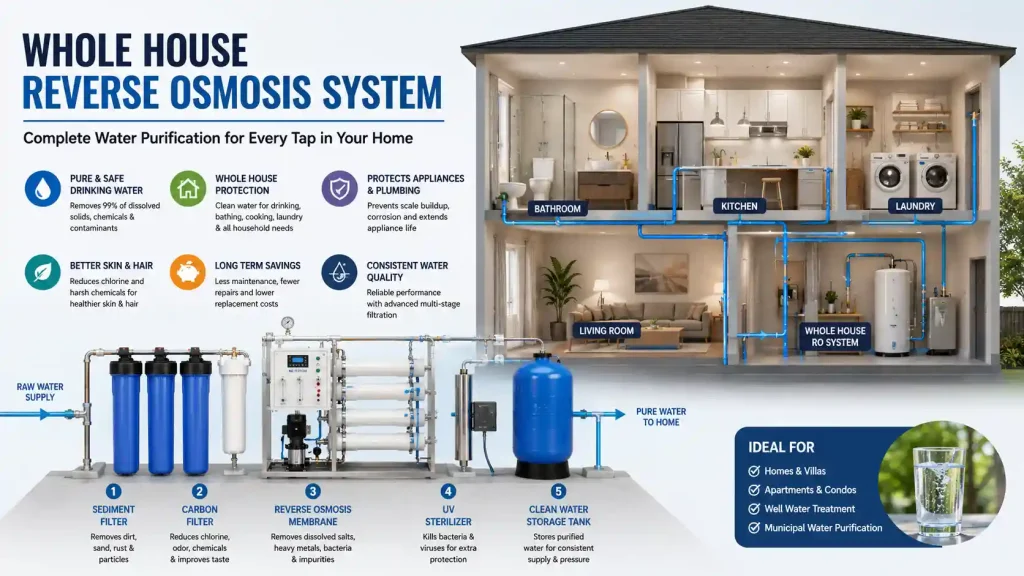
So, picture this: It’s a Tuesday morning. I pour myself a tall glass of water from the tap, take a big gulp, and—blech—it tastes like I just licked a swimming pool and a rusty pipe at the same time. Classic. You know that feeling, right? That weird, chemical aftertaste that makes you wonder if your house is secretly a chemistry lab?
That was my last straw. I needed a change, and not just for the kitchen pitcher filter—I mean full, glorious, whole-house intervention. That’s how I fell down the rabbit hole of the Reverse Osmosis (RO) whole house system. And spoiler alert: it’s not as sci-fi as it sounds (okay, maybe a little).
Wait, What Exactly Is Reverse Osmosis?
Okay, let’s break this down without getting a headache. Think of reverse osmosis as the bouncer at an exclusive water club. It only lets the good stuff—pure H2O molecules—through the door, while kicking out the riffraff: lead, chlorine, arsenic, fluoride, and even those tiny bacteria you don’t want to think about.
Must Read
It’s a high-tech membrane that does the heavy lifting. Basically, it pushes your water through a filter so fine that only water molecules can pass. Everything bigger? Gone. Poof. It’s like having a microscopic sieve for your whole house. And yes, it’s way more intense than your Brita pitcher.
The Whole House Part: Why Just the Kitchen Isn’t Enough
Here’s where the irony kicks in. Most of us only think about drinking water. But what about when you shower? Your skin is your largest organ—it’s basically a sponge for whatever’s in that spray. Hard water minerals? Chlorine vapor? Your pores are taking a bath in that stuff. Gross, right?
A whole house RO system means every single faucet—from the kitchen sink to the master bathtub to the garden hose (if you’re fancy)—gets the same pure treatment. No more dry, itchy skin after a shower. No more orange stains on your white sinks. Your hair will actually thank you. It’s like giving your entire plumbing a spa day, every day.
But Isn’t It Super Complicated? (Spoiler: No)
Honestly? I was terrified it would require a PhD in plumbing and a second mortgage. But here’s the truth: most systems are surprisingly plug-and-play (with a professional install, of course). The tank is usually tucked away in your garage or basement, and it works silently, 24/7. You won’t even know it’s there—except when you taste that first sip of pure water. Crystal clear. No aftertaste. Perfection.
One caveat: space. These systems aren’t tiny. You’ll need room for a storage tank and the filter cartridges. But if you have a corner in your laundry room or a spare closet, you’re golden. Just measure first—learn from my mistakes, okay?
 How Do Water Filters Work? Types & Benefits Explained
The Cons? Let’s Be Real for a Minute
Nobody’s perfect, and neither is RO. The biggest downside is water waste. The process sends some water down the drain to flush away the rejected junk—about 3-4 gallons of wastewater for every 1 gallon of pure water. Ouch. But newer systems are getting way more efficient. Look for one that recycles the waste or has a booster pump. Your water bill won’t cry as much.
Also, mineral removal. RO strips out everything, including the good minerals like calcium and magnesium. If you’re a “water should have minerals” purist, you might want an add-back filter or a remineralization cartridge afterwards. It’s a small tweak for a huge taste upgrade.
Is It Worth the Hype? (Verdict Time)
After six months with my whole house RO, I’m a convert. No more plastic water bottles (good for the planet, good for my wallet). No more funky smells when I wash my face. And honestly? Vegetables steamed with RO water taste… crisper? I swear it’s true.
If you’re considering it, ask yourself: Do you hate that “tap water taste”? Do you want to protect your pipes, appliances, and your family from mystery chemicals? Then yes, it’s a no-brainer. Just be ready for the initial cost (think $1,500–$4,000 installed) and the space requirement. But your future self, sipping that blissfully neutral water, will send you a thank-you card.
So, go ahead. Ditch the swimming pool taste. Your house—and your hydration—deserves a serious upgrade.
