How Often Should You Replace Keurig Water Filter

Let’s be honest: your Keurig is basically the office hero—or the kitchen one—delivering that liquid motivation when your brain is still on airplane mode. But behind that glori...

Let’s be honest: your Keurig is basically the office hero—or the kitchen one—delivering that liquid motivation when your brain is still on airplane mode. But behind that glorious cup of breakfast blend lurks a silent, slightly sinister component: the water filter. It’s the unsung hero, or the neglected house guest, depending on how you treat it.
You bought that little blue-and-white charcoal puck thingy, shoved it in the reservoir, and promptly forgot it existed. We’ve all been there. It’s like buying a gym membership in January—great intentions, but by March, it’s just gathering dust (and in this case, mineral scale).
So, the million-dollar question: how often should you actually swap this sad, soggy puck? The official Keurig answer is every two months, or after about 60 full tanks of water. That’s roughly 120 standard cups of coffee, which for a heavy user is about three weeks of “I need this to function.”
Must Read
But here’s the real talk: your filter doesn’t wear a little calendar. It judges you based on your water hardness. If your tap water could double as a chemistry experiment—limescale, chlorine, weird smells—that filter is working overtime. It’ll die faster than a houseplant in a windowless office.
The "I Forgot" Timeline
If you ignore the two-month rule, don’t panic—your Keurig won’t explode. But after three months, the filter becomes a flavor vampire. It stops removing bad tastes and actually starts dumping the stuff it caught back into your water. Fancy, right?
At six months, you’re basically brewing coffee with recycled bathwater. The minerals build up, your coffee tastes “flat,” and that weird black sludge? That’s old charcoal tea, and it’s not a gourmet addition.
I once found a filter in a coworker’s machine that was so old, it had developed its own zip code and a tiny retirement plan. The water came out looking like weak iced tea. Don’t be that person.
The "Wait, I Have a Filter?" Checklist
Here’s how you know it’s time to swap, beyond the calendar: Your coffee starts tasting like your grandmother’s basement. Or you notice a sudden drop in water flow. The machine struggles, making that sad, wheezing sound like a asthmatic hamster.
Another telltale sign: the water reservoir gets a slimy film that feels like regret. That’s bacterial biofilm, and yes, your filter is supposed to prevent that. When it fails, the bacteria throw a pool party.
Surprising fact: a clogged filter can actually reduce the lifespan of your machine. The pump works harder, the heating element strains, and suddenly your $150 coffee maker starts weeping green liquid. That’s not a feature; it’s a cry for help.
The "Wait, I’m Cheap" Strategy
Some geniuses online say you can “recharge” a Keurig filter by boiling it. Let me stop you right there: that’s a myth. Boiling a used charcoal filter is like trying to un-cook an egg. You just get a hot, messy disappointment.
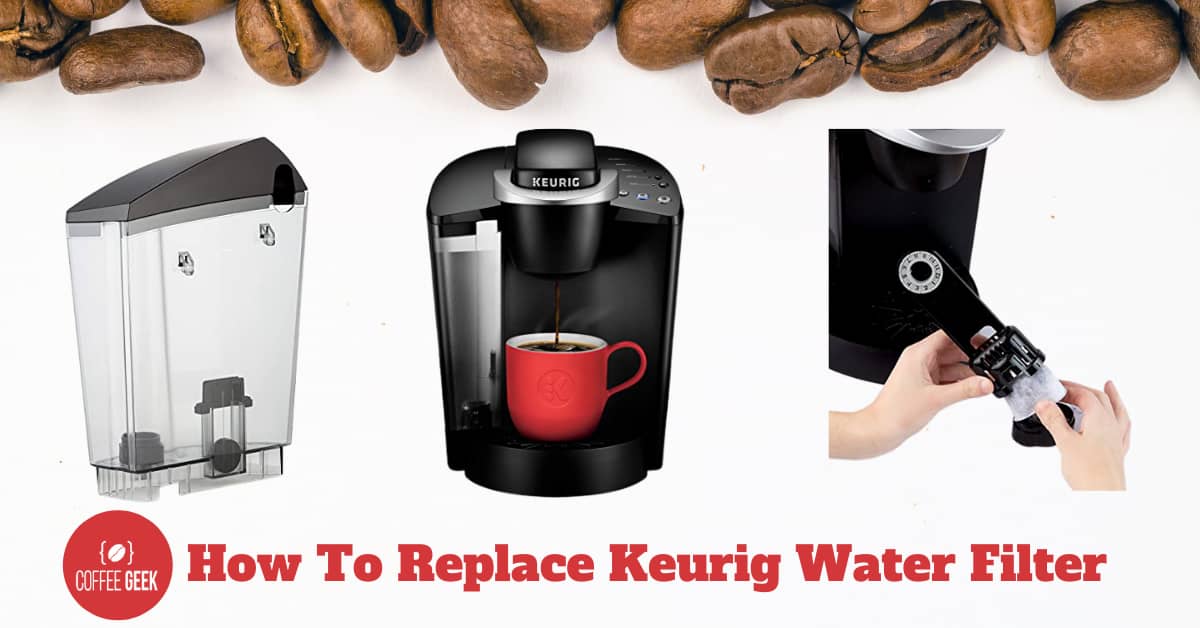 How To Replace A Keurig Water Filter & 6 Maintenance tips
Another hack: soak it in vinegar. Okay, that does remove mineral buildup, but it also destroys the charcoal’s ability to filter. So you get clean-looking, but chemically weird, water. Congratulations, you’ve invented artisan vinegar-coffee.
The absolute cheapest option? Replace it every single month if you drink more than two cups a day. It costs about $5. That’s less than one fancy latte. Spend the money, and your taste buds will throw you a parade.
When You Can Just Skip It
Here’s a shocking admission: you don’t actually need the filter. Keurig machines work fine with plain tap water (assuming your tap isn’t from a rusty garden hose). The filter is purely for taste and scale reduction.
If you’re a purist who uses distilled or filtered water from your fridge pitcher, you can safely ignore the Keurig filter forever. But if you’re using municipal tap water that smells like a swimming pool, you absolutely need the filter. Otherwise, your morning coffee will taste like a YMCA diving board.
One more thing: never use the filter with a Keurig that uses the older K-Cups with the little foil lid. The needle can get clogged. That’s a whole other kind of nightmare involving pliers and tears.
The Final, Caffeinated Verdict
Set a phone calendar reminder for every two months. Write “Change Keurig Filter” on it. If you use the same day as your birthday, you’ll remember. If not, just do it when you notice your coffee tastes like disappointment and debt.
Your filter is like a tiny, disposable hero that works in silence. Treat it with respect—or at least with a modicum of attention. Your taste buds, your machine, and your future morning self will thank you.
And if you’re still reading this while sipping a cup of sludge, go change it right now. I’ll wait. Taps watch. Okay, done? Good. Now enjoy a brew that tastes like actual coffee, not a chemistry set.
You’re welcome.
