Activated Carbon Filter In Water Treatment Plant

You know that moment when you’re on a long road trip, you crack open a bottle of water, and it tastes like the plastic bottle and the dashboard had a fight? Yeah, that’s the o...
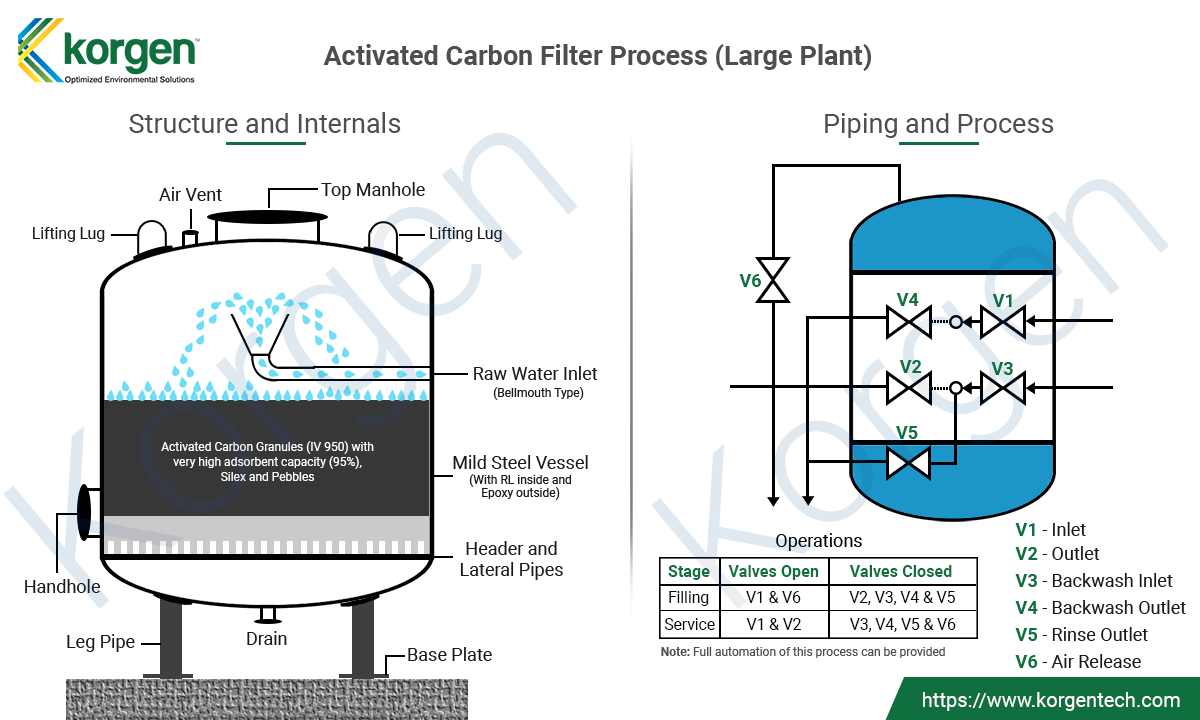
You know that moment when you’re on a long road trip, you crack open a bottle of water, and it tastes like the plastic bottle and the dashboard had a fight? Yeah, that’s the opposite of what happens inside a water treatment plant. There, a humble but mighty hero—the activated carbon filter—is working overtime to make sure your tap water doesn’t taste like yesterday’s gym bag.
Imagine a microscopic sponge that’s been through a rebellious phase, full of nooks and crannies. That’s activated carbon. It’s not just any carbon; it’s been “activated” by heat or steam, turning it into a supercharged surface area for trapping gunk. We’re talking about a square foot of it having the surface area of a football field. Try vacuuming that.
The Underground Party Crasher
Think of every weird flavor or funky smell in your water as an uninvited guest at a pool party. Chlorine? That’s the loud friend who overstays. Pesticide runoff? That’s the guy who brings a weird potato salad. Activated carbon is the bouncer who politely but firmly escorts them out. It doesn’t filter them out by size—it adsorbs them, which is science-speak for “latching on like a barnacle on a boat.”
Must Read
I once watched a plant operator test a carbon filter’s efficiency by holding a glass of treated water to his nose. He nodded, grinned, and said, “Tastes like nothing.” That’s the highest compliment in water treatment. If you can’t smell or taste anything, the carbon is doing its job. It’s like a ninja that cleans up without leaving a trace.
Why Your Fish Tank Thanks You
If you’ve ever owned a fish tank, you’ve seen activated carbon in action. That little pouch in your filter that turns gray? That’s carbon grabbing fish waste and leftover food smells. Same exact technology, just scaled down. The one at the treatment plant is basically a giant fish tank filter for your entire neighborhood. Only it doesn’t need to be swapped out every two weeks—some plants regenerate their carbon by baking it like a pizza, burning off the trapped nasties.
Here’s the funny part: people worry about the carbon itself getting into their water. Relax. The carbon is held in massive beds, like a giant sand trap, and water trickles through it. You’re not going to find charcoal bits in your morning coffee unless the plant pipes exploded. And if they did, you’d notice because your glass would look like a hipster smoothie.
The “Before” and “After” of Your Morning Drink
Picture water from a river before treatment. It’s got algae, silt, dead leaves, and maybe a hint of beaver pee (yes, that’s a real thing). After passing through sand, gravel, and then the activated carbon filter? It goes from “swamp tea” to “crystal clear” in hours. The carbon specifically targets volatile organic compounds—those are the chemicals that make your water smell like a swimming pool or a gas station.
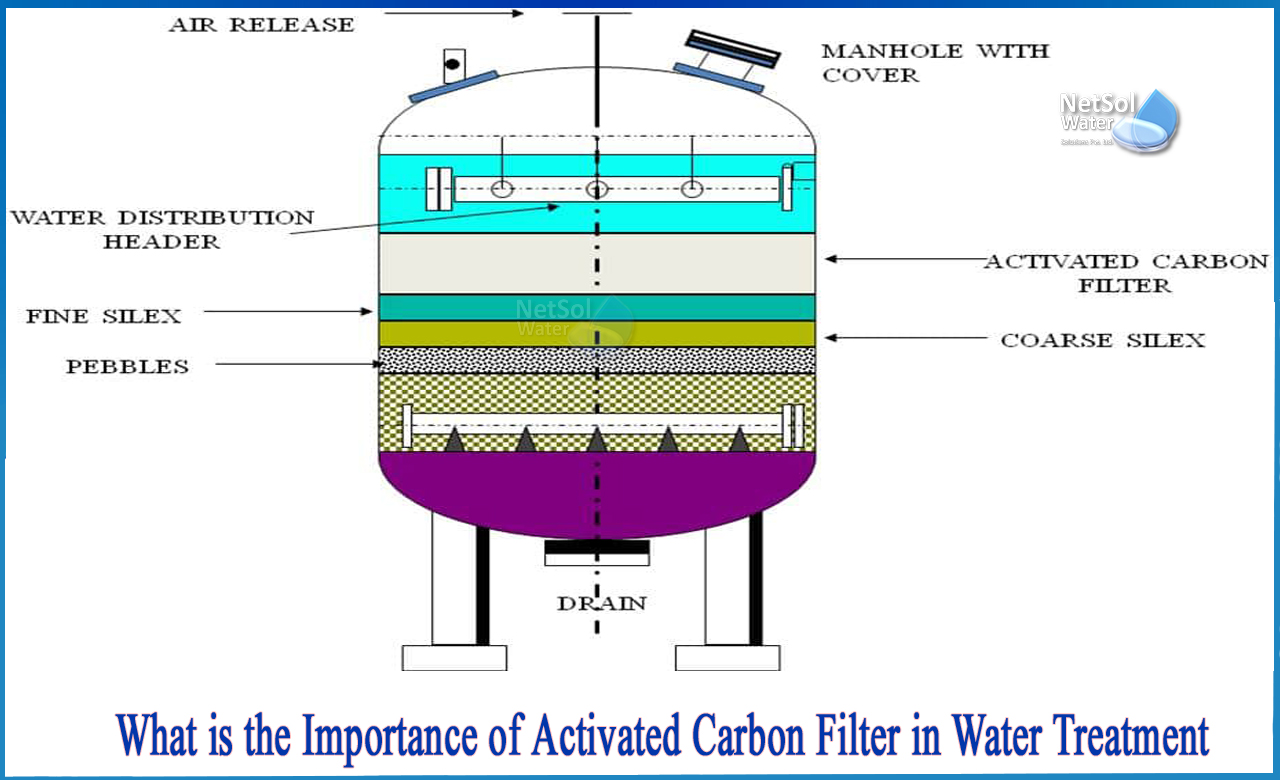 What is the importance of Activated carbon filter in water treatment
I once toured a plant where the operator poured raw river water into a jar next to the finished water. The raw water looked like weak iced tea with floating bits. The treated water looked like a diamond had a glass of water. He said, “The carbon filter is what makes you trust your tap after you’ve been drinking bottled water for years.” And he was right.
When Carbon Gets Tired
Activated carbon doesn’t last forever. After a few months or years, all those nooks and crannies get filled up with gunk—like your kitchen sponge after a month of washing greasy pans. When that happens, the plant sends it to a special facility where it’s heated to over 800 degrees Celsius. That burns off the trapped pollutants and “revives” the carbon. It’s the closest thing to a zombie resurrection for a water filter.
This is also why you shouldn’t reuse the filter in your Brita pitcher forever. That little black block eventually becomes a home for bacteria, not a hero. The big plant filters, on the other hand, get regularly cleaned and replaced so your tap water always tastes like “nothing”—which, in water world, is everything.
The Real-World Payoff
Next time you fill a glass from the sink and it tastes clean, take a moment to thank the activated carbon filter. It’s not glamorous. It doesn’t have a shiny chrome faucet. It’s just a bed of black, porous stuff that works 24/7, year-round, silently removing the taste of yesterday’s dirty rain and the leftover chemicals from your lawn.
And when you visit a city with famously good tap water—say, New York or San Francisco—you’re likely drinking water that passed through tons of this stuff. The next time someone hands you a fancy plastic bottle at a party, you can just smirk and say, “Nah, I’ve got carbon.” They’ll think you’re a health guru. You’ll know you’re just praising a very talented, very porous piece of rock.
