Are Pellets Or Crystals Better For Water Softener

So, picture this: I’m standing in the hardware aisle, feeling like a contestant on a weird home-improvement game show. In one hand, a bag of little white pellets that look lik...
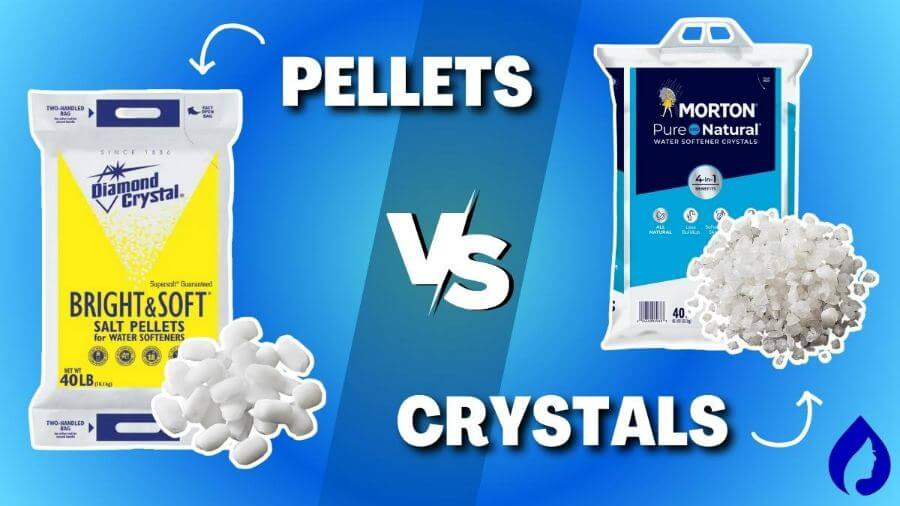
So, picture this: I’m standing in the hardware aisle, feeling like a contestant on a weird home-improvement game show. In one hand, a bag of little white pellets that look like rabbit food. In the other, a bag of bigger, jagged crystals that scream “I mean business.” My water softener was empty, and I had no clue which one to toss in. If you’ve ever been there, you know the panic is real. (Don’t worry, I didn’t pick the wrong one and flood the basement—this time.)
Here’s the deal: you’re probably asking the same question I was—are pellets or crystals better for a water softener? The short answer is that both work, but they’re not identical twins. They’re more like cousins who argue at Thanksgiving dinner. Let’s break it down without the boring science lectures, okay?
The Pellet Lowdown: Neat, But Prone to Clumping
Pellets are those compact, pillow-shaped nuggets, usually made by compacting salt. They’re smooth, uniform, and look like they belong in a fancy spa, not a grimy brine tank. Their big selling point? They dissolve slowly, which means less gunk building up at the bottom of your tank.
Must Read
But here’s the ironic twist: pellets are also the divas of the salt world. If your water softener sits in a humid basement or a damp garage, pellets can stick together like a bad batch of mashed potatoes. You end up with a solid “salt bridge” that blocks water flow, and suddenly your softener is on strike. I once had to chisel that stuff out with a screwdriver—not my finest Saturday. (Pro tip: always poke around in the tank with a broom handle to check for bridges, even with pellets.)
The Crystal Crusaders: Messy, But Hard Workers
Crystals, on the other hand, are irregular chunks that look like broken ice cubes. They’re usually made from mined rock salt, not compacted. Their biggest flex? They dissolve faster than pellets, which means your brine tank stays active, especially in colder water. If you have a high-efficiency softener or a smaller tank, crystals can be your best friend.
Downside alert: crystals can leave a muddy sludge at the bottom of the tank. That sludge is just insoluble stuff (like dirt and clay) that came from the earth where the salt was mined. It won’t ruin your softener, but it might require more frequent cleaning. Also, crystals are not as tidy—expect a few stray chunks on the floor when you pour them in. But hey, nobody said being a water warrior was glamorous.
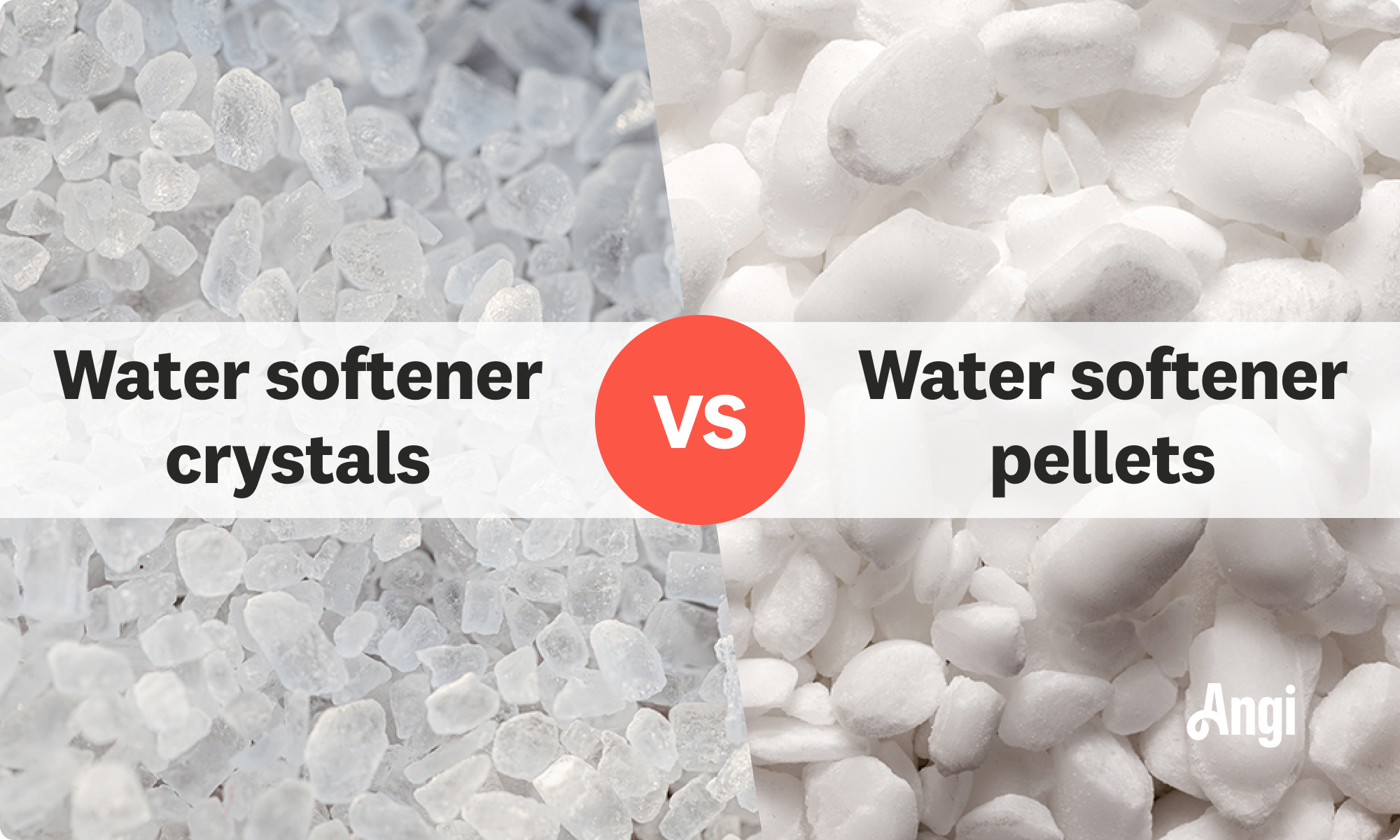 Water Softener Crystals vs. Pellets | Angi
Where’s The Real Difference? It’s All About Your Water and Your Tank
Let’s get practical. If you have hard water with iron (that gross reddish stain on your sinks), go with pellets. Many brands add resin cleaners that help flush out iron buildup from your system. Pellets are also the safer bet if your tank has tight spaces or a narrow opening—they flow more easily. For standard, moderate-hardness water, crystals do the job just fine and often cost less per bag.
But here’s the kicker: check your softener’s manual. I know, I know, nobody reads manuals. I didn’t either—until I bought a fancy digital softener that said “pellets only” in tiny print. Some high-efficiency models are designed for the slower dissolution of pellets, and using crystals can mess with the cycle timing. (Trust me, an angry water softener is a passive-aggressive appliance that will give you spotted glasses just to spite you.)
The Verdict: No Clear Winner, But One Clear Loser
So which one is “better”? Honestly, neither is universally superior. It’s like asking if a SUV or a sports car is better—it depends on the road. If you want less maintenance and cleaner tank bottoms, pick pellets. If you want faster dissolution and lower cost, pick crystals. The real loser is the salt that’s full of impurities or just cheap table salt—stay far away from that stuff.
Oh, and one last thing: don’t overthink it. I spent two weeks researching this, and my friend just threw in whatever was on sale. His water is soft, his dishes are spotless, and he doesn’t even know his softener’s brand. So grab a bag, clean your tank once a year, and go live your best, soft-water life. You’ve got this. (And if you still can’t decide, flip a coin—your softener will forgive you.)
