What's The Difference Between Hard And Soft Water

Let’s be honest: when you turn on the faucet, you probably don’t think much about what’s actually in that water. You just want it to be wet, cold, and plentiful. But there’s a...

Let’s be honest: when you turn on the faucet, you probably don’t think much about what’s actually in that water. You just want it to be wet, cold, and plentiful. But there’s a quiet war happening in your pipes, and it’s between two very different personalities: hard water and soft water.
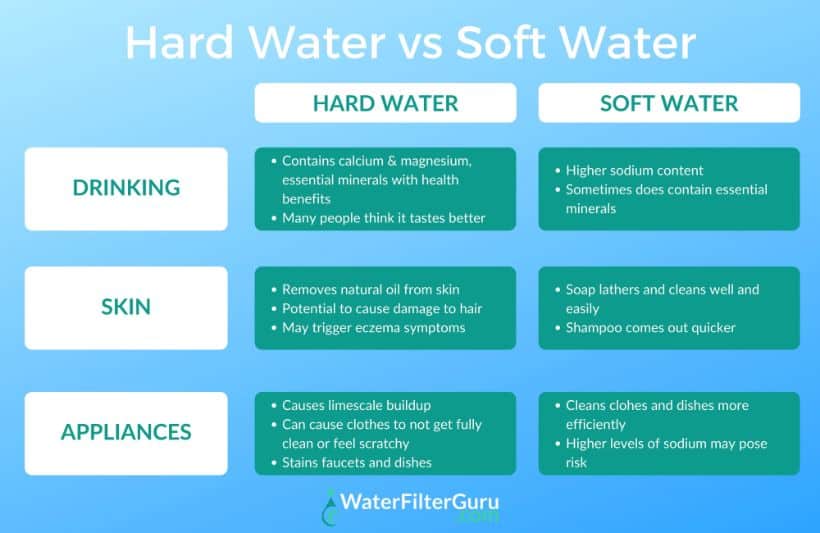
Think of hard water as that friend who shows up to a party carrying a heavy bag of minerals. It’s loaded with calcium and magnesium, which it picked up on its journey through underground rock. Soft water, on the other hand, is the minimalist friend—it’s been treated to remove those extra minerals, leaving it smooth and gentle.
How to spot hard water without a science kit
You don’t need a laboratory to figure out which kind you have. Just look at your shower glass after a few days. If it’s covered in cloudy, white spots that refuse to wipe off, you’re living with hard water.
Must Read
I once had a roommate who swore our shower was haunted because the doors were always foggy. Turns out, it wasn’t ghosts—it was limescale, the calling card of hard water. Those spots are actually dried-up mineral deposits, like tiny, stubborn snowflakes made of rock.
Another telltale sign? Soap scum. You know that ring around your bathtub that feels like waxy armor? That’s your soap reacting with the minerals in hard water. It basically creates a reluctant shield that takes forever to scrub off.
Why your skin and hair are giving you clues
Your body knows the difference, even if your brain doesn’t. After a shower with hard water, your skin might feel a little dry or tight. That’s because the minerals prevent soap from rinsing away fully, leaving a thin, sticky film behind.
Your hair also gets the memo. It can feel brittle, frizzy, or just off. It’s not your shampoo’s fault—it’s the water working against it. Soft water, by contrast, lets your soap and shampoo lather up like a dream, and you rinse clean in seconds.
I remember visiting a friend with a water softener and taking a shower there. I honestly thought I’d used a different shampoo. My hair felt like silk, and my skin didn’t need lotion afterward. It was a total “aha!” moment.
The hidden costs in your appliances
Hard water isn’t just annoying for your morning routine—it’s a bit of a bully to your appliances. Your coffee maker, dishwasher, and washing machine all have to work harder when they’re battling mineral buildup.
I once had a kettle that developed a thick, crunchy crust inside after just a few months. It looked like a mini coral reef. That’s the kind of stuff that shortens the life of your machines, costing you real money over time.
Soft water extends the life of everything it touches. Less scale means your pipes stay clearer, your water heater runs more efficiently, and you won’t need to replace your dishwasher as soon. It’s like giving your home a gentle, mineral-free spa treatment.
The taste test: can you really tell?
Here’s the fun part: you can actually taste the difference. Hard water often has a slightly metallic or chalky flavor. It’s not bad, it’s just… present. Soft water tastes cleaner and smoother, almost like bottled water from a mountain spring.
 Difference In Hard Water And Soft Water | Explora Madeira
Pour yourself a glass of tap water from a hard-water area, then take a sip of soft water side by side. Most people notice that soft water feels “softer” on the tongue. It’s subtle, but once you notice it, you won’t un-notice it.
That said, some folks actually prefer the minerally taste of hard water. It’s like preferring a hearty stout over a light lager. No judgment here—just personal taste.
Is one better for your health?
This is the big question, and the answer is a gentle shrug. Hard water has calcium and magnesium, which are good for your bones. So in a way, you’re getting a tiny mineral supplement with every glass.
Soft water, especially if it’s been through an ion-exchange system, contains extra sodium. The amount is usually very small—like a pinch of salt in a swimming pool—but if you’re on a strict low-sodium diet, it’s worth checking.
For most of us, the health difference is negligible. The real choice comes down to convenience, comfort, and how much you like scrubbing shower doors. It’s not about one being dangerous and the other being perfect.
A little story to wrap it up
My grandmother had hard water her whole life. She called her kettle’s limescale “the crust of character.” She scrubbed it with vinegar once a month and thought nothing of it. For her, soft water felt “slippery” and wrong.
Meanwhile, my cousin bought a water softener last year and swears it changed her life. She sends me texts like, “My dishes are shiny. This is true happiness.” They’re both right. It’s a matter of what makes your daily life easier.
So, what’s the difference between hard and soft water? It’s basically the difference between a rugged, mineral-rich hike and a smooth, filtered swim. Both get you clean, but one leaves fewer rocks in your path.
If you’re curious about your own water, grab a cheap test strip at the hardware store. It takes ten seconds and might explain why your skin feels cranky. And hey, if nothing else, you’ll finally know why your shower glass looks like a frosted window.
Your water has a personality. Get to know it. Your coffee maker—and your hair—will thank you.
