Reverse Osmosis Whole House Water Filtration System

Let’s be honest: tap water is kind of a mystery in most homes. You fill up your glass, and you don’t really know what’s in there besides the “water” part. Maybe you catch a wh...

Let’s be honest: tap water is kind of a mystery in most homes. You fill up your glass, and you don’t really know what’s in there besides the “water” part. Maybe you catch a whiff of chlorine when you take a hot shower. Or you notice those stubborn white spots on your coffee pot that no amount of scrubbing seems to fix.
That’s where a reverse osmosis whole house water filtration system comes in, like a superhero for your plumbing. Imagine it as a bouncer at an exclusive club, but instead of checking IDs, it stops almost everything except pure water molecules. We’re talking about a serious upgrade from the little pitcher in your fridge.
What’s the big deal about whole house?
You might have seen those under-sink reverse osmosis systems that give you a separate little faucet for drinking water. That’s great for your glass of water, sure. But what about your skin? Your hair? Your washing machine? A whole house system means every single drop of water that enters your home gets the royal treatment—from the kitchen sink to the toilet bowl.
Must Read
Think of it like this: a point-of-use filter is like wearing a raincoat on a drizzly day. A whole house system is like having a clear dome over your entire house. No rain gets through anywhere. Your shower head won’t clog up with scale. Your dishwasher won’t leave weird film on your plates. It’s total water peace of mind.
The shower story that changed my mind
I remember visiting a friend who had just installed one of these systems. She told me to smell her towel. I felt awkward, but I did it. It smelled like nothing. That might sound boring, but if you live with hard water, you know the “gym sock” smell that lingers even on clean towels.
That zero-smell thing happens because there’s no mineral buildup or bacteria food left in the water. She explained that her hair felt “squeaky clean” without needing a ton of conditioner. It’s like the water itself stopped fighting against her shampoo. And honestly, her skin looked softer—she called it the “wrinkle-dew effect,” and I laughed, but I got it.
How does it actually work? (The simple version)
You don’t need to be a science nerd to appreciate this. Picture a very, very fine filter—so fine that it practically pushes water through a membrane with holes smaller than a germ. That’s reverse osmosis. It uses household water pressure to force water through that membrane, leaving behind nasties like lead, chlorine, fluoride, pesticides, and even some viruses.
Now, here’s the whole house twist: before that super-fine membrane, the system usually includes pre-filters that catch bigger stuff like sand and rust. It’s like having a security line at the airport: first you dump your big metal items in a bin, then you walk through the scanner. Only the purest water gets to stay on the plane.
Whole house systems often add a final remineralization step, too. This puts back a tiny bit of calcium and magnesium so your water doesn’t taste “dead” or flat. It’s like giving water its soul back after it’s been purified.
Why should you care? (Let’s get practical)
Here is the part that gets my wallet talking: your appliances. Hard water and contaminants are basically appliance assassins. Your water heater has to work harder because scale coats the heating element. Your coffee maker dies three years early. Your ice maker gets clogged with weird gunk.
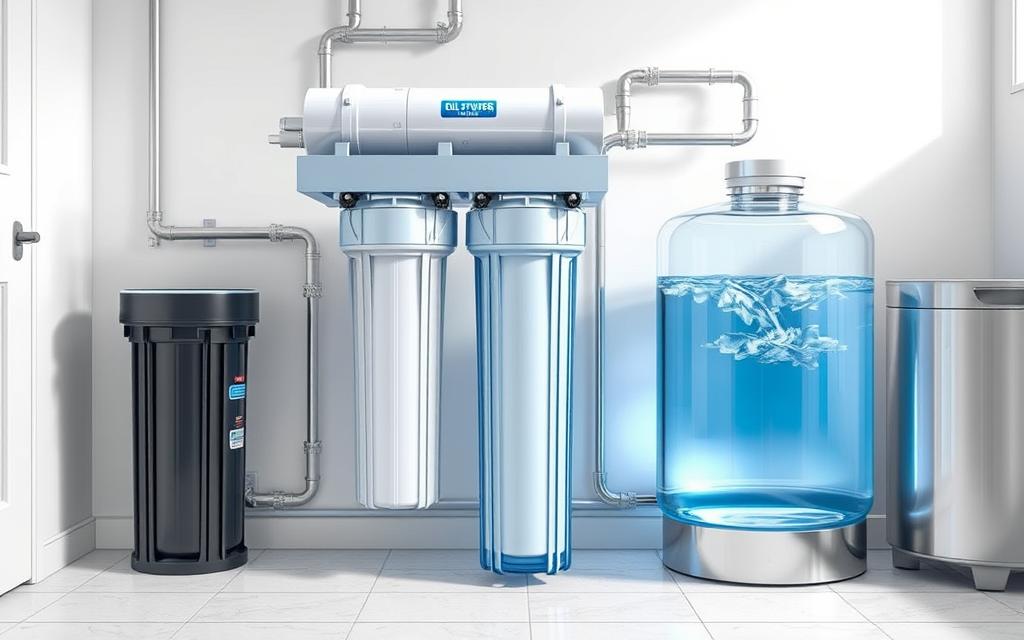 Best Whole House Reverse Osmosis Water Filter Guide
A whole house RO system can extend the life of your dishwasher, washing machine, and water heater by years. You’re not just buying better tasting water; you’re buying fewer repair calls. And let’s be real, nobody wants to spend a Saturday afternoon wrestling with a scale-encrusted showerhead.
Plus, think about the plastic bottle savings. When your tap water tastes like premium spring water from a mountain creek, you stop buying cases of plastic bottles. That’s less plastic in the landfill and more cash in your pocket. It’s a win-win that even the recycling fairy approves of.
The catch? (There’s always a catch)
Okay, I won’t sugarcoat it. Whole house reverse osmosis systems are not cheap and they do waste some water during the filtration process (usually about 3-4 gallons for every gallon of clean water). They also need professional installation because they tap into your main water line.
But here’s the thing: modern systems are getting much more efficient. Some have “permeate pumps” that reduce water waste. And honestly, compare the cost to buying bottled water for a family of four for ten years? It pays for itself. Plus, you get that smug feeling of turning on any tap in your house and knowing you’re drinking the cleanest, best-tasting water on the block.
Is it overkill for your home?
If you live in an area with very high-quality municipal water and you don’t notice any strange tastes or smells, you might not need it. But if you’ve ever hesitated before filling a glass from the sink, or if your skin feels dry after a shower, it’s worth a look.
Talk to a local water specialist. Get your water tested. It’s often free, and you might be shocked by what’s hiding in there. One friend of mine tested theirs and found trace amounts of a medication that someone in their city had flushed down the toilet. That’s the kind of reality check that makes a whole house RO system feel less like a luxury and more like a necessity.
So here’s my take: a reverse osmosis whole house system turns your home into a water sanctuary. It protects your pipes, your skin, your appliances, and your peace of mind. And every time you take a sip, you’ll smile knowing the bouncer at the door is doing a great job. Cheers to that.
