Difference Between Distilled And Reverse Osmosis Water

Let’s be real: water is having a moment. Between the fancy glass bottles, the viral hydration challenges, and your cousin’s new countertop filter, it’s easy to feel like you n...
Let’s be real: water is having a moment. Between the fancy glass bottles, the viral hydration challenges, and your cousin’s new countertop filter, it’s easy to feel like you need a science degree just to take a sip. But two names keep popping up at every dinner party and wellness chat—distilled and reverse osmosis water. They sound like lab equipment, but they’re actually the quiet heroes (or villains) of your morning coffee and your skin care routine.
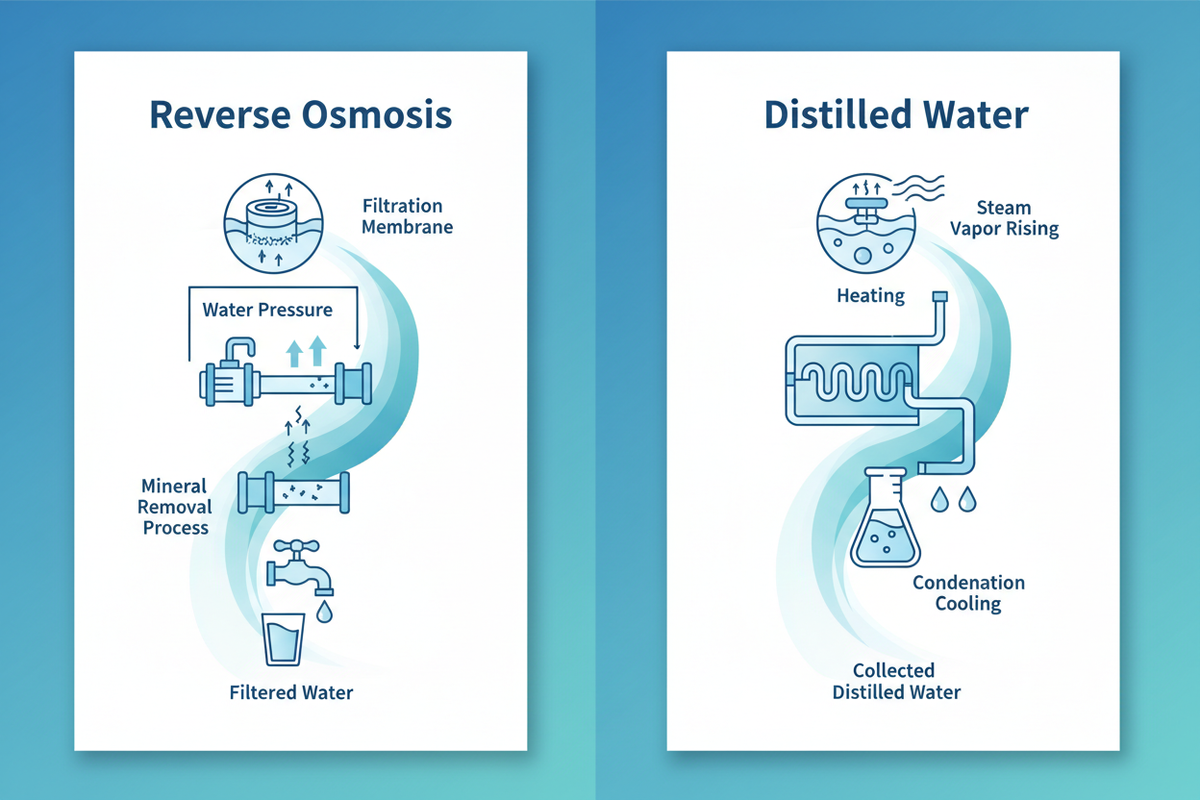
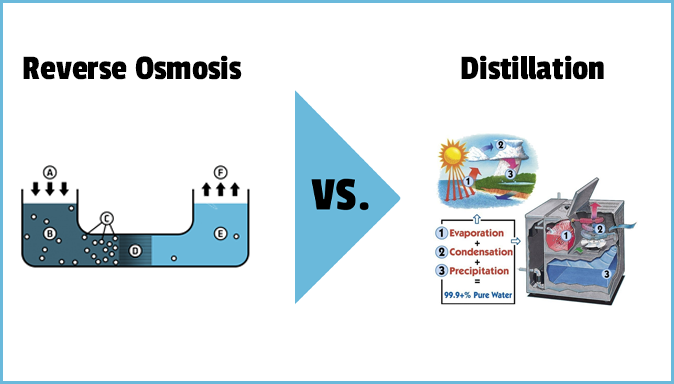
So, what’s the deal? Both methods strip water down to its purest form, but they take different roads to get there. Think of them as the minimalist and the perfectionist of the water world. One boils and steams, the other squeezes through a high-pressure membrane. And trust me, the results taste—and behave—very differently.
The Boiling Point: Distilled Water
Distilled water is the old-school classic, the grandma’s recipe of purification. You boil water until it turns to steam, then collect the steam as it cools back into liquid. It’s like a spa day for H2O—everything that isn’t water (minerals, bacteria, that faint taste of tap) gets left behind in the pot.
Must Read
Fun fact: This process is so thorough that distilled water is used in medical devices and car batteries. Yes, the same water that keeps your iron from spitting is the one your kidney dialysis machine trusts. It’s the purest water you can make at home without a nuclear reactor.
But here’s the twist: distilled water is also a little boring. It’s flat, almost lifeless, because removing minerals like calcium and magnesium also removes the subtle flavors that make water taste “refreshing.” That’s why coffee snobs often avoid it—your espresso will taste like a wet sock.
When to use it (and when to skip it)
Distilled water is a rockstar for your humidifier and CPAP machine. No mineral buildup, no white dust, no nasty gunk. It’s also perfect for mixing baby formula or watering your picky orchids. But drinking it daily? Not the best move. Your body actually needs those trace minerals, and drinking too much pure H2O can leach electrolytes from your cells. Team moderation, always.
Plus, that bottled “distilled” water you grab at the gas station? It’s been sitting in plastic for months. The taste is… let’s call it memorable. Don’t expect a crisp mountain stream—expect a blank canvas.
The Pressure Play: Reverse Osmosis Water
Reverse osmosis (RO) is the tech-forward cousin, the one who brings a sleek filter to the party and then explains how it works. It uses a semi-permeable membrane and high water pressure to shove water through, trapping contaminants like lead, chlorine, arsenic, and even microplastics. It’s like a velvet rope for molecules.
RO systems are everywhere now—under your sink, in fancy office breakrooms, even in those Instagram-worthy water stations at the gym. The result? Water that’s incredibly clean, but not totally empty. It still retains some beneficial minerals, depending on the system. Many units add a remineralization stage, giving you the best of both worlds: purity plus a little zing.
Fun fact: You’ve probably drunk reverse osmosis water without knowing it. Most bottled water brands (think Dasani, Aquafina) use RO as a key step. They then add back a tiny pinch of minerals for taste. So that “pure” bottle you bought? It’s been engineered.
The real-world trade-off
RO water is great for everyday drinking and cooking—especially if your tap water tastes like a swimming pool or a rusty pipe. It shines in coffee brewing, letting the bean’s true flavors sing without chlorine interference. Many tea lovers also swear by it for a smoother cup.
 Reverse Osmosis versus Distilled Water - My Pure Water
But here’s the catch: RO systems waste water. For every gallon of clean water, they can send 2–4 gallons down the drain. That’s a bummer for your water bill and the planet. Also, the membrane needs regular replacement, or you’ll end up with something closer to dirty juice than pure H2O.
Plus, if you’re on a zero-waste vibe, the plastic filters can pile up. Some companies now offer reusable cartridges, so do your homework before impulse-buying that sleek under-counter unit.
Head-to-Head: Which One Wins Your Kitchen?
Let’s settle it with some cultural shorthand. Distilled water is like minimalist Scandinavian design—beautifully simple, but maybe too sterile for daily life. Reverse osmosis is like a well-curated capsule wardrobe—practical, stylish, and suited for most occasions, but not cheap.
If you’re a gardener or health obsessive with a humidifier, distilled is your friend. If you’re a home cook or iced tea fanatic, RO is the upgrade your cabinets deserve. For the average person? A solid carbon filter pitcher is often enough. But if you’re going to invest, RO wins for versatility.
One pro tip: Never use distilled water in your espresso machine. It can cause corrosion because it’s too “hungry” for minerals. RO water is safer, but check your machine’s manual. Yes, that’s a thing.
Fun Fact: The Great Taste Test
Here’s a party trick: Fill three identical glasses—one with tap, one with distilled, one with RO water. Ask friends to rank them. Most people pick RO as the best, tap as “acceptable,” and distilled as “weirdly empty.” Why? Because our tongues are wired to expect a tiny mineral crunch. Distilled water feels like a lie.
Also, in the world of cocktails, RO water is the bartender’s secret weapon. The clarity of ice cubes matters, and RO cubes are crystal-clear with no weird aftertaste. Your next Negroni? Thank the filter.
The Bigger Picture: A Sip of Perspective
In the end, choosing between distilled and reverse osmosis water is less about purity and more about intention. Are you trying to protect your appliances, your plants, or your palate? Distilled is a specialist tool—brilliant for specific jobs, but a bit antisocial. RO is the multi-tasker, fitting into daily life with grace and a few quirks.
But here’s what I’ve learned after testing both for months: Water doesn’t have to be perfect to be good. A glass of slightly mineral-rich tap, filtered through a basic pitcher, shared with a friend after a long walk—that’s often the most refreshing thing of all. So go ahead, geek out on the science, then pour yourself something that makes you happy. And maybe laugh at the fact that we’re all just chasing the same thing: a drink that feels like a hug.
