What Is The Difference Between Distilled And Filtered Water

You’re standing in the grocery aisle, hand hovering between a sleek bottle of distilled water and a plastic jug labelled “filtered.” It’s a quiet little war of purification, a...
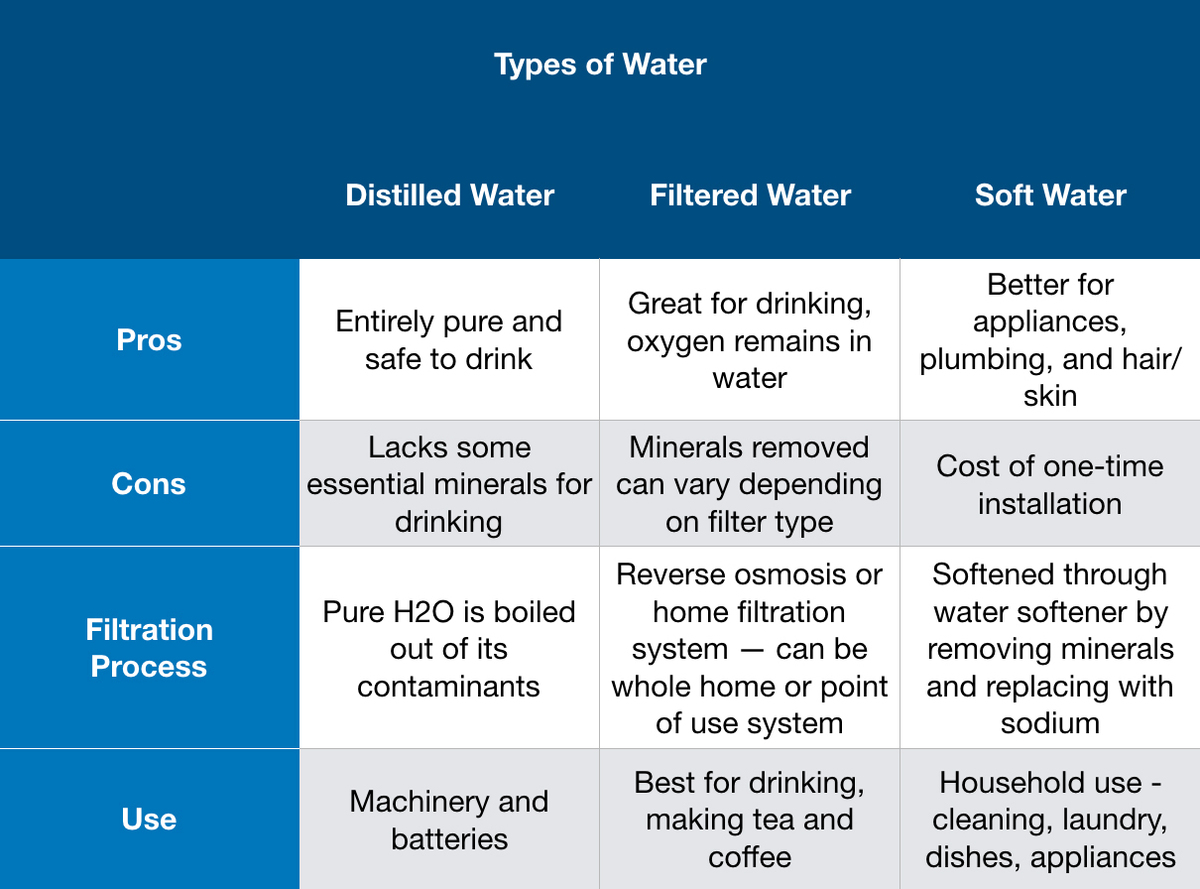
You’re standing in the grocery aisle, hand hovering between a sleek bottle of distilled water and a plastic jug labelled “filtered.” It’s a quiet little war of purification, and honestly, it feels like choosing between a spa treatment and a good deep breath. Let’s settle this once and for all, with a bit of science, a dash of culture, and zero pretension.
The Quick & Dirty Breakdown
Distilled water is the purist’s purist. It’s boiled into steam, then cooled back into liquid, leaving behind almost everything—minerals, bacteria, even that hint of tap-water personality. Filtered water, on the other hand, is more of a bouncer at a VIP club: it lets the good stuff (like some minerals) stay, while kicking out chlorine, sediment, and odd tastes. Think of distillation as a total reboot, and filtration as a gentle edit.
A fun little fact: astronauts on the International Space Station drink distilled water made from their own recycled urine. Yes, really. That’s how thoroughly distillation strips things down. Meanwhile, your average Brita filter is basically a carbon-based bouncer for your kitchen counter.
Must Read
What’s Actually in Your Glass?
Distilled water is pure H₂O, with a total dissolved solids (TDS) count near zero. It’s the blank canvas of hydration. Filtered water, depending on the system (carbon, reverse osmosis, ceramic), retains some calcium, magnesium, and potassium—those tiny minerals that give water a “mouthfeel” and actually taste like something. Yes, water has a flavor profile.
Here’s the kicker: if you’re a coffee snob or a tea purist, filtered water is your best friend. The minerals help extraction, giving you a rounder, brighter cup. Distilled water makes coffee taste flat—like a joke with no punchline. But if you’re using a CPAP machine, a steam iron, or a car battery, distilled is non-negotiable. Mineral buildup kills appliances.
A Cultural Detour: The World’s Water Habits
In Tokyo, people often buy filtered water from vending machines that tweak pH levels—it’s a lifestyle choice, like choosing a yoga mat. In Mexico City, many families rely on filtered garrafones (big jugs) as a daily ritual, and never drink tap. Meanwhile, in parts of rural India, simple cloth filtration is used—a low-tech reminder that “filtered” can mean many things. Distillation, by contrast, feels almost clinical; it’s the water of labs, hospitals, and survivalists who own a solar still for the apocalypse. Which tribe are you in?
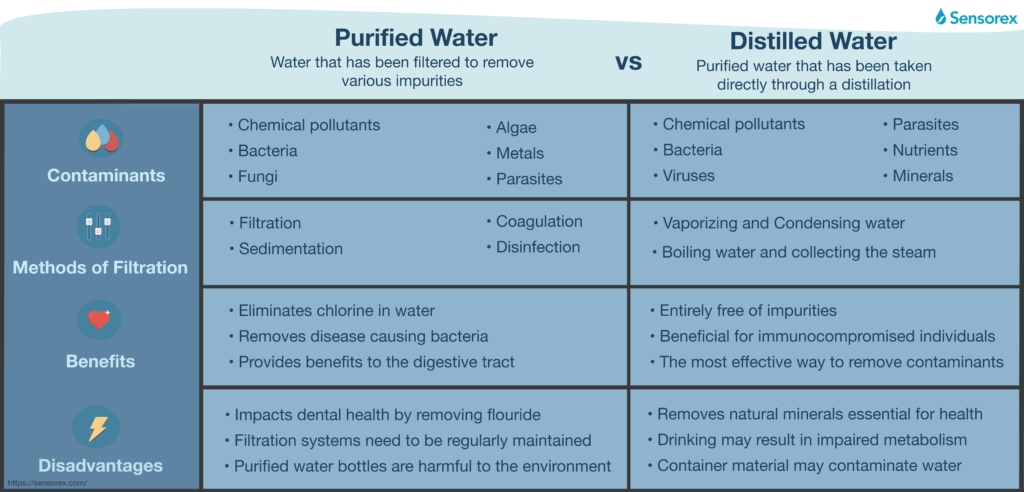 What’s the Difference Between Purified vs. Distilled Water? - Sensorex
Practical Tips for Real Life
Tip one: If you’re hydrating all day, filtered water is usually better. Your body actually likes those bonus minerals, and drinking pure distilled water for weeks can leach electrolytes from your system. It’s not dangerous, but it’s like eating plain white rice every meal—functional, but missing something.
Tip two: Use distilled water for your houseplants that are drama queens (ferns, calatheas, carnivorous plants). They hate the chlorine and fluoride found in tap, even filtered tap. But don’t use distilled for your orchid if you want blooms—it’s too sterile. Plants are fussy.
Tip three: Taste test. Fill two glasses—one distilled, one filtered—and close your eyes. Distilled tastes like a memory of rain. Filtered tastes like a clean river. Which one makes you take a second sip? That’s your answer.
The Myth-Slaying Section
Myth: Distilled water is “dead.” Nope. Water molecules are still water molecules. But it lacks the trace minerals that give filtered water its subtle complexity. Another myth: all filters are the same. They are not. A basic carbon filter removes chlorine and bad taste. A reverse osmosis filter is almost as intense as distillation, stripping out 99% of impurities—but it wastes water in the process. Pick your fighter.
 Distilled vs. Filtered Water: What's the REAL Difference? - Eco-savvy.blog
Fun fact: In the 1800s, distilled water was prescribed for cholera patients because it was sterile. Today, you can buy it for three bucks at the pharmacy. Progress is weird.
When to Choose Each (A Cheat Sheet)
Choose distilled when: You’re filling a steam iron, a humidifier, a car battery, or a CPAP machine. Also great for mixing baby formula (doctor approved) or making clear ice cubes that look like diamond chips. Choose filtered when: You’re drinking all day, making morning coffee, cooking pasta, or watering your prized Monstera plant. For everyday sipping, filtered wins on taste and mineral content.
But here’s the secret: most of us don’t need to obsess over this. Your tap water—if it’s safe and tastes okay—is often just fine with a basic filter. Distillation is a specialty tool, not a daily necessity. Unless you’re an astronaut.
Short Reflection: The Water You Choose Is the Life You Live
At the end of the day, the difference between distilled and filtered is less about chemistry and more about intention. Distilled water is the monk in the mountains—pure, solitary, detached. Filtered water is the friend at the coffee shop—engaging, supportive, just a little bit mineral-rich. Which one you reach for says something about how you want to move through your day. Water is the most ordinary luxury we have. So take a sip, and enjoy the fact that you get to choose. That’s a privilege worth tasting.
