What Is The Difference Between Hard Water And Soft Water

Let’s be honest, for most of us, water is just water. You turn on the tap, it comes out clear, and you go about your day. But if you’ve ever had a shower that left you feeling...

Let’s be honest, for most of us, water is just water. You turn on the tap, it comes out clear, and you go about your day. But if you’ve ever had a shower that left you feeling like you’d been rubbed down with sandpaper, or you’re constantly scrubbing a weird white crust off your kettle, you’ve already met the real difference between hard and soft water. It’s a tale of two liquids that look identical but act like complete opposites, like that calm cousin and the chaotic one at a family reunion.
The Great Scale-Off: What’s Actually in Your Glass?
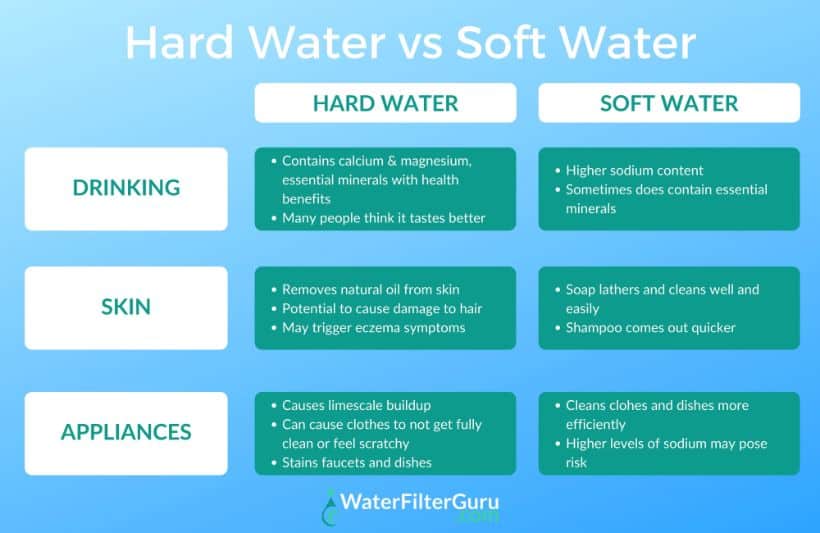
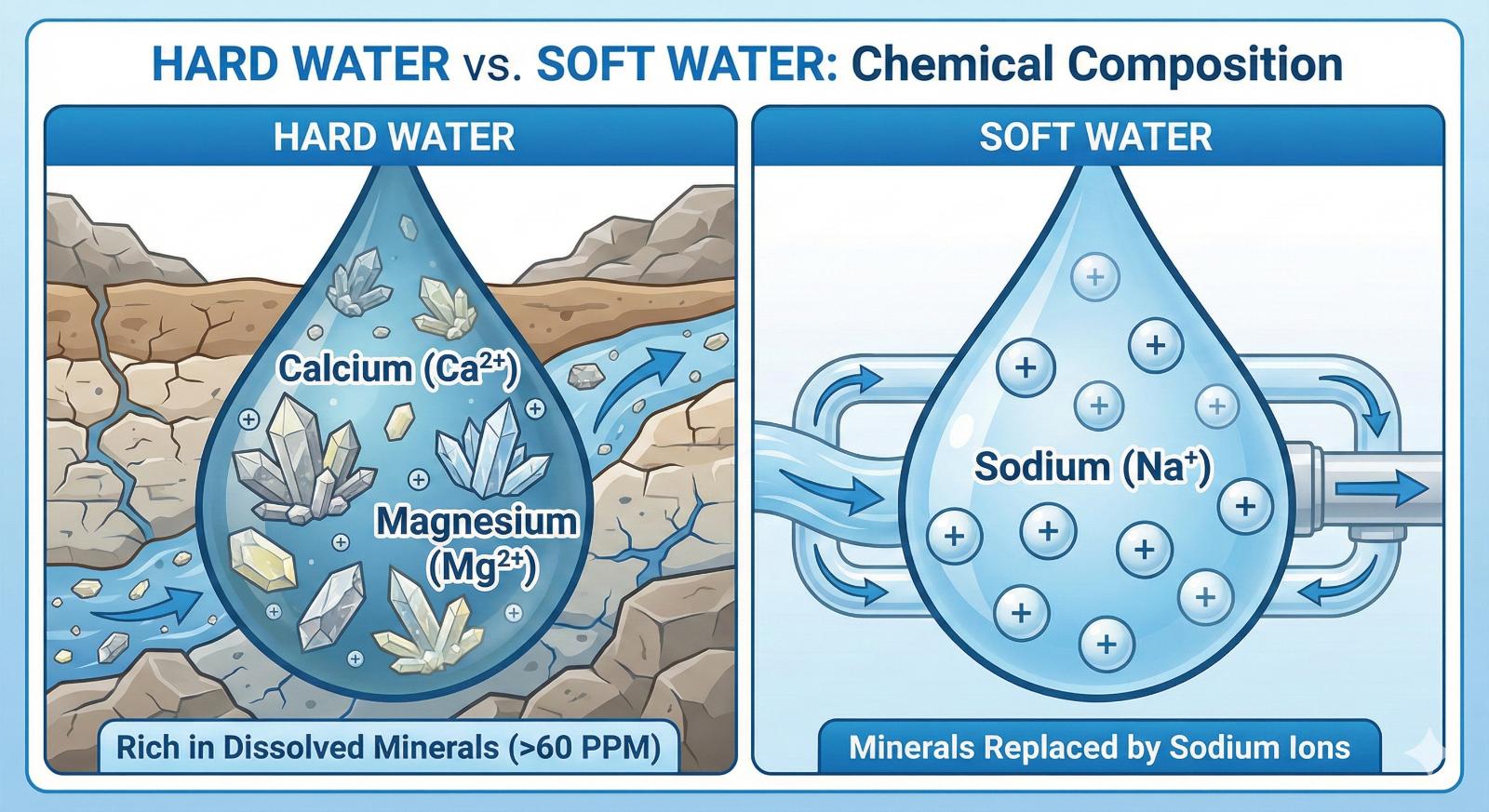
Hard water isn’t tough because it lifts weights. It’s tough because it’s loaded with dissolved minerals—mostly calcium and magnesium. Think of it as water that took a detour through a pile of chalk and rocks before reaching your sink.
Soft water, on the other hand, is the minimalist’s choice. It has had those minerals stripped away, usually replaced with a tiny bit of sodium. It’s like water that went to a fancy spa and came back feeling clean, smooth, and a little bit salty (in the good way).
Must Read
Here’s the crazy part: you can’t tell them apart just by looking. They’re both clear and wet, but your soap knows the difference immediately. It’s like trying to keep a secret from your best friend—the evidence shows up fast.
Soap: The Unwilling Detective
Ever squirt liquid soap into your palm and watch it refuse to lather? That’s hard water fighting back. Because of those mineral hitchhikers, soap doesn’t bubble up easily. Instead, it forms a sticky, gray gunk called soap scum—the stuff that leaves a film on your skin and a ring around your bathtub like a crime scene.
With soft water, soap goes wild. A tiny dab creates a mountain of fluffy suds. You feel like you’re in a car commercial, lathering up with a single bubble. It’s almost too efficient—you’ll be saying, “I swear, I only used a pea-sized amount!” and your shower is already a foam party.
Your Hair and Skin: The True Test Subjects
Here’s where the rubber meets the road—or rather, where the shampoo meets your scalp. After a hard water shower, your hair might feel stiff, tangled, or like it has a waxy coating. It’s not your imagination; the minerals are basically sticking to your hair, making it look dull and feel crunchy.
A soft water shower is the polar opposite. You step out feeling like you’ve been wrapped in silk. Your skin doesn’t feel dry or tight; it feels like you just applied lotion from the tap. It’s honestly a little unsettling at first—you might keep rinsing because you can’t believe the soap is actually gone.
 Hard Water And Soft Water Difference | Explora Madeira
People with dry skin or eczema often become secret fans of soft water. It’s like your skin finally gets a break. But if you’re used to hard water, the first soft water shower makes you feel too slippery, like a fish that just escaped a net.
The Appliance Wars: Kettle, Dishwasher, and Washing Machine
Hard water is the archenemy of your kitchen appliances. That white, chalky buildup in your kettle? That’s limescale—the solid remains of the minerals that decided to stay behind after the water boiled away. It’s like your kettle is slowly turning into a stalactite.
Your dishwasher isn’t safe either. Hard water leaves white spots on your glasses that look like a weird disease. You try to polish them dry with a cloth, but it’s a losing battle. Meanwhile, your washing machine gets clogged, and your clothes come out feeling stiff and faded, as if they’ve been doing manual labor.
Soft water is basically a superhero for your appliances. No scale, no spots, no buildup. Your coffee maker works faster, your dishwasher makes glasses look brand new, and your washing machine lives a long, happy life. It’s like putting your house on a low-maintenance diet.
The Taste Test: A Matter of Preference
Some people swear they can taste the difference. Hard water often has a distinct, “mineral-y” flavor—like you’re drinking from a mountain stream (or a rock, depending on your perspective). Many people actually love this taste, claiming it’s more refreshing or natural.
 Is Soft Water Better for Your Hair? Hard vs Soft Water Compared (2026)
Soft water tastes… well, softer. It can be slightly salty, almost flat, like rainwater. Some folks say it tastes like it came from a bottle that’s been left open for too long. It’s a divisive issue—I’ve seen couples argue about it at the dinner table, saying “Your water tastes weird!” and “No, your water tastes like chalk!”
If you’re really curious, grab two glasses—one from a friend with hard water, one from a soft water home. Do a blind taste test with your eyes closed. Just be prepared for a dramatic reaction, because water politics can get surprisingly heated.
Which One Is “Better”? The Twist No One Expects
You might think soft water wins by a landslide—but hold your horses. Soft water is great for your skin, hair, and appliances, but it’s not perfect. Remember the calcium and magnesium that hard water has? Those are actually essential minerals your body needs. Hard water can contribute to your daily intake of calcium, which is a nice plus for your bones.
Also, soft water contains more sodium. If you’re on a strict low-sodium diet, you might want to think twice. Plus, many people find that soft water doesn’t rinse off soap as thoroughly, leaving a slight, slippery residue that feels like you never fully dried off.
So the real answer? It depends on what you value. If you hate scrubbing your shower door and want baby-smooth hair, soft water is your best friend. If you enjoy the taste of minerals and don’t mind a little limescale, hard water is perfectly fine. It’s like choosing between a sports car and a pickup truck—each one will get you there, but the ride feels completely different.
At the end of the day, the biggest difference is simply how much work you’re willing to do. Hard water asks you to clean a bit more. Soft water asks you to get used to feeling like you’ve been greased up. Either way, we’re all just trying to wash our hands and get on with life—preferably without a film of scum or a slippery floor.
