What Is Acceptable Level Of Arsenic In Drinking Water

You’re standing in your kitchen, filling a glass from the tap, when a headline flashes across your phone: “Arsenic in Your Water?” Cue the eyebrow raise. But before you panic...

You’re standing in your kitchen, filling a glass from the tap, when a headline flashes across your phone: “Arsenic in Your Water?” Cue the eyebrow raise. But before you panic and switch to bottled water forever, let’s get real about what an acceptable level of arsenic in drinking water actually means. It’s less about a chemistry test and more about a practical, everyday balance—the kind we all crave in our wellness routines.
The Magic Number: 10 Parts Per Billion
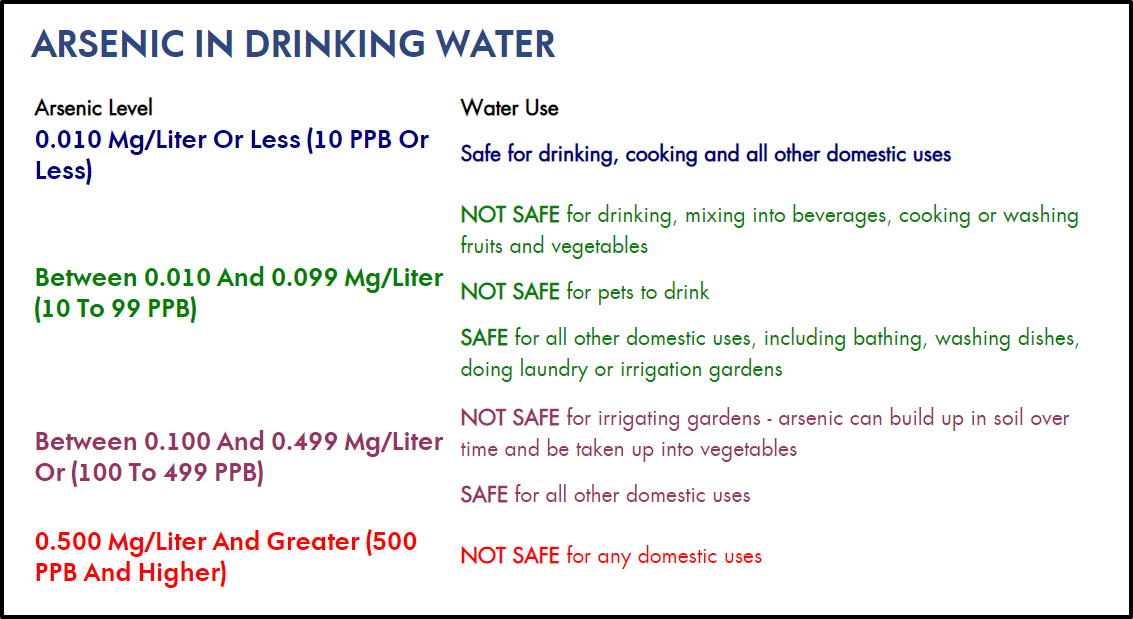
Here’s the headline you actually need: The U.S. Environmental Protection Agency (EPA) sets the maximum contaminant level for arsenic in public drinking water at 10 parts per billion (ppb). Think of that as one drop of arsenic in an Olympic-sized swimming pool. It’s a tiny, almost invisible number, but it’s the line between “safe to sip” and “let’s check the filter.”
Why 10? Because science shows that below this level, the health risks—think long-term cancer and skin issues—drop to what regulators call negligible. It’s the sweet spot where safety meets reality, since completely removing arsenic is expensive and nearly impossible in nature.
Must Read
The History Surprise: Arsenic Was a Beauty Secret
Here’s a fun fact that’ll make you blink: In the Victorian era, women actually ate small amounts of arsenic to get a “peach-bloom” complexion. It gave their skin a pale, luminous glow—before it slowly poisoned them. Today’s standards are a massive upgrade from that era of dangerous glamour.
Another cultural gem: In parts of Bangladesh and West Bengal, natural arsenic in groundwater has been called the “largest mass poisoning in history.” That’s why our 10 ppb standard feels less like a bureaucratic rule and more like a life-saving benchmark. It’s a quiet victory of modern science over old-school ignorance.
Your Tap vs. The World
Not all water is equal. Private well water, for example, isn’t regulated by the EPA—that’s on you. If you’re a homeowner with a well, you’re the CEO of your water quality, and the acceptable level is still the same 10 ppb. But here’s the twist: Some regions have naturally higher arsenic, like parts of the Southwest and New England, where rocks leach the mineral into groundwater.
Meanwhile, bottled water falls under the FDA, which also uses the 10 ppb limit—so that fancy glass bottle isn’t a magic shield. A 2020 study even found that some brands tested above the limit in trace amounts. It’s a reminder that rules are only as good as enforcement, and your own awareness is your best filter.
 Arsenic contamination in Utah's water — Longevity Water Systems
Practical Tips: Filter Your Way to Peace
Want to stress less? Get a certified filter. Look for ones marked “NSF/ANSI Standard 53” for arsenic removal—these things can cut levels from 50 ppb down to below 5. Reverse osmosis systems are the gold standard, but even a quality countertop pitcher can handle it if you’re on a budget.
And don’t obsess over zero. A 2023 report from the World Health Organization notes that “the absence of risk is not a realistic goal.” Instead, aim for low and steady. Think of it like sunscreen: you can’t avoid the sun completely, but you can manage your exposure. Same logic for your tap water.
One more pro tip: Let your water run for 30 seconds before drinking if it sat in pipes for hours. This flushes out stale water that might have picked up metals from plumbing. It’s a tiny ritual as soothing as your morning pour-over coffee.
The Fun Side of a Serious Topic
Did you know that Napoleon might have been slowly poisoned by arsenic? Wallpaper in his era was dyed with a green pigment called Scheele’s Green, which released arsenic dust when damp. His famous stomach aches? Could’ve been a bad interior design choice. Lesson: What you can’t see can still matter—whether it’s 200-year-old wallpaper or today’s water supply.
 A Perak town has poison in its water. So why is the Health Ministry
Another light bit: In tiny doses, arsenic used to be prescribed for everything from malaria to skin conditions. It’s a classic case of “the poison is in the dose,” a principle that rings true for much of life, from caffeine to that extra glass of wine.
When to Test and What to Do
If you’re on a public system, your water provider must send you a Consumer Confidence Report every year. Read it. Look for the arsenic line—if it’s above 10 ppb, they’ll flag it and fix it. For well owners, test annually for around $20 to $40 using a certified lab. It’s cheaper than the anxiety of guessing.
What if it’s higher, say 15 ppb? Don’t panic—that’s common in some areas. Install a point-of-use filter on your kitchen tap, and you’re good. For levels above 50 ppb, consult a pro for a whole-house system. The key is action, not alarm.
The Daily Life Reflection
At the end of the day, worrying about acceptable levels of arsenic is really about control and trust. We can’t see every molecule in our water, but we can make smart choices: test, filter, and stay informed. It’s the same gentle approach we use for sleep, stress, and sugar.
So fill your glass, take a sip, and appreciate that you live in an era where 10 parts per billion is a rule, not a rumor. Life has bigger headlines than your tap water—and now you know enough to let this one flow downstream.
