What Is A Safe Level Of Arsenic In Drinking Water

You probably don't think about arsenic often. Maybe it reminds you of a vintage mystery novel or a black-and-white film where someone sips a tainted cup of tea. But the realit...

You probably don't think about arsenic often. Maybe it reminds you of a vintage mystery novel or a black-and-white film where someone sips a tainted cup of tea. But the reality is far more mundane: arsenic can be hiding in your tap water, and it's a quiet guest at the table of daily life.
The question, then, isn’t whether it’s there. It’s how much is safe. And the answer, as with most things in the wellness world, is more nuanced than a simple number.
The Number on the Label
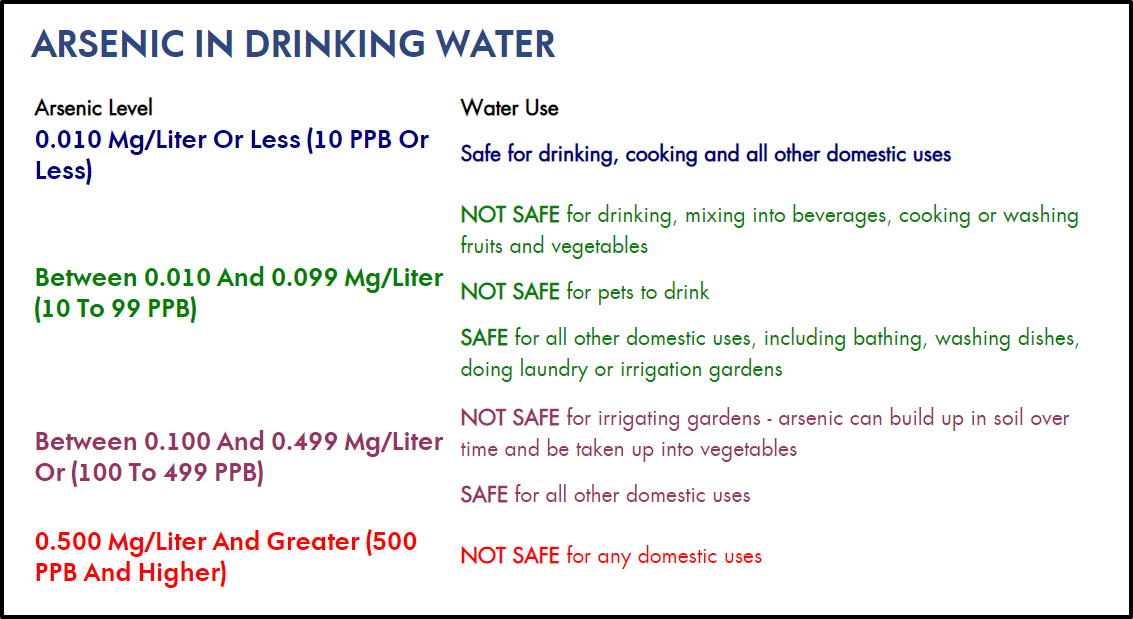
In the United States, the Environmental Protection Agency (EPA) has set a maximum contaminant level of 10 parts per billion (ppb) for arsenic in public drinking water. That’s a tiny amount—think of four drops of water in an Olympic-sized swimming pool. This standard is enforced for municipal water systems, but it’s not a guarantee of zero risk.
Must Read
Why 10 ppb? The number is a compromise between health data and practical, economic feasibility. Some studies suggest that even levels below this can pose a detectable increase in long-term cancer risk, particularly for bladder, lung, and skin cancers. It’s a “best guess” at a safe threshold, not a magical line in the sand.
For the curious: the World Health Organization sets a provisional guideline of 10 ppb as well. But many countries, like Denmark and the Netherlands, aim for lower targets, around 5 ppb. It’s one of those environmental details that makes you realize how local water policy really is.
Where Does It Come From, Anyway?
Arsenic is a naturally occurring element in the Earth’s crust. It leaches into groundwater from rocks and soil, especially in regions with volcanic deposits or old mining activity. Think of the American Southwest, parts of India, and Bangladesh. It’s also a byproduct of historical agriculture—arsenic-based pesticides were once widely used—and industrial runoff.
Fun fact: In the 1800s, arsenic was a popular ingredient in Victorian cosmetics. Women actually used it to achieve a pale, porcelain complexion. Unfortunately, it also worked a little too well, leading to chronic poisoning. Beauty standards: a real killer.
 A Perak town has poison in its water. So why is the Health Ministry
Today, the main concern is not cosmetics but your kitchen faucet. If you rely on a private well, you’re the boss of your water quality, and you’re also the one responsible for testing. Public systems are monitored; private wells are not.
The Math of “Safe”
Here’s where it gets interesting: safe doesn’t mean zero. The body can handle trace amounts of arsenic—it’s present in rice, apples, and even some seafood (in an organic, less toxic form). The problem is cumulative exposure over years and decades. It’s like eating a single potato chip: fine. Eating a whole bag every day for 40 years? Not fine.
So what’s the practical takeaway? If your water consistently tests below 10 ppb, most experts say you’re in the clear for general health. But if you're pregnant, have a compromised immune system, or are raising young children, you might want to aim for below 5 ppb. It’s a personal calculus, not a one-size-fits-all decree.
And here’s a surprising twist: boiling water doesn’t remove arsenic. In fact, it concentrates it because water evaporates but the arsenic stays. The only reliable home methods are reverse osmosis or distillation. A standard Brita filter? Cute, but useless for this job.
How to Test—and What to Do
Testing your water is easier than you think. You can buy a simple test kit online for around $20, but for accuracy, send a sample to a certified lab (costs $30–$70). It’s a low-stakes investment for peace of mind. Many local health departments offer free or discounted testing for well owners.
 Arsenic contamination in Utah's water — Longevity Water Systems
If your levels are high, don’t panic. You have options: install a point-of-use reverse osmosis system under your kitchen sink (great, but slow), or a whole-house filtration system (expensive, but thorough). For renters, a countertop distiller works wonders, though it’s a bit of a power hog.
Cultural reference time: In the film Erin Brockovich, the villain was chromium-6, not arsenic. But the lesson is the same—communities are powerful when they test, ask questions, and push for answers. You don’t need to be a lawyer. You just need a test kit and a little curiosity.
The Bottom Line, Laid Back
Think of arsenic in water like the gentle, persistent hum of a fridge. You don’t notice it until someone points it out. But once you know, you can tune it out or fix it. The key isn't to stress—it’s to know your number. If you’re on a public system, request the annual water quality report (it’s free and legally required). If you’re on a well, test it once a year.
And if you’re feeling extra fancy, pair your water testing with a little ritual—a moment of gratitude for the modern plumbing that keeps most of us safe. After all, the alternative—Victorian face powder—is no longer in style.
Final reflection: The safest level of arsenic is the one you’re aware of. Not zero, not idealistic, but informed. Your daily life is already full of tiny decisions—what to eat, how to move, whom to love. Adding “check my water” to the list isn’t a chore. It’s a small act of care for the vessel that carries you through it all.
