Reverse Osmosis Water Filter How Does It Work

Imagine you are a thirsty secret agent. You need pure water, but the only source is a muddy puddle. Your mission, should you choose to accept it, is to make that sludge drinka...
Imagine you are a thirsty secret agent. You need pure water, but the only source is a muddy puddle. Your mission, should you choose to accept it, is to make that sludge drinkable. Forget fancy gadgets. You need reverse osmosis. It sounds like a physics final you failed, but it’s actually a hilarious magic trick for your tap.
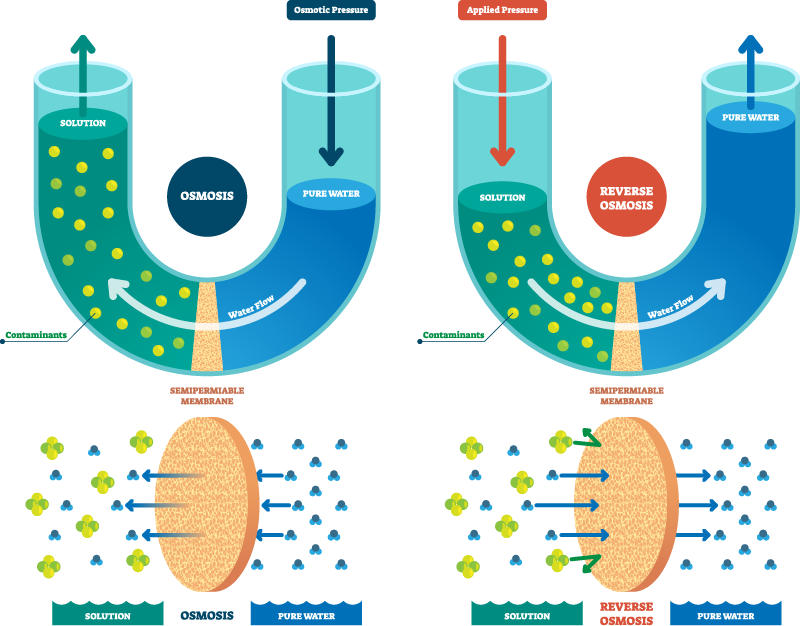
Let’s start with osmosis. That’s a boring word for water moving to where it’s “salty.” Think of a grape in salt water. It shrivels up like a grumpy old raisin. That’s natural osmosis—water rushes to the salty side to balance things out.
Now, do the opposite. Reverse osmosis. You push water the other way. You force it through a membrane that’s impossibly tiny. It’s like trying to push a beach ball through a keyhole. Only the smallest, most innocent water molecules get through.
Must Read
This membrane is the star of the show. It’s a thin, plastic sheet covered in microscopic holes. Those holes are 0.0001 microns wide. A human hair is about 50 microns. You could fit 500,000 of these holes across a hair’s width. That’s smaller than a virus. Smaller than a bacterium. It’s basically a bouncer that only lets water molecules into the VIP club.
Everything else gets stuck. Lead, chlorine, arsenic, fluoride—they all get the boot. Even salt molecules are too chunky to pass. That’s how we make seawater drinkable on submarines. Imagine peeing in your sink, then drinking the filtered result a minute later. Gross, but reverse osmosis could do it. Thank science, not your bladder.
Here is the funny part: the system wastes water. Like, a lot of water. For every gallon of clean water you get, it dumps 3 to 4 gallons down the drain. It’s like buying a pizza and tossing half the crusts in the trash. Critics call this wasteful. Fans call it “goodbye, forever chemicals.”
Quirky fact: Aquariums love this tech. Saltwater fish are picky divas. They need water so pure it’s boring. A reverse osmosis system strips out all minerals, making a blank slate. Then you add back the exact minerals the fancy fish wants. You are basically a water DJ for a clownfish.
It’s also a lifesaver in space. The International Space Station uses reverse osmosis to recycle astronaut sweat and pee. That’s right. The water you drink on Earth is older than the dinosaurs. In space, it’s older than last week’s breakfast. Cheers to that.
 Reverse Osmosis (RO) | Water Filter Bali
How does the magic happen?
You need pressure. Lots of it. A pump shoves water against the membrane at 40 to 100 psi. Think of a firehose pushing through a coffee filter. If the pressure is too low, nothing happens. It’s like trying to blow a bubble with weak lungs—just a sad dribble.
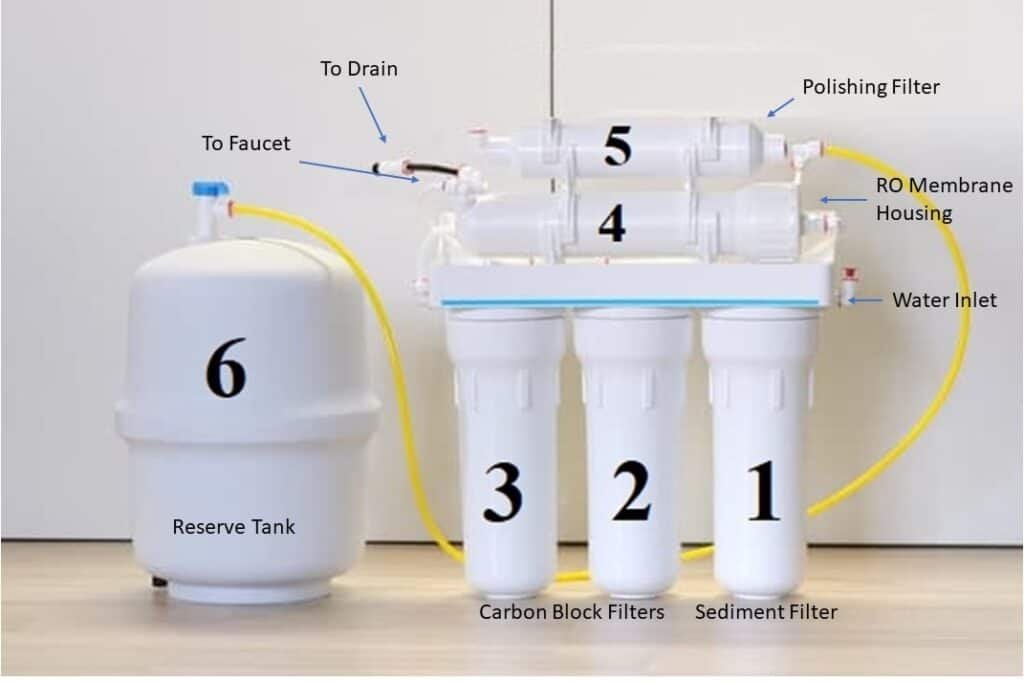
The system has three stages. First, a sediment filter catches dirt and rust. Basic stuff. Then a carbon filter eats chlorine and bad tastes. That’s the pre-party. Finally, the star—the RO membrane—does the heavy lifting. It banishes 99% of dissolved solids.
After the membrane, the water goes through a polishing filter—usually carbon again. This removes any lingering odors. Because nobody wants water that smells like a wet dog. Then it sits in a little tank, waiting for your glass. It’s ready to hydrate your cells.
But wait—is it too clean?
Some people panic. They say reverse osmosis removes beneficial minerals like calcium and magnesium. True. It strips everything. But guess what? You get minerals from food, not water. A glass of milk has more calcium than a swimming pool of tap water. Relax. You won’t turn into a brittle skeleton.
Another myth: it makes water “dead.” That’s nonsense from people who sell fancy crystals. Water is H2O. It doesn’t have a soul. Reverse osmosis doesn’t kill water. It just gives it a snob filter for a second.
 How Reverse Osmosis Process Works Filterwatercom How Reverse Osmosis
Funny detail: Some systems include a UV light stage. That zaps any bacteria that slipped through. It’s like a tanning bed for your water, minus the burn and bad music. Total overkill for city water, but awesome for well water that might have visitors.
The most hilarious part? The gurgling noise. When the system flushes waste water, it sounds like a toilet having a nightmare. Guests will ask if your pipes are haunted. You can proudly say, “No, that’s just my water going through elite training.”
Why you should care
Tap water is safe, but boring. Reverse osmosis makes it pristine. It’s perfect for coffee snobs. Without minerals, your coffee tastes brighter. Baristas cry happy tears. It’s also great for ice cubes that look like diamonds, not cloudy sludge.
Plus, it’s eco-friendly if you stop buying plastic bottles. One RO system can replace thousands of single-use bottles. Your carbon footprint shrinks. Your trash can sighs with relief.
So next time you see a shiny faucet with a separate spout, think of the secret agent. Remember the grape. Remember the astronaut pee. It’s a tiny, pressurized miracle sitting under your sink. And all it asks is a bit of gurgling and a lot of wasted water. Totally worth it.
Drink up, agent. Your mission is a success.
