Does Distilled Water Need To Be Refrigerated

Let’s be honest—most of us have a weird relationship with our fridge. It’s the place where leftovers go to be forgotten, and where we stash everything from batteries to nail p...

Let’s be honest—most of us have a weird relationship with our fridge. It’s the place where leftovers go to be forgotten, and where we stash everything from batteries to nail polish “just in case.” So when you buy a jug of distilled water, that little voice in your head probably whispers: “Should this go in the fridge, too?” It’s a fair question, and the answer might surprise you.
Here’s the short, sweet truth: No, distilled water does not need to be refrigerated. Unlike milk, eggs, or that questionable dip from last week’s party, distilled water is perfectly happy living in your pantry. Think of it as the introvert of the water world—it doesn’t need the cold to stay safe or fresh.
Why the fridge isn’t necessary
Distilled water goes through a fancy process where it’s boiled into steam and then cooled back into liquid. This strips away nearly everything: minerals, impurities, and—most importantly—the stuff that makes regular water go bad. Without those minerals and nutrients, bacteria and mold have almost nothing to eat. It’s like putting a party guest in an empty room with no snacks; they’ll get bored and leave.
Must Read
Compare that to a bottle of tap water left on your counter. Tap water has trace minerals and organic matter, which can turn it cloudy or a bit funky after a few days. Distilled water? It’s so clean that it’s practically sterile. You could leave an unopened jug in your garage for a year, and it would still be safe to drink—though I wouldn’t recommend it for taste reasons.
So, if your fridge is already stuffed with pickles and mystery Tupperware, give distilled water a break. Room temperature is its comfort zone.
But wait—what about after you open it?
This is where folks get tripped up. Once you crack that plastic lid, does it change the rules? Technically, no. Distilled water isn’t a magnet for airborne bacteria the way, say, a cut tomato is. But here’s the catch: your hands, the cup you pour it into, or even a dusty kitchen counter can introduce germs. If you leave an open jug of distilled water out for weeks, those germs might multiply slowly—like a very lazy houseplant.
For everyday use, you’re fine leaving it in the pantry for a week or two after opening. Toss it if you see floating bits or weird smells, but that’s rare. I keep a half-empty gallon next to my coffee maker, and it’s still crisp a month later. My fridge? That’s for my fancy cheese and leftover pizza.
 Does Distilled Water Go Bad or Expire? - Practical Cooks
When refrigerating distilled water isn’t crazy
Okay, I’ll admit it: there are moments when popping distilled water in the fridge makes total sense. If you live in a hot, humid place—hello, summer in Florida—an open jug might start to feel a little “warm and sad.” Chilling it can slow down any potential microbe growth, even if it’s not needed. Also, some people just prefer cold water. That’s a personal taste thing, not a safety thing.
Another exception: if you’re using distilled water for a medical device, like a CPAP machine or a humidifier, follow the manual. Many devices say to use cool, distilled water to avoid scaling, but they don’t usually demand refrigeration. I once asked my humidifier’s instructions, and they basically shrugged and said, “Store it in a clean, dry place.” No fridge required.
And let’s be real—if you have kids who knock over everything, refrigerating the jug might just mean a colder spill on your floor. Your call, but I vote for fridge space for the stuff that actually needs it, like my precious jar of salsa.
The “forever” water myth
I’ve heard people say distilled water lasts “forever.” That’s a stretch, but it’s closer to true than for any other water. An unopened, factory-sealed jug of distilled water can last practically indefinitely if stored in a cool, dark place. That’s because the plastic bottle is airtight, and without oxygen or food, bacteria just can’t thrive. It’s like a time capsule for pure H₂O.
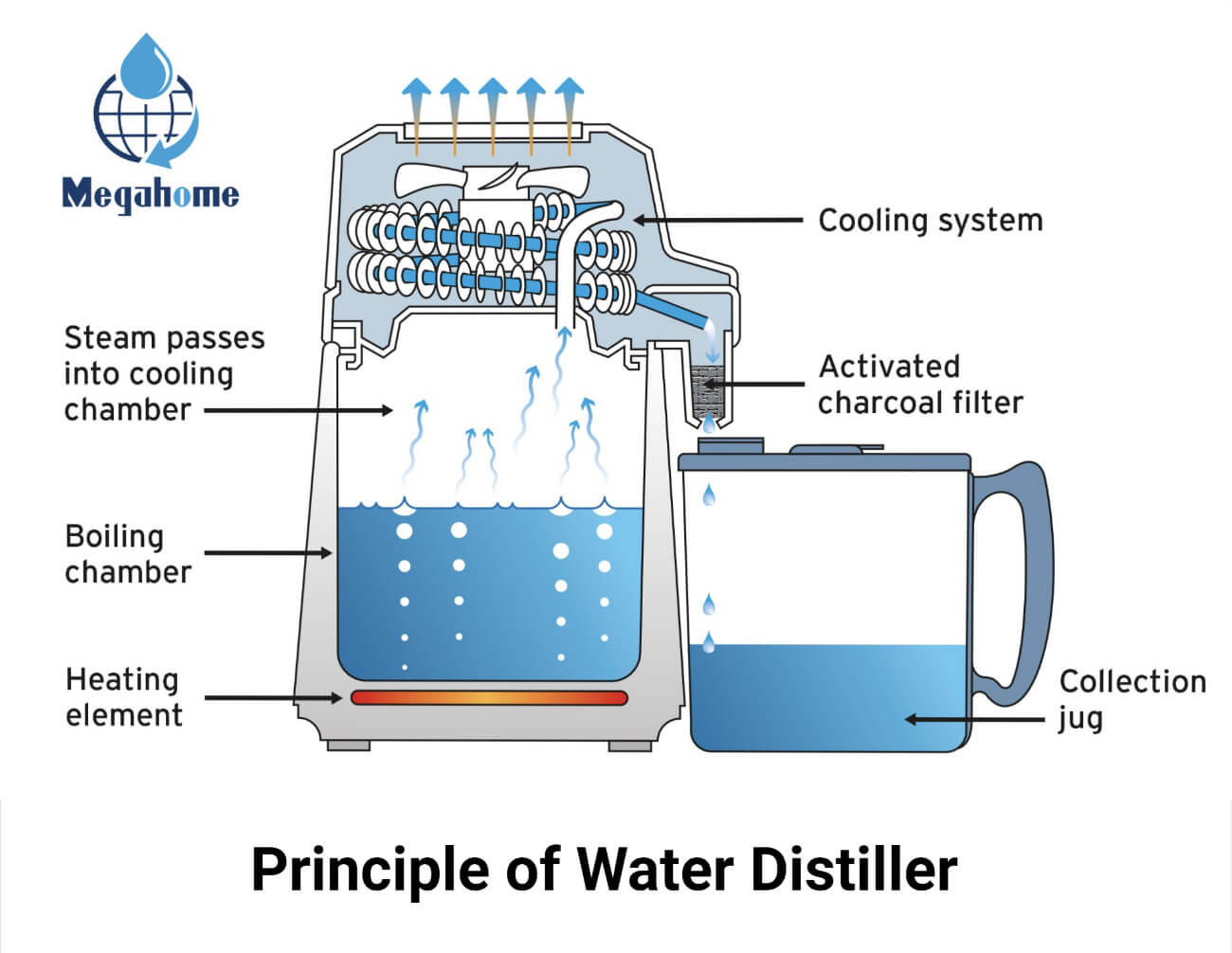 Water Distillation
But once that seal is broken, the clock starts ticking—though it ticks very slowly. Think of it like a vacuum-sealed bag of coffee: it’s fine for ages until you open it, then it’s best used within a month or two. Distilled water is similar, minus the caffeine jitters.
What people actually do (the real-world test)
I polled some friends on this, and the answers were hilarious. My buddy Mike keeps his distilled water in the garage because “that’s where the humidifier lives.” He says he’s never had an issue, even in 90-degree heat. My sister-in-law Sarah chills hers because “cold water tastes better,” and she’s right—it does, but that’s a luxury, not a rule. Then there’s Dave, who stores his gallon under the sink next to the bleach. Please don’t do that, Dave.
So, the bottom line? Distilled water doesn’t need the fridge. It’s the low-maintenance friend who’s happy anywhere. Refrigerate it if you want a cool drink, but don’t stress if the jug sits out. Your fridge will thank you for the extra room—and so will your energy bill.
Next time you’re grocery shopping and eyeing that gallon of distilled water, just grab it, toss it in your cart, and know you can stash it in the cabinet without a second thought. Your future self, reaching for a room-temperature sip while binge-watching your favorite show, will nod in approval.
Stay hydrated, stay easy-going, and save the cold for the pickles.
