How Long Does Water In A Plastic Bottle Last

You know that bottle of water lurking in your car’s cup holder? The one that’s been there since spring, and now the leaves are turning? It’s time we had a little chat about it...
You know that bottle of water lurking in your car’s cup holder? The one that’s been there since spring, and now the leaves are turning? It’s time we had a little chat about its lifespan.
Let’s be real: water itself doesn’t exactly “go bad” in the way milk does. It’s not going to curdle or grow little legs. But the plastic bottle it lives in? That’s a different story.
The Sneaky Chemistry of Plastic
Most plastic water bottles are made from PET (polyethylene terephthalate). Think of it as a very polite, but slightly leaky, house for your water. Over time, that house starts to let in uninvited guests.
Must Read
Heat is the party crasher here. If your bottle sits in a warm car or gets a little too toasty in the sun, the plastic can start to leach chemicals into the water. We’re talking about things like antimony and BPA—not exactly what you want in your morning sip.
The “Taste” Factor
Even if the chemicals don’t scare you, the taste will. Have you ever grabbed an old bottle and felt that weird, plasticky aftertaste? That’s the bottle saying, “I’ve been in this relationship too long.”
It’s like when you leave a Tupperware container of spaghetti in the fridge for a month. The food is technically okay, but the container remembers. Your plastic bottle remembers the heat, the sunlight, and the stale air you left inside.
So, What’s the Official Timeline?
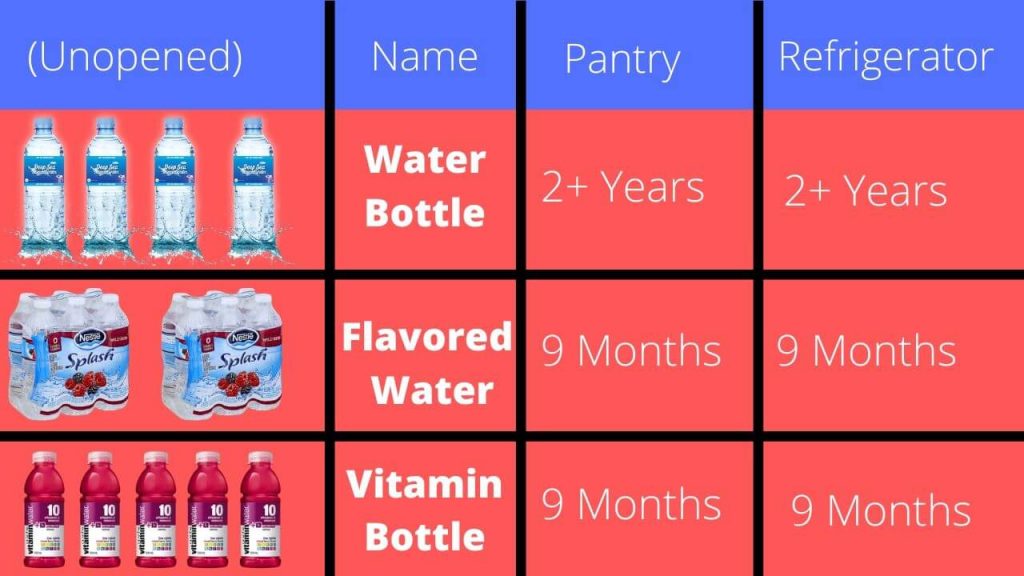
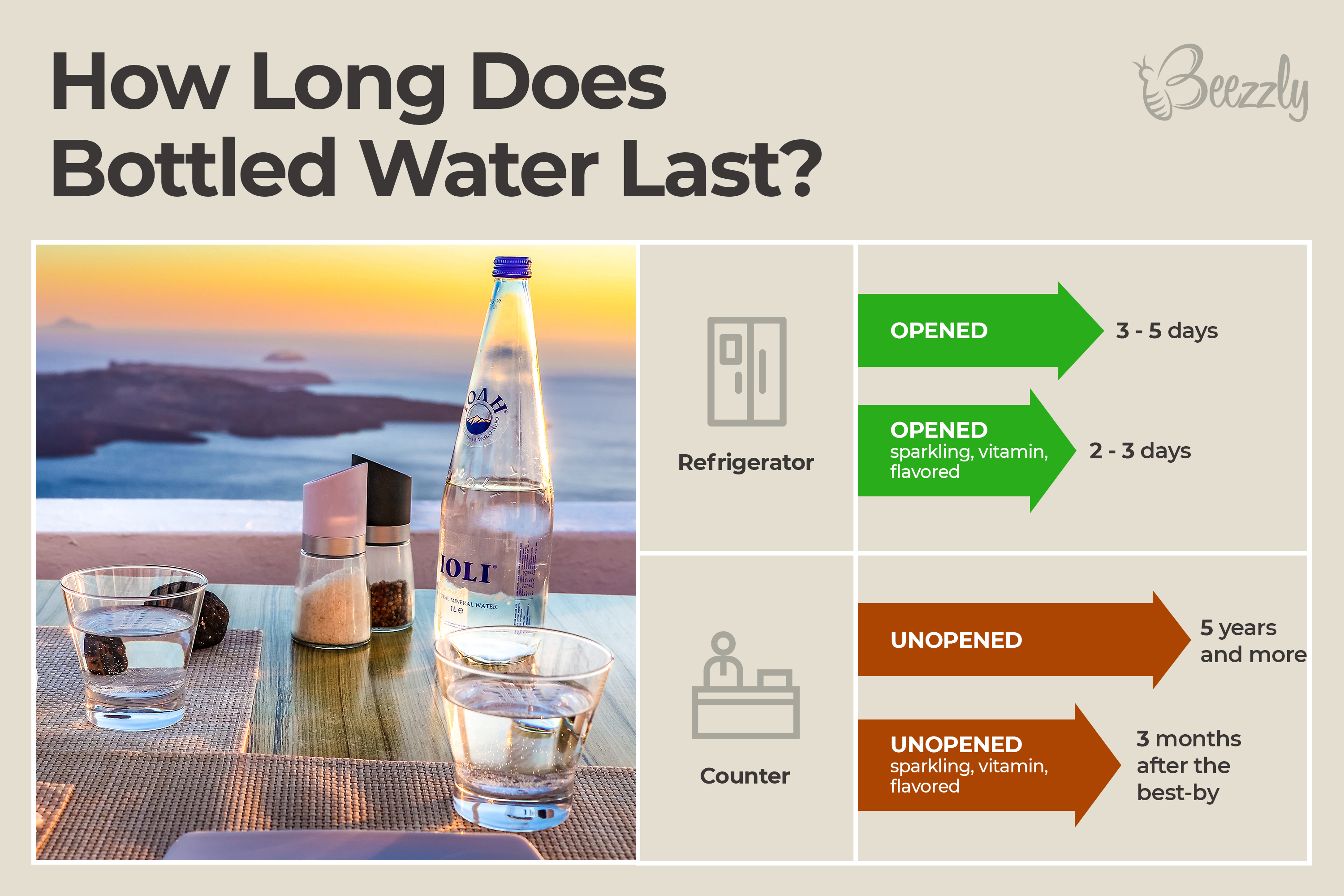
If you buy a sealed bottle of water from the store, check the label. Most manufacturers stamp a “best by” date about two years from the bottling date. That date isn’t for the water—it’s for the bottle.
After that window, the plastic’s integrity starts to decline. It becomes more porous, more likely to absorb flavors from its surroundings, and more willing to share its own chemical flavor profile with you. Think of it as the bottle’s midlife crisis.
 How Long Does Bottled Water Last? | Detailed Guide - Beezzly
Once It’s Opened, the Clock Speeds Up
Now, here’s where most of us live. You open a bottle, take a few swigs, and then screw the cap back on for later. That “later” should be within a few days.
Once you open it, you’re introducing bacteria from your mouth, the air, and your dusty desk. That water becomes a tiny petri dish. Leave it for a week, and you’re basically drinking a very gentle, watery microbial soup. Not the gourmet kind.
Real Life Examples (Because We All Do This)
Picture Sarah. She keeps a bottle on her nightstand for midnight sips. After three days, it tastes fine, but it’s now a community center for her own mouth germs. Is it dangerous? Probably not for a healthy person. But it’s not a sparkling summit of purity, either.
Or think of Mark. He fills a reusable plastic bottle before his morning jog. He forgets it in his gym bag for a week. When he finds it, the water is warm and smells vaguely of sweaty socks and old plastic. That’s the bottle screaming, “Let me go!”
The Great Refill Dilemma
Then there’s the classic: you buy a single-use bottle, and then you keep refilling it from the tap for a month. Let’s stop that right now. Single-use bottles are designed for one trip. Refilling them is like wearing disposable underwear for a week. Technically possible, but deeply unhygienic.
The inside of the bottle develops micro-scratches from washing and normal wear. Those scratches are a perfect breeding ground for mold and bacteria. You can’t see them, but they’re there, having their own tiny party.
 How Long Can You Keep Water In Plastic Bottles at Albert Hoopes blog
Why You Should Actually Care
You might be thinking, “I’ve gulped down week-old water and I’m fine.” And you probably are. But this isn’t about panic. It’s about treating your body with a little more respect.
Fresh, cool water from a clean container doesn’t just taste better—it feels better. It’s like the difference between wearing fresh socks and socks you found under the bed. Both cover your feet, but only one makes you feel human.
The real takeaway? Buy water, drink it within a few days of opening, and please stop leaving bottles in a hot car. Your tastebuds and your stomach will thank you.
A Simple Rule to Remember
Here’s an easy guideline: if you wouldn’t offer that water to a friend who just came in from the heat, don’t drink it yourself. If it’s been sitting open for over a week, pour it on your houseplants. They’ll appreciate the minerals.
And if you want to avoid this whole drama? Invest in a good reusable stainless steel or glass bottle. No plastic leaching, no weird tastes, and it keeps your water crisp all day. It’s like upgrading from a rental car to your own cozy sedan.
So next time you reach for that forgotten bottle, take a sniff. If it smells like victory, drink up. If it smells like a science experiment, respect the plastic’s limits and grab a fresh one. Your body is a temple, not a recycling bin.
