Does Uv Treatment Remove Chlorine From Water

So, you’ve got a UV water treatment system, and now you’re wondering: does this cool purple glow actually zap the chlorine out of your water? The short answer is no—but the lo...
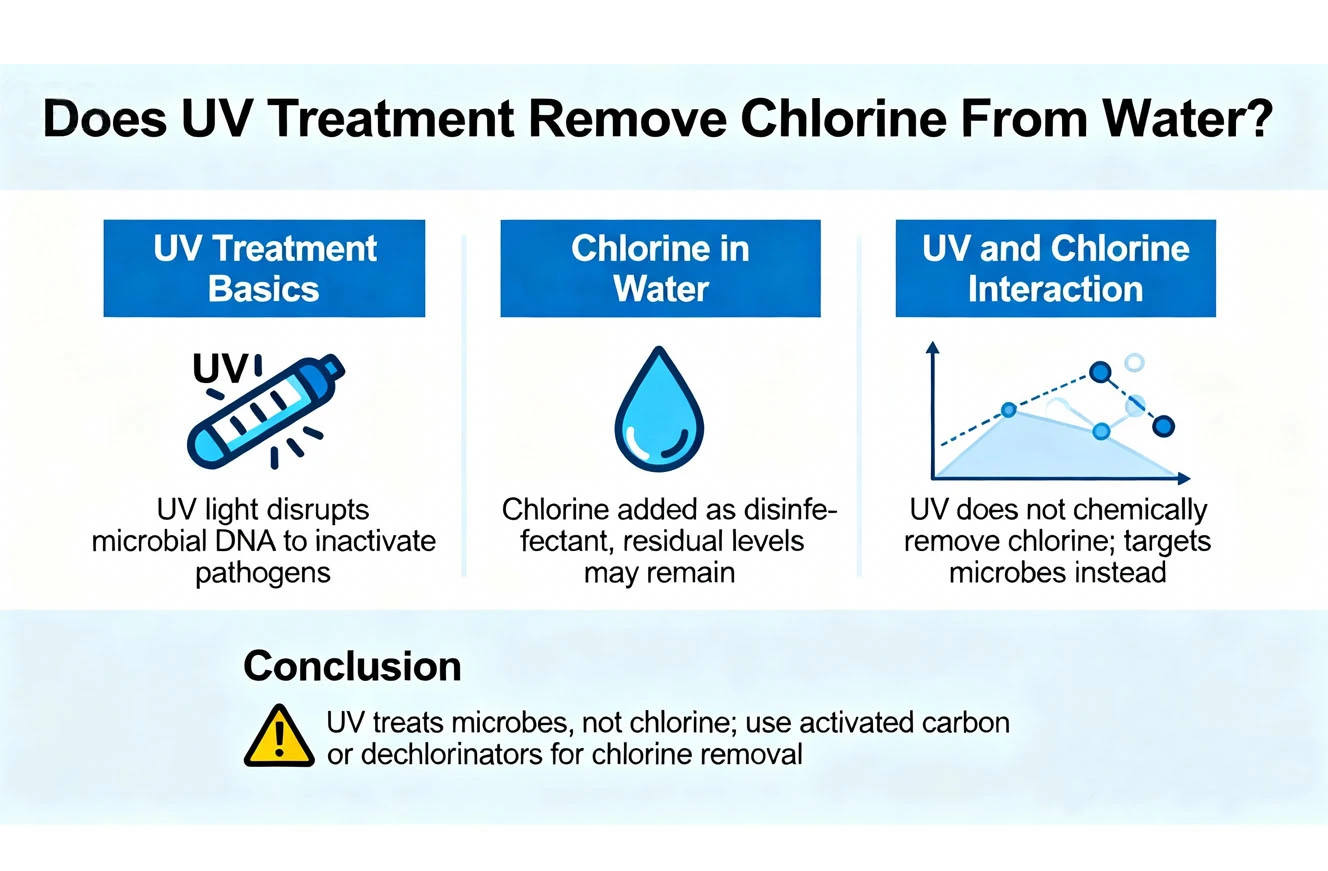
So, you’ve got a UV water treatment system, and now you’re wondering: does this cool purple glow actually zap the chlorine out of your water? The short answer is no—but the longer answer is where the fun begins! Ultraviolet (UV) light is a brilliant disinfection tool, but it plays a totally different game than chemical removal. Think of it as a ninja that targets living threats, not the leftover soapy taste from your tap.
What UV Actually Does (And Why It’s Awesome)
UV treatment works by frying the DNA of bacteria, viruses, and other creepy-crawlies in your water. It’s like giving those microscopic party crashers a sudden sunburn so severe they can’t party anymore. This is amazing for safety, but chlorine? That’s just a chemical compound—a molecule of chlorine atoms—not a living organism. UV light doesn’t care about molecules; it cares about life. So no, it won’t remove chlorine, and honestly, it shouldn’t have to.
Why Would You Even Want to Remove Chlorine?
Ah, here’s the kicker. Chlorine is added to municipal water to protect you from germs during its long journey to your glass. It’s a hero, but it can also make your water smell like a swimming pool or dry out your skin. You might want it gone for better-tasting coffee, softer showers, or happier houseplants. And UV alone can’t do that—but don’t worry, this is where you get to play water scientist!
Must Read
To banish chlorine, you need a different tool, like an activated carbon filter. This stuff is like a sponge that soaks up chlorine, bad tastes, and odors. Pair it with your UV system, and you’ve got a dream team: the carbon zaps the chlorine, and the UV zaps the germs. It’s a one-two punch that makes your water delicious and safe. Talk about a win-win!
But Wait—There’s a Cool Chemistry Twist
Here’s a little secret: UV light can interact with chlorine, but it’s not removal—it’s transformation. High-intensity UV can break down something called chloramines (a weaker form of chlorine used in some systems) into harmless compounds. This is rare in home units, but it happens in big water plants. So, while your home UV gizmo won’t delete chlorine, it might give it a makeover. Still, for most of us, a carbon filter is the star player.
 UV vs Chlorine for Water Treatment Comparison - Clear Water Industries
Think of it like this: UV is your water’s bodyguard, and carbon is its flavor stylist. Together, they make sure everything is clean and tasty. Who knew water treatment could be so team-oriented?
Making Life More Fun (Yes, Really!)
Now, why does this matter for your everyday joy? Because better water means better everything. Imagine coffee that tastes like it was brewed in a mountain cabin, not a pool. Picture your skin feeling silky after a shower, or your pet’s aquarium staying crystal clear with less effort. Understanding your water is like having a superpower—it turns a boring chore into a little adventure.
 Reducing chlorine and chloramines in industrial water | Trojan Technologies
You can even test it yourself with a simple chlorine test kit from a hardware store. Fill a glass with tap water, test it, then run it through a carbon pitcher or filter and test again. Watch those purple dots turn from “pool party” to “pristine spring.” It’s science that feels like magic.
An Uplifting Ending (Because You Deserve It)
So no, UV treatment doesn’t remove chlorine from water—but that’s not a failure; it’s a invitation. It invites you to learn how water works, to mix and match technologies, and to take charge of something as essential as the liquid you drink every day. You are now smarter than 90% of people in the room when someone brings up water filters. Go you!
The best part? This is just the beginning. Once you start exploring water chemistry, you’ll find endless ways to improve your home, your health, and your sense of wonder. Every glass of water becomes a small victory. So go ahead—grab a filter, test your tap, and toast to the tiny, invisible world you just mastered. Cheers to better water, bigger curiosity, and the joy of always learning something new!
