Does Reverse Osmosis Remove Lead From Water

Let’s be real for a second. You’ve probably spent a good chunk of your life wondering if your tap water is secretly plotting against you. It’s that moment when you fill a glas...
Let’s be real for a second. You’ve probably spent a good chunk of your life wondering if your tap water is secretly plotting against you. It’s that moment when you fill a glass, take a sip, and think, “Hmm, that tastes a little like a wet sock.” We’ve all been there.
One of the biggest fears lurking in that glass is lead. It’s the uninvited guest at the water party, the one nobody wants. So, when you hear about Reverse Osmosis, or RO as the cool kids call it, you have to ask: does it actually kick lead to the curb?
Spoiler alert: Yes, it does. But let’s not just take my word for it. Let’s walk through this like we’re talking over a cup of coffee—without the lead, of course.
Must Read
Reverse Osmosis: The Overachieving Bouncer
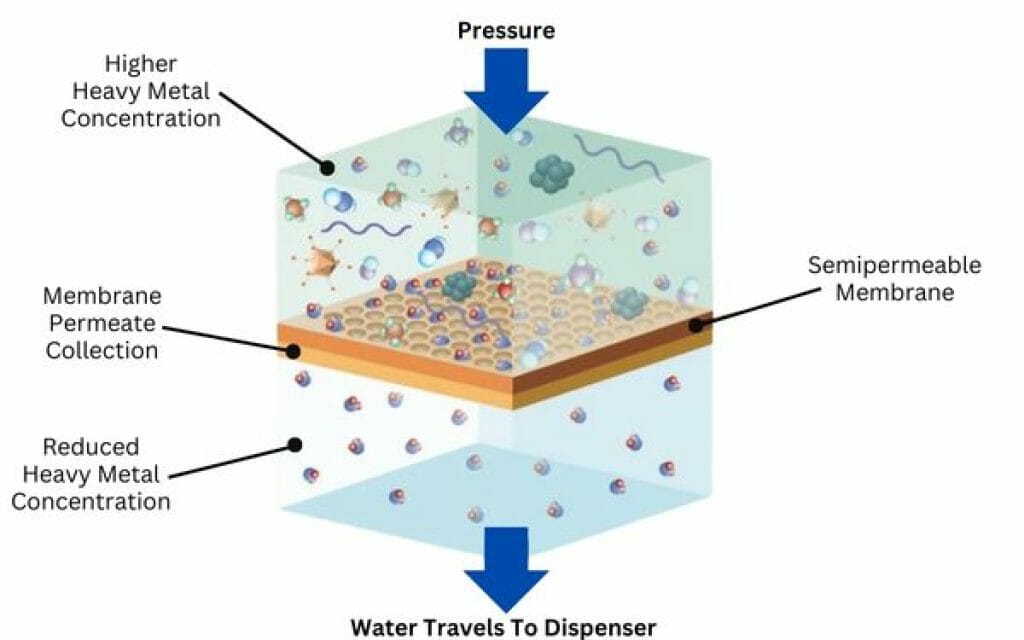
Imagine Reverse Osmosis as the bouncer at a very exclusive club for water molecules. This bouncer is picky. It lets the good stuff in—pure H2O—and laughs in the face of nasty contaminants.
Lead? Lead is the guy trying to sneak in with a fake ID. The RO system uses a semi-permeable membrane, which is basically a microscopic sieve with a superiority complex. It catches particles much smaller than a human hair, and lead, my friend, doesn’t stand a chance.
How It Actually Works (The Science That Won’t Hurt Your Brain)
Here’s the non-nerdy version: Water is forced through a special filter with tiny, tiny pores. Think of it like trying to push a beach ball through a keyhole—except the beach ball is a lead particle. It’s just not happening.
Studies show that RO systems can remove up to 99% of lead from your water. That’s not a “maybe” or a “sometimes.” That’s a “get out of here, you toxic troublemaker” level of efficiency. Fun fact: Most city water filters can’t even touch lead like this.
But here’s the kicker: Reverse Osmosis doesn’t just stop at lead. It’s also great at kicking out chlorine, fluoride, arsenic, and even that weird metallic taste your water gets after sitting in a plastic bottle for three days. It’s the Swiss Army knife of water purification.
 Does Reverse Osmosis Remove Lead From Drinking Water - Water Systems Guide
The Catch: It’s Not All Rainbows and Unicorns
Okay, let’s be honest. RO systems aren’t perfect. They’re like that friend who is super helpful but also a little high-maintenance. For starters, they can be a bit wasteful. You might lose a few gallons of water for every gallon you purify—it’s the price of being picky.
Also, they can strip out some of the good minerals from your water. You know, the calcium and magnesium that make your water taste like a mountain stream instead of a science experiment. Some people add a remineralization filter afterward to put those nice minerals back. It’s like giving your water a spa day after its intense workout.
And the cost? A decent under-sink RO system might run you anywhere from $150 to $500. Installation can be a bit of a headache if you’re not handy, but once it’s in, you don’t have to worry about lead sneaking into your morning oatmeal.
Is It Worth It for Everyday Life?
Let’s picture your kitchen. You’re making pasta, and you fill the pot with water. If you have old pipes—like really old pipes from the 80s or earlier—lead can leach in. It’s not a dinner party you want to host.
With an RO system, you fill that pot without a second thought. No more holding your breath, no more “Is this going to give me superpowers or a stomach ache?” uncertainty. It’s the peace of mind that comes with knowing your water is cleaner than your conscience after a good deed.
 Does Reverse Osmosis Remove Lead From Water? Truth Revealed (2024)
Plus, there’s something profoundly satisfying about watching the RO system’s little tap dispense water. It’s like a tiny victory dance every time you fill a glass. I swear, my RO system has more swagger than most people I know.
The Bottom Line: Nod and Smile
So, does Reverse Osmosis remove lead? Absolutely. It’s the heavy-lifting champion of water filters. If you’re worried about lead—whether from old plumbing, well water, or just a general distrust of your local water authority—RO is your best friend.
Is it overkill for some people? Sure. If your water is already pristine and you live in a brand-new house with copper pipes, you might not need it. But for the rest of us in slightly older homes, it’s like having a superhero in your cupboard.
At the end of the day, you want your water to taste good and keep you safe. Reverse Osmosis does that. It’s the overachiever, the bouncer, the picky friend who makes sure only the best gets in. And honestly, that’s a relationship we could all use.
Now go pour yourself a glass of RO water. You’ve earned it. Cheers to no more lead, no more worry, and a little more peace of mind in your everyday life.
