How Does A Water Softener Work Step By Step

So, You Want to Know How a Water Softener Works? Picture this: You’re standing in the shower, and your soap refuses to lather. Your hair feels like straw, and your dishes have...
So, You Want to Know How a Water Softener Works?
Picture this: You’re standing in the shower, and your soap refuses to lather. Your hair feels like straw, and your dishes have more spots than a Dalmatian convention. Welcome to the world of hard water—nature’s way of sneaking extra minerals into your life, uninvited. A water softener is the hero you never knew you needed.
This magical box doesn’t actually “soften” water in the way a pillow softens your head. It’s less about texture and more about chemistry—specifically, kicking out calcium and magnesium ions. Think of it as a bouncer at a club, except the club is your pipes and the uninvited guests are minerals that cause scale.
Step 1: The Great Ion Swap
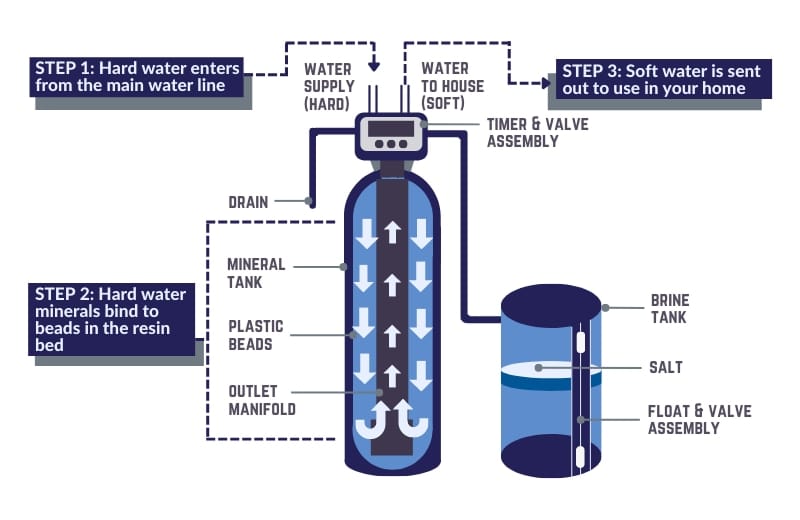
Inside your water softener is a tank filled with tiny resin beads. These beads are covered in sodium ions (yes, salt). They have a negative charge, like a magnet waiting to grab something positive. Hard water, full of positively charged calcium and magnesium, flows in and—zap!—the beads glom onto those minerals like a toddler with a cookie.
Must Read
Here’s the fun part: The beads release sodium ions in exchange. So, your water gets a little saltier (not enough to taste, unless you’re a super-taster fish), but all the scale-causing villains are now trapped. Congrats: you just performed ion exchange, the superhero move of plumbing.
Step 2: The Resin Gets Tired (Yeah, It Happens)
After a few gallons of hard water, those resin beads are covered in enough calcium to build a tiny house. They stop working. They’re like a sponge that’s too wet to soak up more spills. This is where the system gets clever—and a little dramatic.
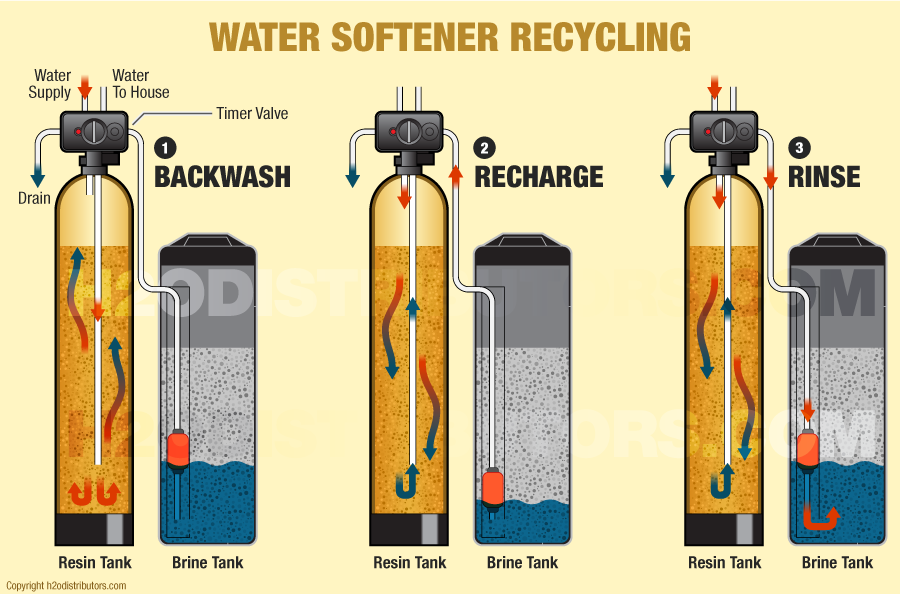
The softener now needs a regeneration cycle. It basically takes a nap, flushes itself with a brine solution (super-salty water), and screams, “Get off me, you minerals!” The brine is so salty that the calcium and magnesium let go of the beads, clinging to the salt instead. It’s like convincing a clingy friend to hug someone else.
Surprising fact: A single regeneration cycle can use up to 50 gallons of water. That’s enough to fill a bathtub and then some. But it’s a flush that saves your pipes from years of crusty disaster.
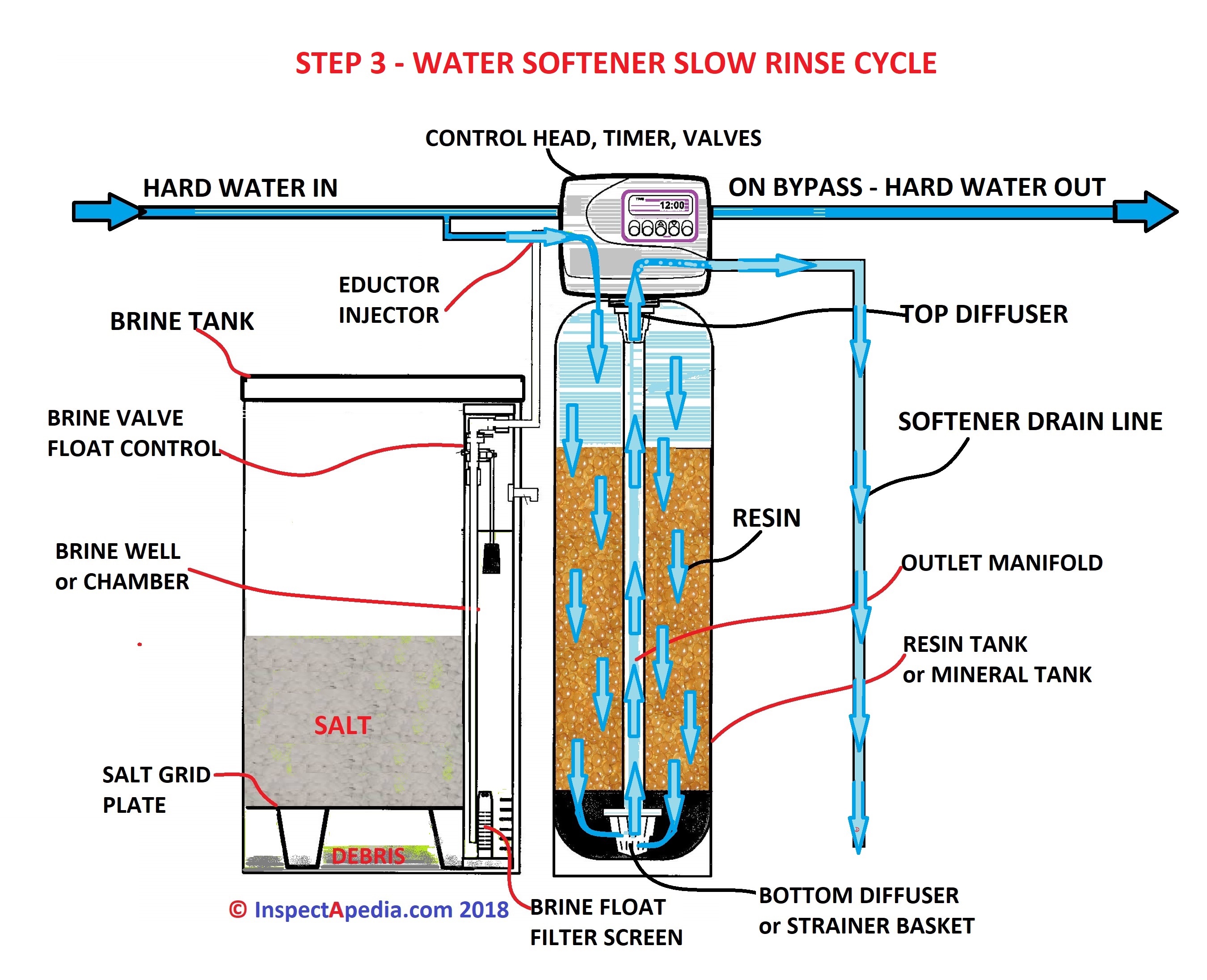
Step 3: The Briny Flush Down the Drain
All that nasty mineral-laden brine—now packed with calcium and magnesium—gets flushed out of the system and into your wastewater pipe. It goes to a treatment plant or septic tank, where it eventually becomes someone else’s problem (or nature’s, sorry, ocean).
 How To Recharge Water Softener Pillow at Andres Lowe blog
Meanwhile, your resin beads are squeaky clean again, recharged with sodium ions from the brine. They sit there, smug and ready for round two. It’s like they had a spa day and a detox in 20 minutes. Efficiency at its weirdest.
Step 4: The Timer (or Computer) Takes Over
You don’t have to babysit this process. Modern softeners have a timer or a smart meter that says, “Hey, you’ve used up enough water—time to regenerate!” Usually, this happens in the middle of the night, while you’re dreaming of lathery showers.
Some fancy models even track your water usage and adjust the schedule automatically. They’re like a Fitbit for your plumbing. If only they could also tell you how many steps you took to the fridge for a glass of water.
Step 5: The Salt Tank (The Unsung Hero)
Of course, none of this works without the brine tank—the big plastic bucket next to the main unit. You have to dump bags of water-softener salt into it every month or so. It’s like feeding a pet, except the pet never barks and only eats sodium chloride.
Pro tip: Don’t use table salt. It’s too pure and can gum up the system. Use specifically designed salt pellets. And if you spill a bag on the floor, congratulations—you now have a very salty indoor skating rink. Your cat will judge you.
 How Does A Water Softener Work Step By Step | Detroit Chinatown
Why Bother? (The Unexpected Payoffs)
Soft water makes your soap lather like a dream. Your skin feels less like a desert, your hair stops frizzing, and your dishes sparkle like they’re auditioning for a jewelry commercial. Even your coffee tastes better—because it’s not battling minerals.
But here’s the kicker: Your appliances last longer. No more calcified water heaters, clogged showerheads, or washing machines that die young. A water softener can extend the life of a water heater by years—saving you hundreds of dollars. That’s like getting a gold medal in household economics.
The Weird Truth: Sodium Overload? Not Really
Worried about drinking salt? A glass of softened water adds roughly the same amount of sodium as a slice of bread. If you’re on a strict low-sodium diet, you can install a reverse osmosis system for your drinking tap. Or just tell the water to chill out.
Fun fact: Some people claim soft water tastes “slippery.” That’s because it doesn’t have minerals to create friction. You’re not imagining things—your water is now a lube for your entire life. Use this power wisely.
Final Thoughts (No Science Degree Required)
So, a water softener is essentially a slow-motion, high-tech shell game where salt swaps places with rock. It’s dumb simple, yet weirdly satisfying. If only our taxes were this transparent.
Now go forth, buy some salt, and give your pipes the vacation they deserve. Your shower will thank you. Your kettle will stop screaming. And you’ll never look at a water spot the same way again.
