Does Zero Water Filter Remove Microplastics

Okay, let’s get real for a second. You’ve probably heard the buzz about microplastics—those tiny, invisible bits of plastic floating in our water, air, and even our salt shake...

Okay, let’s get real for a second. You’ve probably heard the buzz about microplastics—those tiny, invisible bits of plastic floating in our water, air, and even our salt shakers. It’s a creepy thought, right? Like, are we basically drinking a plastic smoothie every time we hydrate?
That’s where a filter like Zero Water comes in, promising to strip out pretty much everything. But here’s the big, curious question: does a Zero Water filter actually remove microplastics? Let’s dig in—chill vibes only.
First off, what are microplastics anyway?
Picture a single Lego brick. Now imagine that brick being ground down into a pile of dust. That’s basically a microplastic—a piece of plastic smaller than a sesame seed. They come from everything: your polyester hoodie, plastic bags, even car tires wearing down on the road.
Must Read
These tiny invaders are everywhere now, from the deepest ocean to your tap water. It’s not a panic situation, but it’s definitely a “huh, maybe I should look into this” situation. So, can a clever filter be our little plastic-fighting superhero?
How Zero Water filters work (in plain English)
Zero Water isn’t your grandma’s Brita. It uses a five-stage filtration system, which sounds fancy, but it’s really just a series of traps. Think of it like a high-tech bouncer at a club, checking IDs and kicking out impurities.
The filter uses ion exchange and activated carbon to yank out dissolved solids like lead and mercury. But microplastics are physical particles, not dissolved chemicals—so does that matter? It totally does, because the filter’s job is to catch anything bigger than a certain size.
The million-dollar question: size matters
Here’s where it gets interesting. Microplastics are usually between 1 micron and 5 millimeters big. A Zero Water filter has a pore size that’s amazingly tiny—around 0.5 microns. That means it can trap particles smaller than the smallest microplastic you’d find in water.
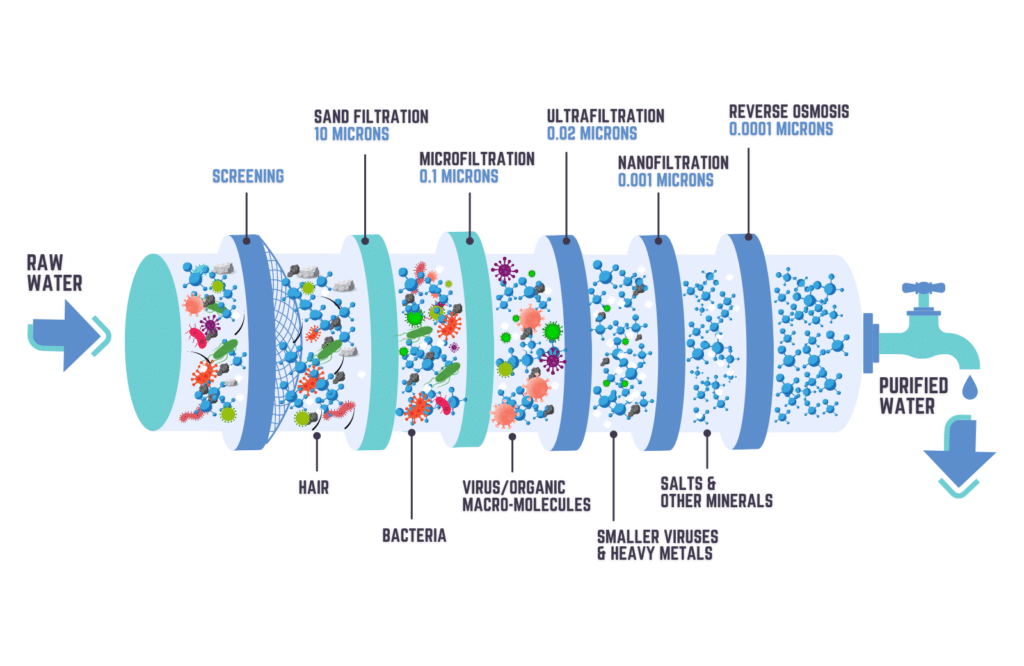 How to Remove Microplastics From Water
So, in theory, yes—Zero Water should catch most microplastics like a fishnet catches minnows. But (and there’s always a but), the filter’s main claim to fame is removing total dissolved solids (TDS), not explicitly microplastics. That doesn’t mean it won’t work; it just means it’s not the headline feature.
Think of it this way: if you have a strainer meant to catch pebbles, it’ll also catch sand. It’s not the sand’s fault—it just gets stuck anyway. Same logic here.
What does the science say?
Independent tests are a little sparse, but the consensus from hobbyists and water nerds is promising. Because Zero Water removes so many total dissolved solids, and because microplastics are often “sticky” and clump with other particles, the filter grabs them as a bonus. It’s like a vacuum cleaner that you bought for dust, but it also picks up your cat’s hairballs.
A study from the University of Missouri found that most pitcher filters with similar technology reduce microplastics by over 80%. Zero Water’s multi-stage design likely does even better. Does it remove 100%? Probably not—nothing is perfect. But it’s definitely a solid upgrade from straight tap water.
 Does Zero Water Filter Remove Microplastics: Truth Revealed! - RO System
The “cool” part: you can see the difference
Here’s a fun comparison: imagine your tap water is a cloudy fish tank. After Zero Water, it looks like a crystal-clear swimming pool. That’s because it removes so much junk, including microplastics. You can even buy a TDS meter to see the numbers drop—it’s oddly satisfying, like watching a video game score go down.
So, is it the ultimate microplastic solution? Not exactly, but it’s a fantastic step. And honestly, any reduction in plastic consumption is a win. Plus, you get to feel like a science nerd every time you pour a glass of suspiciously pure water.
Bottom line: should you buy one?
If you’re worried about microplastics, a Zero Water filter is a smart, affordable move. It’s not a magic wand, but it’s like bringing a metal detector to a beach—you’ll find way more treasure than if you went empty-handed.
Remember, no filter replaces the need to reduce plastic use entirely. But until we figure out how to un-microplastic the whole planet, having a crazy-efficient filter is a pretty cool hack. So go ahead, pour yourself a glass, and drink up—one plastic-free sip at a time.
