How To Clean Pennies Without Losing Value

So, you’ve got a jar of sad, grimy pennies, and a wild idea: “I’ll make them shine like the sun!” Hold your horses, Scrooge McDuck. Before you reach for the steel wool or the...
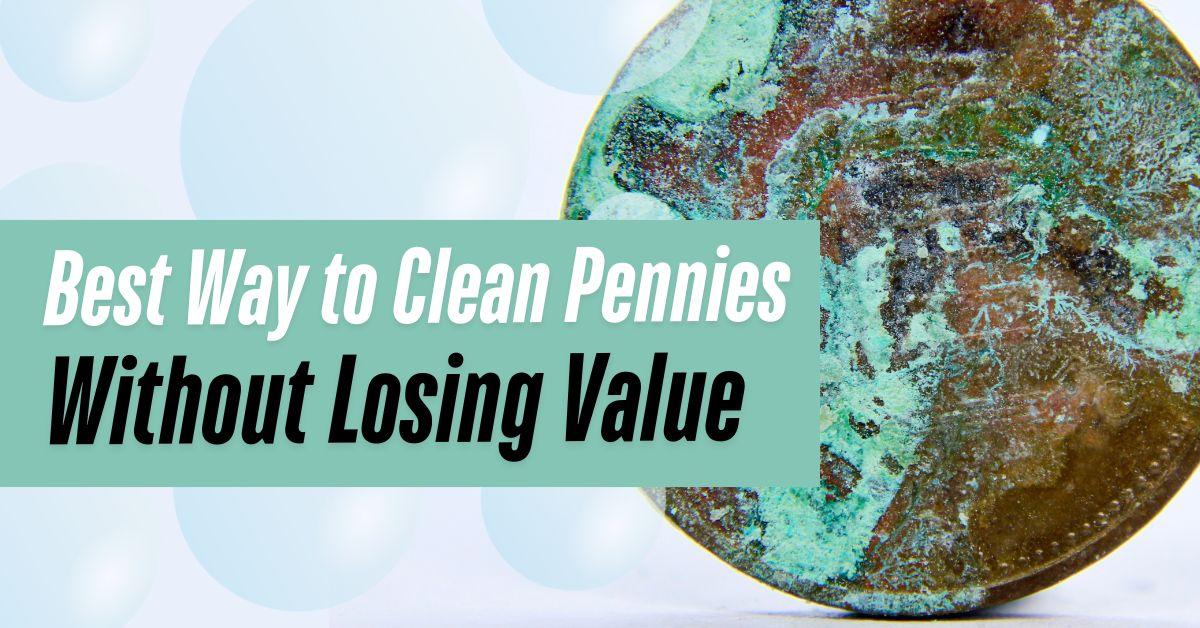
So, you’ve got a jar of sad, grimy pennies, and a wild idea: “I’ll make them shine like the sun!” Hold your horses, Scrooge McDuck. Before you reach for the steel wool or the industrial-grade acid, you need to know a terrifying truth: cleaning a valuable penny can literally cost you thousands of dollars. It’s like giving a classic Ferrari a paint job with a roller—technically shinier, but now worth less than a bicycle.
Here’s the deal: coin collectors don’t pay for “sparkly.” They pay for “original.” That dull, brownish film on an old penny? That’s called patina, and it’s the coin’s historic suntan. A crusty 1909-S VDB Lincoln cent with that dark patina can be worth a cool $1,000. Rub it with a penny-cleaning potion, and BAM—it’s suddenly worth about fifty cents and a side of shame.
The Rules of Engagement (or: How Not to Cry)
First, the Golden Rule: never clean a penny dated before 1982 unless you know it’s junk. Why 1982? That’s the year the U.S. Mint switched from mostly copper to mostly zinc. Pre-1982 pennies are 95% copper and often worth more than one cent—especially in uncirculated condition. If you find a pre-1982 penny that’s even slightly rare (like a 1955 Double Die), don’t even breathe on it. Put it in a plastic flip and call a professional.
Must Read
For the rest of you—those with common, post-1982 zinc zombies or already-beat-up pre-1982 coins—clean away, but do it gently. Think of it as a spa day, not a chemical peel. The goal is to remove dirt, not the metal layer underneath.
Method #1: The Soapy Baptism (Safe for Most)
This is the “I’m not drunk, I’m just adventurous” of penny cleaning. Fill a bowl with warm water and a tiny squirt of mild dish soap. Do not use abrasive cleaners or scrubbing pads. Gently swirl your pennies in the suds with your fingers—like you’re making a very small, very cheap soup. Rinse them in distilled water (tap water can leave mineral spots). Pat dry with a soft microfiber cloth. This removes grime without damaging the coin’s surface. It won’t make them shine, but it will make them clean-ish. And isn’t that all any of us can hope for?
 How To Clean A Penny With Baking Soda - cleanrestoreconnect.com
Method #2: The Ketchup Conspiracy (Surprisingly Effective)
Yes, ketchup. It’s not just for fries, my friends. The acetic acid in vinegar (and ketchup has vinegar) eats away at copper oxide—the stuff that makes pennies look like they crawled out of a swamp. Squirt a blob of ketchup on a plate, dip your penny in, let it sit for 30 seconds, then gently rub with your thumb. Rinse immediately. You’ll see that ugly brown goop turn pinkish and shiny. But here’s the catch: it also eats away a tiny bit of the copper. Do this more than once, and your Lincoln’s face will look like he got Botox from a drunk clown. Use for fun, not for value.
Method #3: The Baking Soda Scrub (The Middle Path)
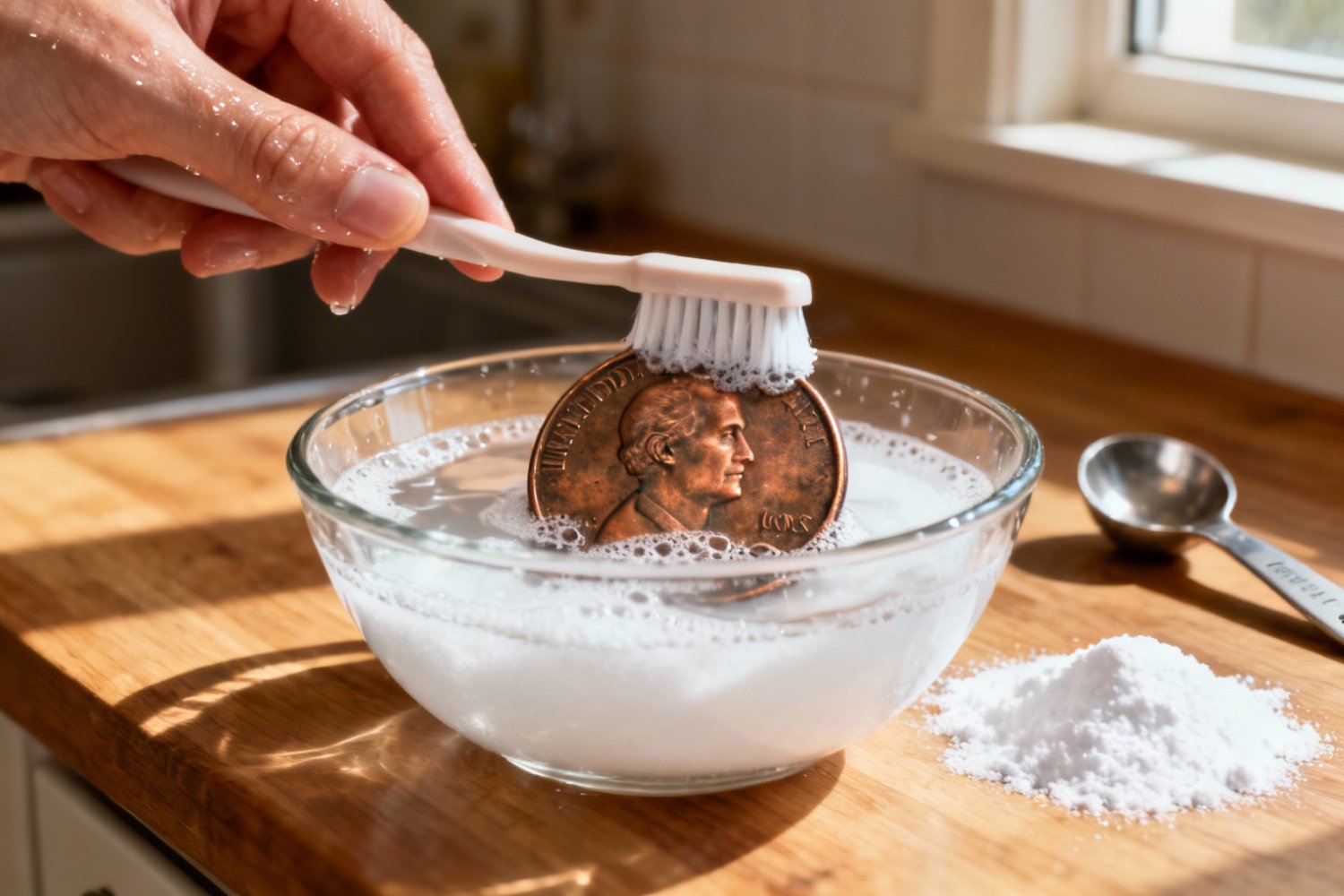
Make a paste of baking soda and a drop of water. Use your finger—not a toothbrush!—to gently massage the paste onto the penny. The fine grit acts as a micro-exfoliant. Think of it as a facial scrub for your coin’s complexion. Rinse and dry. This works best on modern zinc pennies that are just dirty, not corroded. Warning: baking soda is slightly abrasive, so don’t go full Hulk on a rare coin. You’ll turn a 1964 penny into a 1964 penny with a bald eagle.
 Cleaning Pennies | How to clean pennies, Old coins worth money, Pressed
The Horrifying Traps You Must Avoid
Steel wool? Abandon all hope, ye who enter. That will leave micro-scratches visible under a magnifying glass, instantly cratering any collector value. Same goes for metal polish, sandpaper, or your neighbor’s power sander. Also: never use white vinegar alone. That stuff is like acid for copper. I once left a penny in vinegar overnight as a science experiment, and the next morning, it looked like a zombie had chewed on it and then died of shame. The copper was literally green and flaking off.
And here’s a surprising fact that will blow your mind: Old pennies that look black and crusty can be incredibly valuable. In 2021, a 1943 copper penny (yes, copper, not steel—a mint error) sold for over $300,000. If someone had “cleaned” that coin with a wire brush back in the 1950s, it would be worth a fraction of that. So before you start scrubbing, ask yourself: “Is this penny 80 years old and do I have any idea what I’m doing?” If the answer to both is “no,” put down the ketchup and step away.
The Final Verdict: Clean Only What You’d Spend
Here’s my rule: If a penny is worth less than a stick of gum, clean it for fun. Hold a chemistry party. Make them rainbow-colored with heat. Stick them in Coke overnight and marvel at the goo. But if you suspect a penny is old, rare, or has a weird shape? Leave it in the jar. Wrap it in a tissue. Transfer it directly to a coin dealer, who will probably laugh at you but at least give you a professional opinion. Because in the end, the best way to clean a valuable penny is to not clean it at all. Just let it sit there, being grumpy and historic. That’s what true value looks like—crusty, unwashed, and worth a fortune.
