How To Remove Calcium Deposits From Pipes

Your pipes are under attack. Not by aliens, but by something sneakier: calcium. Those white, crusty deposits are like tiny medieval castles blocking your water flow. You might...
Your pipes are under attack. Not by aliens, but by something sneakier: calcium. Those white, crusty deposits are like tiny medieval castles blocking your water flow. You might call it limescale; I call it plumbing’s personal villain.
But here’s the fun part: you can defeat it with stuff from your kitchen. Yes, the same vinegar you put on fries can save your shower. Let’s dive in, shall we?
What even is this calcium stuff?
Calcium deposits are basically rock candy for your pipes. Same chemistry, different outcome. When hard water evaporates, it leaves behind calcium carbonate—a mineral that loves to cling.
Must Read
Imagine a million tiny barnacles throwing a party in your faucet. That’s limescale. It builds up over time, choking your water pressure and making your kettle look like a fossil dig.
Quirky fact: Calcium deposits are actually the same stuff as chalk, limestone, and sea shells. You’re basically battling a piece of the ocean inside your home. Cool, right?
Why should you care?
Blocked pipes mean less water and more energy. A layer of scale just 1/16 of an inch thick can reduce heating efficiency by 18%. That’s like wrapping your pipes in a winter coat of rock.
Your dishwasher, washing machine, and coffee maker all hate this stuff. They struggle, use more soap, and break faster. Fixing calcium deposits saves you money—and your sanity.
Weird bonus: If you ever get nostalgic, you can scrape off the deposits and write on a chalkboard. Yes, really. This stuff is chemically identical to classroom chalk.
First, the gentle assassin: vinegar
White vinegar is your new best friend. It’s acidic enough to dissolve calcium but safe for most metal and plastic pipes. No hazmat suits required.
For faucets and showerheads, unscrew them and soak them in a bowl of vinegar overnight. You’ll wake up to crusty chunks floating like snow globes. Rinse and install—boom, water flows like a river again.
For whole pipes inside walls, pour a cup of vinegar down your drains. Let it sit for 8 hours (overnight works best). Then flush with boiling water. Do this every month to prevent deposits from forming.
 How to Remove Calcium Deposits from PVC Pipes ⚡ Quick Home Fix
Pro tip: If the smell of vinegar bothers you, add a few drops of lemon juice. It boosts the acid power and makes your kitchen smell like a lemonade stand.
When vinegar isn’t enough: citric acid to the rescue
Citric acid is vinegar’s buff cousin. Sold as a white powder in grocery stores, it’s stronger and faster. Mix two tablespoons per liter of warm water (never hot—it can fizz like a science experiment gone wrong).
Let it sit in your pipes for two hours. You’ll hear a gentle hissing—that‘s the calcium screaming for mercy. Flush with water, and your pipes will feel years younger.
Funny detail: Citric acid is what makes sour candy sour. So technically, you’re giving your pipes a sour gummy worm bath. They’ll love it.
The nuclear option: commercial descalers
Sometimes you need the big guns. Look for products with sulfamic acid or phosphoric acid. They’re designed for heavy-duty scale in water heaters and dishwashers.
Follow the instructions exactly, because these acids are no joke—they can burn your skin. Wear gloves, open windows, and keep kids and pets away. This is not a “wing it” operation.
Weird fact: Some descalers are also used to clean beer brewing equipment. Your pipes could be as clean as a craft brewery’s! Cheers to that.
Physical removal: when chemistry fails
If the deposit is a thick, solid ring inside a pipe, you might need to get your hands dirty. A wire brush or a specialized “de-scaler” tool can scrape it out. It’s like flossing, but for your plumbing.
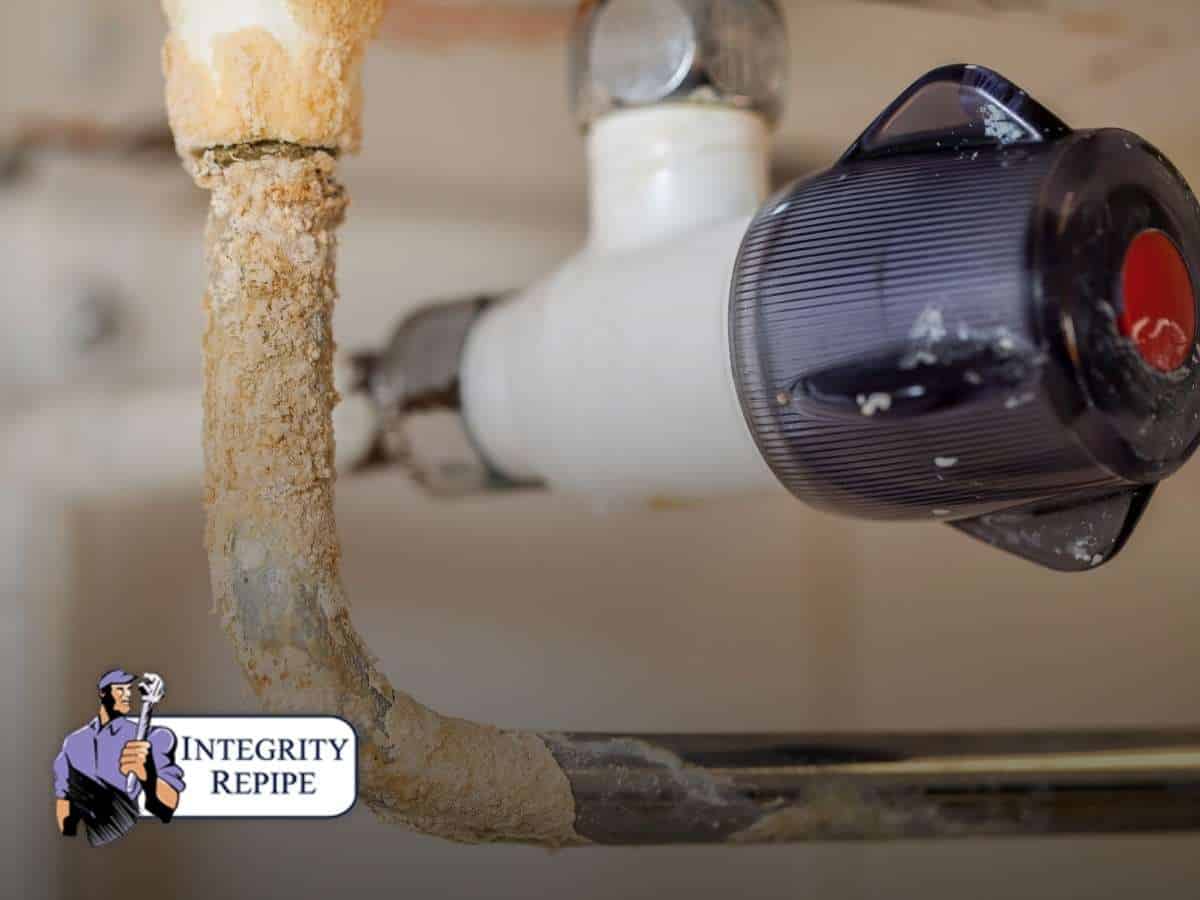 Clean Hard Water Deposits From Pipes
For pipes you can’t access, try a plumbing snake with a brush head. Slowly feed it in, twist, and scrape. It’s oddly satisfying, like popping bubble wrap under your sink.
Warning: Don’t use a metal brush on copper pipes—you’ll scratch them and cause leaks. Stick to nylon or plastic brushes for copper. Trust me, your future self will thank you.
The prevention secret: a water softener
Hard water is the root of all evil here. A water softener replaces calcium with sodium (salt). It’s like giving your pipes a spa day, every day.
No softener? Install a scale inhibitor or a cheap magnetic descaler. Do they work? Science is mixed, but many swear by them. Worst case, you get a cool little magnet on your pipe for $20.
Quirky detail: Ancient Romans used to store water in lead pipes and thought calcium deposits were a sign of purity. They were wrong about lead, but right that scale is hard to remove.
One last trick: baking soda volcano (yes, really)
Pour a cup of baking soda down the drain, followed by a cup of vinegar. Watch it fizz like a grade-school volcano. Let it sit for 15 minutes, then flush with boiling water.
This combo lifts light deposits and smells like a science fair project. It’s not a cure-all, but it’s super fun to watch. Plus, your kids will think you’re a mad scientist.
Final thought: You’ve got this. Your pipes are not your enemies—they’re just coworkers who need a little TLC. Now go grab that vinegar and show that calcium who’s boss. Your showers will thank you with a sweet, unrestricted spray.
