Water Softener Full Of Water How To Drain

There’s a special kind of modern panic reserved for the moment you notice a puddle spreading across your pristine basement floor. You stare at your water softener, that silent...

There’s a special kind of modern panic reserved for the moment you notice a puddle spreading across your pristine basement floor. You stare at your water softener, that silent, unglamorous workhorse, and think, “Did you just… betray me?” If your brine tank looks like a swimming pool for mice, you’re not dealing with a catastrophe — you’re just dealing with a very common, very fixable annoyance. This is the gentle art of draining a water softener, and it’s easier than assembling IKEA furniture without the existential dread.
Why Is My Water Softener Full of Water?
First, a quick reality check: a little water is totally normal. Your brine tank always has a few inches of salty water sitting at the bottom, ready for the regeneration cycle. That’s the good water. The problem is when the tank looks like a backyard kiddie pool after a monsoon. This usually means the brine line is blocked, the drain line is kinked, or — and this is the most common culprit — the safety float valve has decided to take a siesta.
Think of it as your softener’s version of overeating at a buffet. It took in too much water during regeneration and didn’t burp it back out properly. Awkward. For a fun fact, the first commercial water softeners used lime and soda ash in the 1890s, and they were about as reliable as a steampunk toaster. We’ve come a long way, but the drama remains.
Must Read
The Gentle Art of the Drain
Before you channel your inner action hero and grab a shop-vac, take a breath. Draining your softener is a three-step dance, and you’re the lead. Step one: kill the power. Unplug the unit. No electricity, no surprise movements. It’s like pressing pause on a chaotic reality show — you regain control.
Step two: find the bypass valve. This is usually a little lever or knob near the inlet pipe. Turn it to the “bypass” position. This tells your house, “Hey, we’re on hard-water duty for a bit.” Hard water isn’t the end of the world; it just means your soap won’t lather quite like a shampoo commercial. You’ll survive.
Now, step three: the actual drain. Attach a garden hose to the drain spigot on the valve head, or simply locate the brine tank’s overflow tube. Direct that hose to a floor drain, a sump pump pit, or even your driveway if you’re feeling rebellious (just check local codes — some municipalities hate salt runoff). Open the drain valve and let gravity do the heavy lifting. It’s meditation in motion: water leaves, stress leaves.
When the Tank Refuses to Cooperate
Sometimes, the water just sits there, mocking you. If gravity is being lazy, grab a wet/dry vacuum (aka the Shop-Vac, the hero of every minor flood). Suck that water out like you’re a bartender clearing a messy spill. A pro tip: vacuum a bit of fresh water first to wet the filter so it doesn’t clog with salt crystals. It’s like giving your vacuum a palate cleanser.
 Water Softener Full of Water - How to Drain — WaterSmart
Once the tank is empty, you’ll likely find a salt bridge — a crusty, hard layer of salt that looks like an alien artifact. This is the most common reason the float valve gets stuck. Break it up with a broom handle (gently, please; you’re not Thor). Did you know that hard water contains calcium and magnesium ions? These are the same minerals that make your shower glass look like a crime scene. Your softener trades them for sodium, which is why your coffee tastes better. Science is cool.
A Little Cultural Detour: Salt and Manna
Speaking of salt, ancient civilizations fought wars over it. The Romans used it as salary (that’s where the word “salary” comes from, from sal for salt). So, when you’re cleaning a salt bridge off your floor, just remember: you’re handling a historical commodity that built empires. Makes the mess feel a little more noble, doesn’t it?
Culturally, we love outsourcing our problems. That’s why we have Roombas, self-cleaning ovens, and water softeners that whisper, “I got this.” But occasionally, even the best sidekick needs a hand. A little manual intervention is the price of convenience — like tipping your barista, but with more elbow grease.
Practical Tips to Avoid a Repeat Performance
Tip one: Check your salt level every month. Don’t let it dip below a quarter of the tank, but also don’t overfill it like you’re prepping for a zombie apocalypse. Tip two: Use only high-purity cube or pellet salt. The cheap stuff looks like gravel and leaves sludge that clogs your valves. It’s the junk food of the softening world.
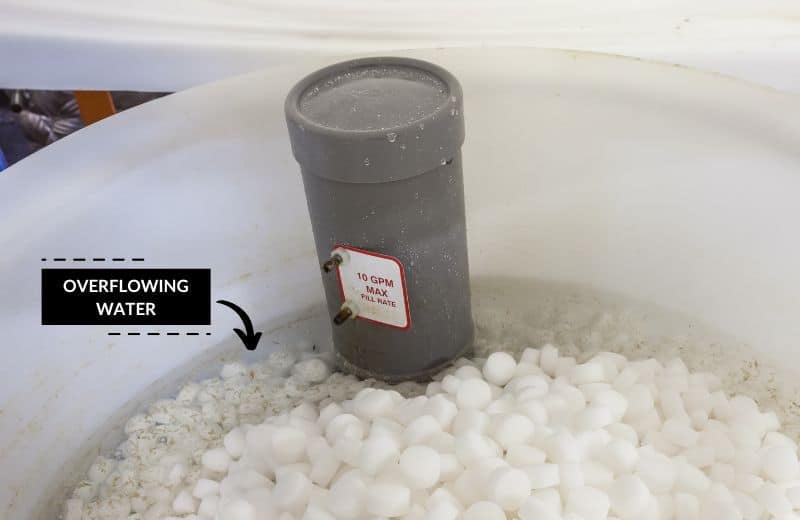 How to Fix Standing Water in a Water Softener Salt Tank
Tip three: Run a manual regeneration cycle after you drain. This flushes out any stubborn air and resets the system. To do this, press the “regen” button on your softener’s control panel. It will hiss, beep, and gurgle like a happy robot. Let it finish, and then check the brine tank water level — it should be only a few inches deep, peaceful and serene.
When to Call the Pros
If you’ve done all this and your softener is still swimming, you might have a stuck piston or a faulty control valve. At this point, you’re in “call-a-plumber” territory. Don’t be a hero. Some battles require a professional with a van full of specialized tools and the confidence of a person who’s seen worse messes than yours.
Fun fact: The modern water softener was patented in 1938 by Emerson L. Richards, a man who clearly wanted to save laundry from the ravages of mineral buildup. He is not a household name, but every clean towel in America owes him a quiet thank you.
The Reflection: The Quiet Symphony of Home
Draining a water softener is not glamorous. It’s messy, a little bit boring, and requires you to crouch on a cold floor. But here’s the thing: it’s also a small act of maintenance that keeps your home humming. That clean sink, that spotless glass, that silky hair after a shower? That’s the payoff. It’s the unseen labor of care that makes the comfortable life possible.
In a world obsessed with big gestures — a new car, a vacation, a viral moment — the quiet work of keeping your water soft, your pipes clear, and your bathroom glass shiny is a humble rebellion. It’s a reminder that life isn’t just about the mountain peaks. It’s about the steady, salty, slightly annoying valleys where you fix things with your own two hands. And when the water flows again, clear and soft, you’ll feel a tiny, unreasonable surge of pride. That’s the good stuff.
