How To Remove Chlorine In Drinking Water

You know that hotel pool smell? The one that screams “chlorine” louder than a lifeguard’s whistle? Well, that same chemical is likely swimming in your tap water—and it’s about...
You know that hotel pool smell? The one that screams “chlorine” louder than a lifeguard’s whistle? Well, that same chemical is likely swimming in your tap water—and it’s about as welcome as a sunburn on a cloudy day.
Municipalities add chlorine to kill bacteria, which is good, but the aftertaste and potential long-term health concerns are, well, less good. So, how do you banish this chemical party guest without turning your kitchen into a science lab? Let’s dive into the easy-going ways to reclaim your pure, clean water.
The Boil-and-Chill Method (Your Grandmother’s Best Trick)
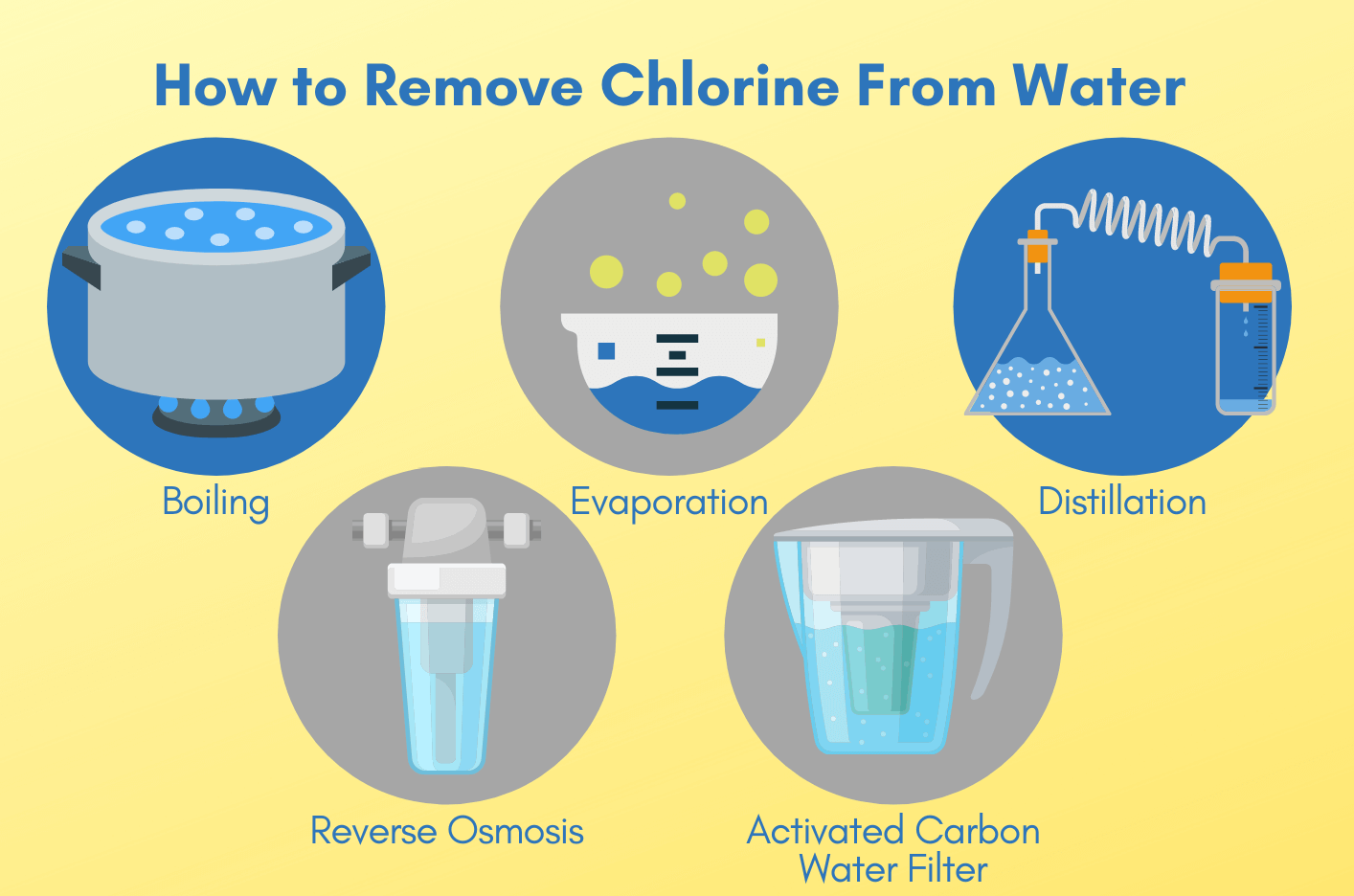
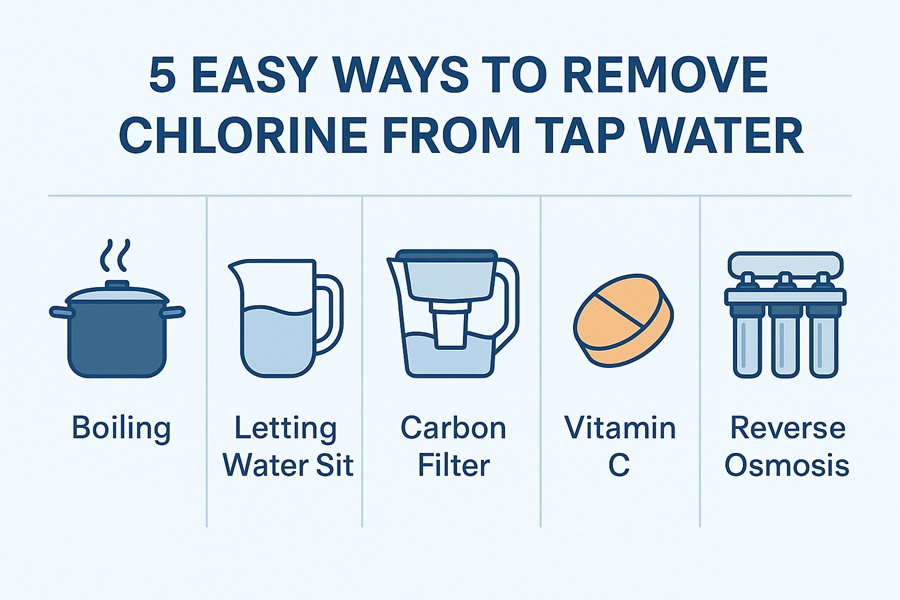
Before you roll your eyes, hear me out: boiling water for just 15 minutes is one of the simplest hacks. Heat speeds up the evaporation of chlorine, sending it off into the air like a ghost at a séance.
Must Read
Cool it down, pour it into a glass pitcher, and you’ve got instant, chemical-free hydration. Pro tip: add a few slices of lemon or cucumber while it cools—suddenly, you’re sipping spa water, not science project leftovers.
Fun Fact: The “Shower Effect”
Did you know that chlorine evaporates faster when water is agitated, like in a shower? That’s why that first blast of hot water smells so potent. It’s the chlorine saying “bye-bye” before it hits your lungs.
So, if you’re in a rush, just pour your tap water back and forth between two glasses a few times—you’re showering it without getting wet. Improvise, darling.
The Power of Patience: Let It Sit
Sometimes the best fix is just doing nothing—a philosophy that works for water, yoga, and your weekend plans. Let a pitcher of tap water sit uncovered in the fridge for 24 hours. Chlorine is a volatile gas; it’ll simply drift away like a lazy Sunday afternoon.
This method is for the chill minimalist in you. No gadgets, no boiling, no fuss—just time and a Brita pitcher-shaped memory. Cultural throwback: this is how your cool aunt in the 90s “filtered” water before it was trendy.
 Remove Chlorine From Water Shower at Misty Orth blog
Fun Fact: The Chlorine Clock
Ever notice how tap water tastes different after a long weekend? That’s because chlorine dissipates completely in 24 to 48 hours at room temperature. So, if you fill a pitcher on Monday, by Wednesday morning you’ve got water that tastes like mountain spring—minus the bear encounters.
Think of it as the water equivalent of letting a wine breathe. Just… a lot less bougie.
Activated Charcoal: The Rock Star of Filtration
Activated charcoal isn’t just for trendy face masks or black ice cream—it’s a master scavenger of chlorine and other nasties. Drop a charcoal stick into your water pitcher, and let it work its magic for about 2 to 3 hours.
It’s like having a tiny, silent bodyguard for every sip. Plus, these sticks can be boiled and reused for months—a win for your wallet and the planet. Cultural nod: this method has been used in Asia for centuries, proving that grandma’s wisdom transcends borders.
The Countertop Talk
Not into sticks? Grab a countertop carbon filter—the simple ones that attach to your faucet or sit in a dispenser. They’re basically the IPA of filtration: efficient, simple, and slightly hipster-approved.
Look for ones certified to remove chlorine by NSF International. It’s the boring label that does the loudest work.
 How to Dechlorinate Tap Water: Safe and Effective Methods - The
The UV and Reverse Osmosis Flex
For those who want to go full wellness warrior, reverse osmosis (RO) systems are the platinum ticket. They strip water of almost everything, including chlorine, heavy metals, and even some bacteria.
Yes, they’re pricier and require installation, but the water tastes like rain on a mountain peak. Fun fact: RO systems were used on the International Space Station. If it’s good enough for astronauts, it’s good enough for your morning oats.
UV light systems are another nerdy-but-effective option—they use ultraviolet radiation to zap chlorine molecules. It feels very Blade Runner chic, but the result is clean, tasteless water. Just make sure your system has a pre-filter for sediments.
A Word on the Daily Dance
You don’t need to become a water sommelier to enjoy good H₂O. Start small: a glass jar, a charcoal stick, and a little patience can transform your relationship with every sip.
Remember, removing chlorine is about choice, not fear. You’re not escaping a villain—you’re curating your own hydration experience. So, next time you drink from a clear glass, take a moment to appreciate the invisible work happening in your kitchen. Water is the original self-care.
And if all else fails? Just add a slice of lemon and call it art. Cheers.
