How Does A Water Well System Work

Ever turned on your faucet and wondered where that water actually comes from? If you’re not on a city water line, the answer is probably a mysterious hole in your backyard. Th...
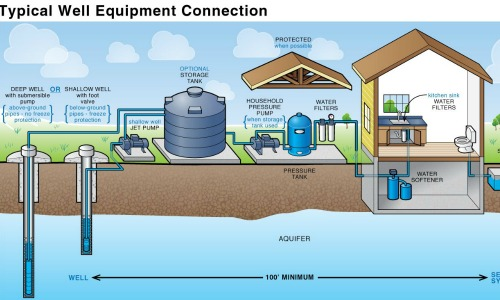
Ever turned on your faucet and wondered where that water actually comes from? If you’re not on a city water line, the answer is probably a mysterious hole in your backyard. That’s a water well system, and it’s basically a secret underground plumbing network powered by a pump.
Let’s be real—it sounds complicated, but it’s surprisingly simple when you break it down. Think of it as a giant straw drilled into the earth, sipping from a hidden lake. That hidden lake is called an aquifer, which is just a fancy word for a layer of rock or sand that holds water underground.
First, you need a hole (and a good spot)
A well doesn’t just start with a shovel—it starts with a drilling rig that punches through soil and rock. This is the part that feels like a science experiment: they drill down until they hit the aquifer, sometimes 100 feet or more.
Must Read
Why so deep? Because the water needs to be clean and plentiful, not just a muddy puddle. Once they hit the sweet spot, they drop in a steel casing (a big pipe) to keep the hole from collapsing and keep surface dirt out. It’s like lining a tunnel so it doesn’t cave in on you.
The pump: the heart of the system
Down inside that pipe lives the submersible pump, a hardworking gadget that pushes water up to your house. Imagine a reverse waterfall—instead of water falling down, it’s being lifted by a motor deep underground.
When you open a tap, the pump gets a signal (like a text message) and kicks on. It’s smart enough to know when to stop, thanks to a pressure switch. Pretty cool, right? Your toilet flush is basically ordering the pump to start a tiny water delivery race.
But wait—how does it stay clean?
If you’re drinking water from 200 feet below, you don’t want it tasting like mud or bacteria. That’s where a screen at the bottom of the casing comes in, filtering out sand and grit. Additionally, a well cap sits on top like a hat, keeping bugs, leaves, and curious frogs from jumping in.
 Parts Of A Water Well Pump - Infoupdate.org
Some systems also add a water softener if the aquifer has lots of minerals. Ever tasted that metallic twang? That’s hard water, and a softener polishes it out so your coffee tastes better and your shower doesn’t leave residue.
The coolest part? It’s all pressure-driven magic
Your well water doesn’t just trickle—it shoots out with force because of a pressure tank in your basement or garage. Imagine a bicycle pump full of air and water; when you open a valve, the air pushes the water out with gusto.
That tank stores water under pressure, so the pump doesn’t have to run every single time you grab a glass of water. It’s like a buffer, a water bouncer that says, “I’ve got this, pump, take a break.” Without it, your pump would burn out in a week from constant work.
Maintenance? It’s easier than you think
Here’s the fun part: a well system is low maintenance if treated right. You just need to check the pressure switch once a year and test the water for bacteria or minerals. Basically, it’s like keeping a pet rock—very little effort, but a big payoff.
 How Does A Well System Work
And if the power goes out? No pump, no water—unless you have a generator. That’s the one catch: you’re independent from city water, but also independent from the city’s emergency backup. Still, most well owners will tell you the trade-off is worth it for the taste and the freedom.
Why it’s weirdly cool
Think about it: you’re tapping into a resource that’s been filtering through rock for centuries. Every time you drink well water, you’re tasting rainwater that fell during the time of your grandparents (or even earlier). That’s a deep thought—literally and figuratively.
Plus, you’re not paying a water bill to a corporation. Your only cost is electricity for the pump and occasional filter changes. It’s like having a private, renewable spring in your own backyard. How many people can say their water comes from a hole a mile down?
So next time you take a sip from the tap, give a little nod to your dusty, hardworking well system. It’s quiet, it’s reliable, and it’s doing a pretty epic job—without making a big fuss about it. And that, honestly, is pretty awesome.
