How Much Sodium In Softened Water

You’ve just installed a water softener, and suddenly your morning shower feels like silk. But then, that little voice whispers: “How much sodium am I actually drinking?” Let’s...

You’ve just installed a water softener, and suddenly your morning shower feels like silk. But then, that little voice whispers: “How much sodium am I actually drinking?” Let’s calm those nerves. It’s a surprisingly easy-going topic once you get the facts straight.
The Short Answer: It’s Less Than You Think
For most people, the sodium added by a standard water softener is negligible. Think about this: an 8-ounce glass of softened water typically contains between 12 and 30 milligrams of sodium. To put that in perspective, a single slice of white bread has around 150 milligrams.
The exact number depends on your water’s starting hardness. Harder water means the softener uses more sodium ions to swap out the calcium and magnesium. But even in very hard water areas, you’re looking at about 20 to 50 mg per glass—barely a blip on your daily radar.
Must Read
A Fun Little Fact: The Sliced Bread Analogy
Drinking a full liter of softened water from a hard-water region adds about as much sodium as two potato chips. Meanwhile, a single dill pickle can pack 1,200 mg. So, unless you’re eating pickles like popcorn, your softener is the least of your worries.
This is why the American Heart Association and most health authorities consider softened water safe for the general population. The catch? It only matters if you’re on a strict low-sodium diet for health reasons like hypertension or kidney issues.
When Expertise Pushes Back: The Exceptions
If you are truly sodium-sensitive—say, your doctor gives you a 1,500 mg daily limit—then yes, you should think about your water. In that case, a single liter of very hard softened water could use up 5% of your daily allowance. That’s not huge, but it adds up if you’re also eating prepared foods.
Here’s a twist: many modern softeners offer a potassium chloride option instead of sodium chloride. This swaps the sodium for potassium, which is actually beneficial for blood pressure. It costs a bit more, but it’s a slick choice for health-conscious folks.
Another pro tip: you can install a bypass faucet for your kitchen sink. That way, you drink unsoftened water while still enjoying soft showers and laundry. It’s the lifestyle equivalent of having your cake and eating it too—minus the extra salt.
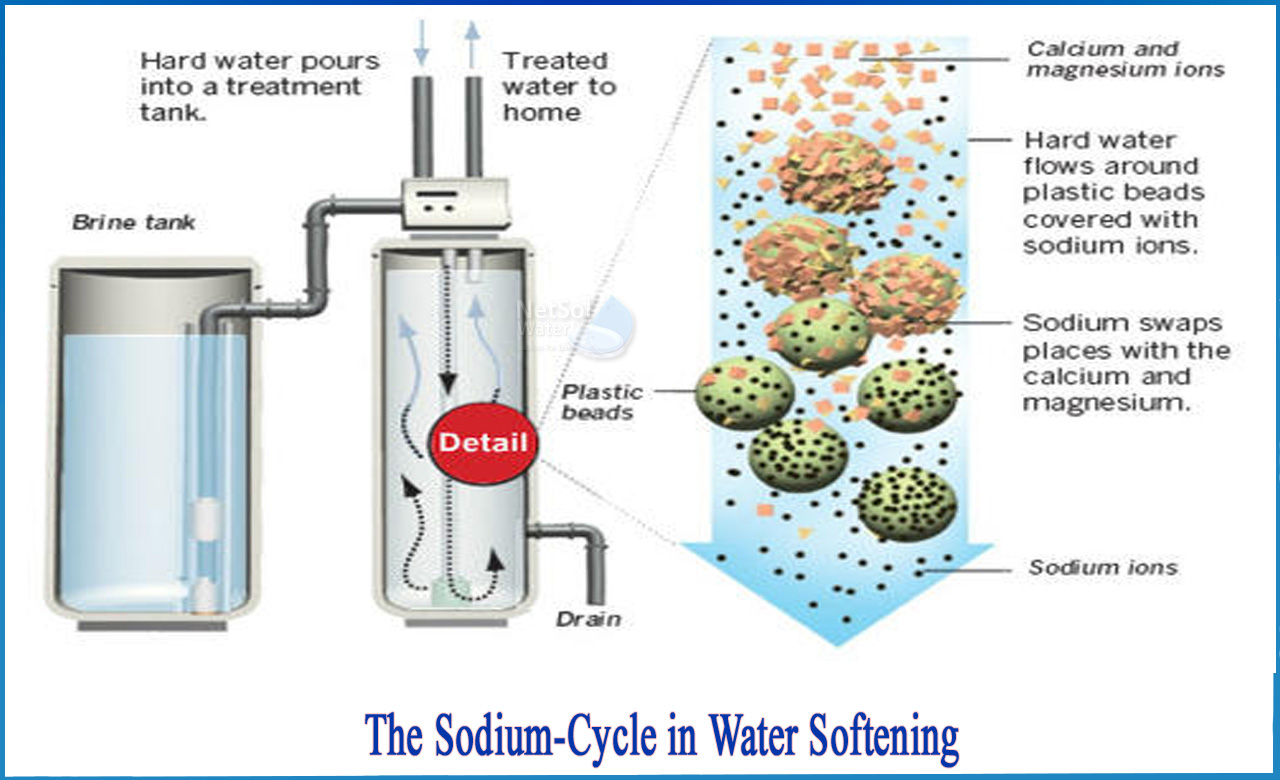 How to Water Softening work with Sodium-Cycle
Practical Tips for the Modern Home
First, test your water hardness. Most home test kits are cheap and tell you exactly what you’re dealing with. If your water is under 7 grains per gallon (moderately soft), your sodium addition is basically zero.
Second, look at your softener’s efficiency settings. Older models waste salt; newer ones regenerate only when needed, cutting sodium use by up to 40%. That’s good for your wallet and your health.
Finally, if you’re pregnant or have a family member on a low-sodium diet, consider a reverse osmosis system for drinking water. It removes the sodium (and other minerals) completely, giving you a blank slate for your morning smoothie.
The Cultural Angle: Bottled Water vs. Softened Water
Remember the 1990s obsession with “designer water”? We spent billions on plastic bottles that were basically filtered tap water with a splash of marketing. Meanwhile, softened water is often purer than many bottled brands, with fewer contaminants like chlorine or heavy metals.
In Europe, particularly in France and Italy, many households use softened water for everything from pasta to espresso. They don’t panic about sodium—they celebrate the fact that their coffee tastes less bitter and their skin feels softer. It’s a cultural mindset: embrace the function, not the fear.
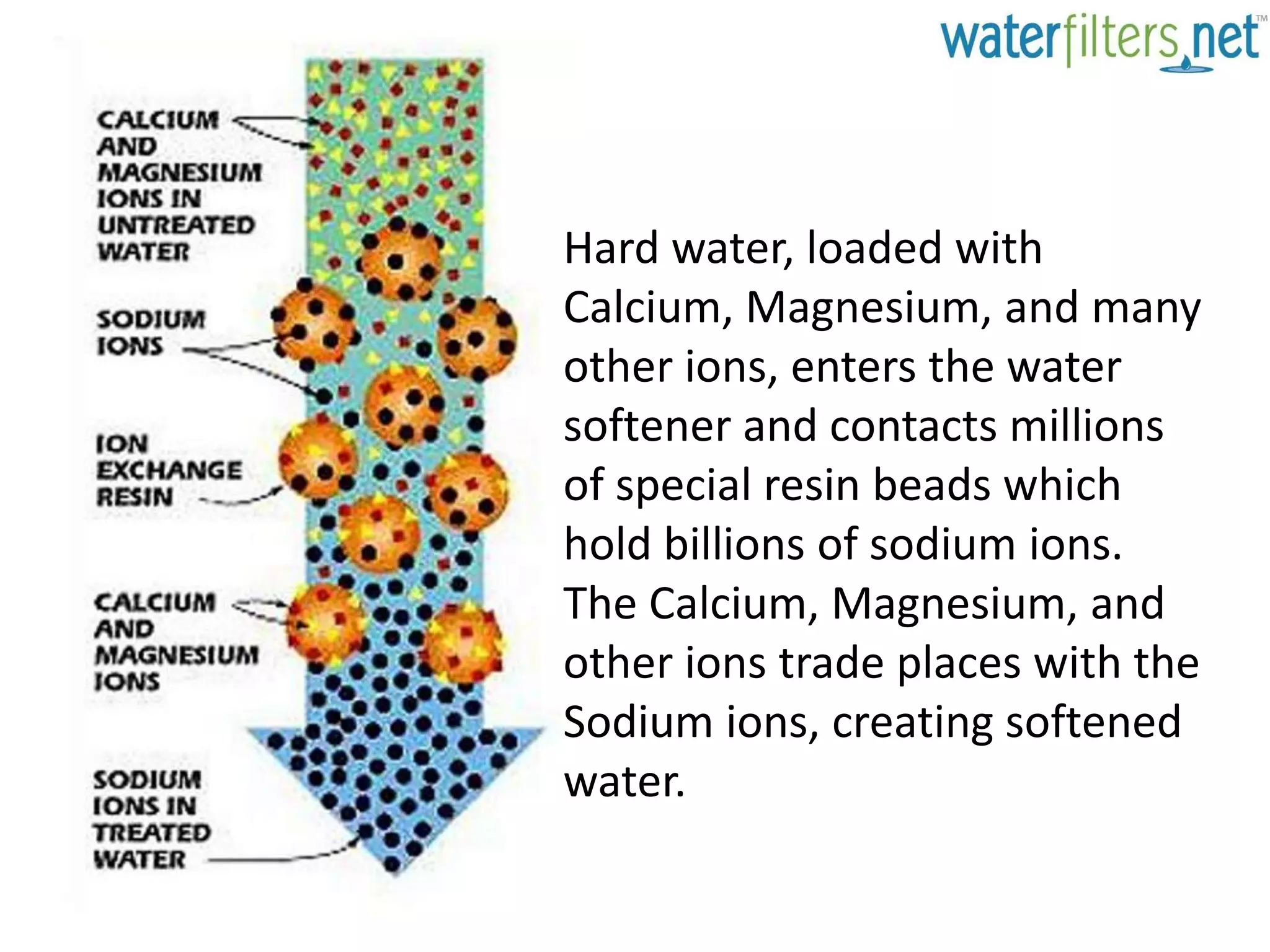 Understanding hard water & water softening | PPTX
The real irony? The sodium in your tap water is a tiny fraction of what’s hidden in restaurant meals and processed snacks. A single serving of canned soup can have 800 mg—more than a week’s worth of softened water. Context is everything.
Fun Fact: The Soap Paradox
Hard water fights with soap, meaning you need more detergent to get clean. That extra soap residue can irritate sensitive skin. By softening your water, you actually use less soap and less chemical exposure. So, in a weird way, softened water might be healthier for your skin than “pure” hard water.
Also, softened water extends the life of your appliances. Your water heater, coffee maker, and dishwasher all last longer without mineral scale. That’s less waste in landfills—a small but real win for eco-conscious living.
Final Reflection: A Glass Half Full
When I first installed a softener, I worried about every sip. Then I realized I was drinking a glass of water while snacking on a bowl of salted almonds. The almonds had more sodium, more fat, and more reality. The water? It was just silence for my taste buds.
So, here’s the takeaway: don’t let the numbers bully you. Unless your doctor says otherwise, sodium in softened water is a non-issue for 99% of us. Enjoy the softer towels, the clearer glasses, and the fact that your hair doesn’t turn into straw.
Life’s too short to stress over 20 milligrams. Pour yourself a glass, add a lemon slice, and toast to the simple luxury of water that feels just right. You’ve got bigger salts to worry about—like that bag of chips you’re about to open.
