How To Test Lead In Water At Home

Let’s talk about lead. Not the pencil kind (that’s graphite, by the way). We’re talking about the sneaky metal that can hitch a ride in your tap water. It’s like an uninvited...

Let’s talk about lead. Not the pencil kind (that’s graphite, by the way). We’re talking about the sneaky metal that can hitch a ride in your tap water. It’s like an uninvited guest at a party—quiet, invisible, and potentially ruining the vibe.
Testing for lead at home is easier than assembling IKEA furniture. And way less frustrating. You don’t need a lab coat or a chemistry degree. Just a little curiosity and a few simple tools.
Why Should You Even Care?
Imagine your water pipes are like aging rock stars. They used to be awesome, but now they’re rusty and shedding old material. That’s lead from old plumbing, solder, or even some brass fixtures.
Must Read
Lead is a neurotoxin. That’s a fancy word for “bad news for brains.” Kids and pregnant folks are the most at risk. But hey, nobody wants extra metal in their morning coffee.
Here’s the quirky part: lead doesn’t smell or taste weird. Your water could look crystal clear and still be a metal taxi service. Testing is the only way to know if your H2O is a clean getaway car or a rusty jalopy.
Method 1: The DIY Test Kit (Your New Best Friend)
Head to your local hardware store or click “buy now” online. Grab a home lead test kit. They cost about $10 to $30. That’s cheaper than a fancy latte habit.
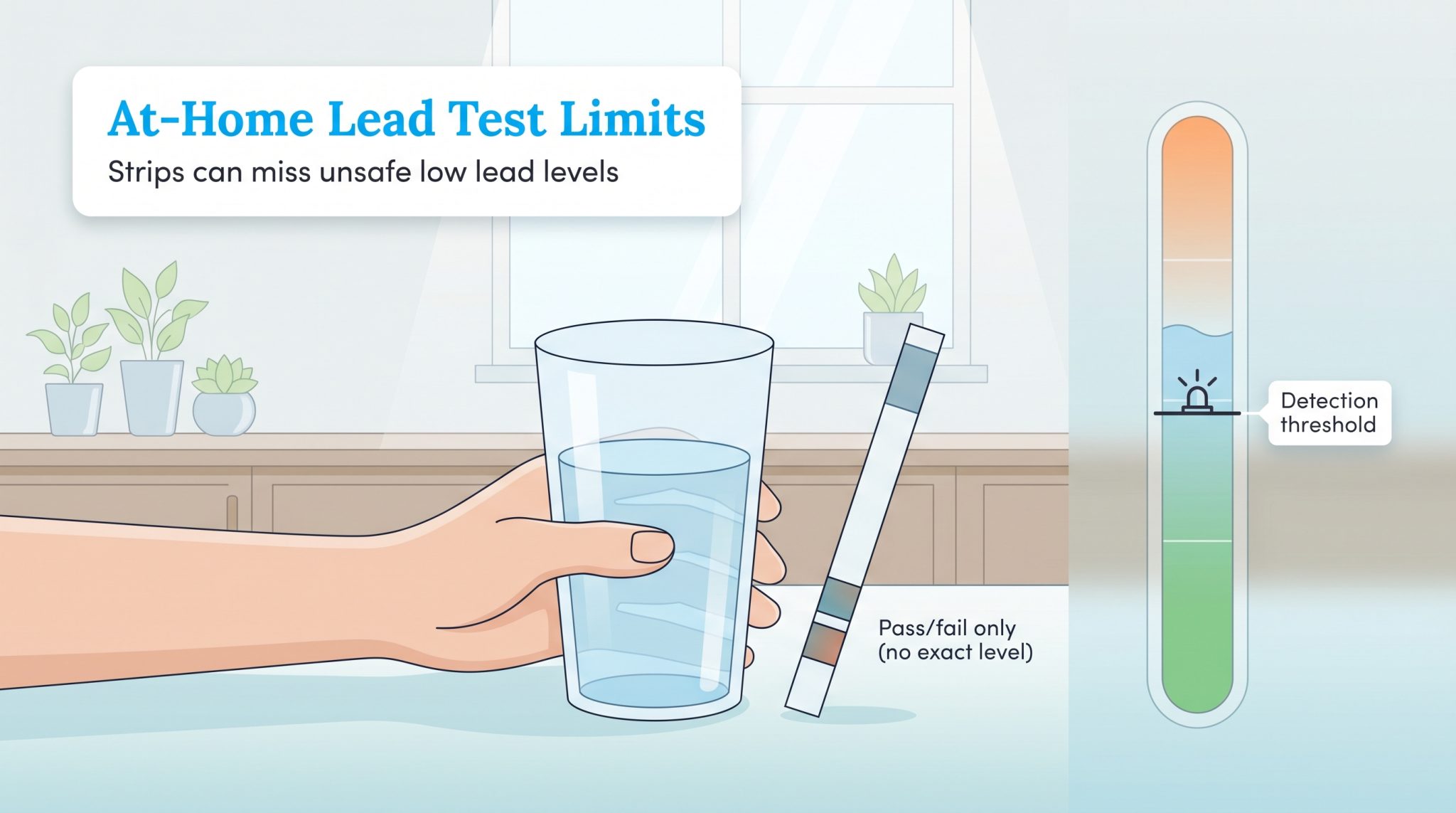
These kits use a chemical reaction. You dip a strip in water, wait a few minutes, and watch for a color change. Pink or red means lead is present. It’s like a mood ring, but for your faucet.
Pro tip: Read the instructions twice. One goof, and you might think your water is haunted when it’s actually just chlorine. Follow the “first-draw” and “flushed” sample rules—they matter.
The Quirky Science Behind It
Most kits use rhodizonate or similar chemicals. They bind to lead ions and turn a specific color. It’s not magic—it’s chemistry. But it feels like a wizard trick you can do in your kitchen.
Fun fact: Lead was used in ancient Roman water pipes. The word “plumbing” comes from the Latin plumbum, meaning lead. The Romans probably weren’t testing their water. They were too busy with togas and chariot races.
 How to Test Your Water for Lead: DIY Kits, Free Options, and Lab
Method 2: The Lab Test (For Overachievers)
Want to be extra thorough? Send a water sample to a certified lab. It costs around $20 to $50. But it gives you a detailed report with exact lead levels—down to parts per billion.
You’ll get a sterile bottle and instructions. Collect water, seal it, and ship it off. Wait a week or two. Then you’ll receive a document that makes you feel like a water detective.
Warning: The lab report might use big words. Don’t panic. Just look for the number for lead. Anything above 15 parts per billion is a red flag. Below that? You’re likely golden (or at least not leaden).
Why the Lab Test is Overkill for Most People
Unless you’re a hypochondriac or a scientist, the home kit is perfect. It’s quick, cheap, and gives you a yes-or-no answer. The lab test is like using a microscope to find a lost sock. Fun, but unnecessary.
But if you’re moving into a fixer-upper from the 1920s? Go for the lab test. Those old pipes might be singing with lead. Knowledge is power, and power means not drinking heavy metal-infused tea.
How to Do the Test Without Being a Goof
First, don’t test hot water. Hot water dissolves more lead. Use cold water from your kitchen tap. That’s your main drinking source. Let it run for 30 seconds first to flush out stagnant water.
Second, fill a clean glass or the provided vial. Most kits need about an inch of water. If you splash it all over your counter, you’re doing it wrong. Slow and steady wins the testing race.
Third, wait for the magic. Dip the strip, hold it for the exact time listed (usually 10-30 seconds), then set it aside. Don’t poke it or blow on it. It’s not a birthday candle.
 3 Easy Ways to Test for Lead - wikiHow
What to Do If You Find Lead
Don’t immediately move to Mars. It’s manageable. Run the tap for 1-2 minutes before drinking. That flushes out water that sat in pipes. Use cold water for cooking and drinking. Never use hot tap water for baby formula or soup.
Consider a filter. Some pitcher filters (like those with NSF/ANSI Standard 53) remove lead. Or install a faucet-mounted filter. It’s a cheap fix that makes your water taste like a mountain stream.
If your whole house has lead pipes? That’s a bigger job. Call a plumber. But don’t panic. Millions of homes had lead pipes. You’re not alone. You’re just part of a historic club.
Why This Topic is Actually Fun
Testing for lead turns you into a citizen scientist. You’re not just drinking water—you’re investigating it. It’s like a game of Clue, but the suspect is a toxic metal, and the weapon is your faucet.
Plus, you get to use words like “parts per billion” and “rhodizonate.” Try dropping those at your next dinner party. People will think you’re either a genius or a conspiracy theorist. Either way, it’s a conversation starter.
Lastly, you own your data. You’re not waiting for a government report. You’re taking action. That feels good. Like finishing a puzzle or winning a round of trivia night.
One Last Quirky Fact
Lead occurs naturally in the Earth’s crust. So even untouched water can have tiny bits of it. But those levels are usually super low. The real troublemaker is human-made plumbing. We invented the problem, and now we get to solve it.
So grab a test kit. Get your water checked. You might discover your tap is awesome—or need a little tune-up. Either way, you’ll be wiser. And wisdom tastes better than lead. Cheers.
