Why Is My Water Softener Leaking

So, you’ve just discovered a puddle creeping across your laundry room floor, and your water softener looks like it’s crying. Before you panic and assume your home’s plumbing h...
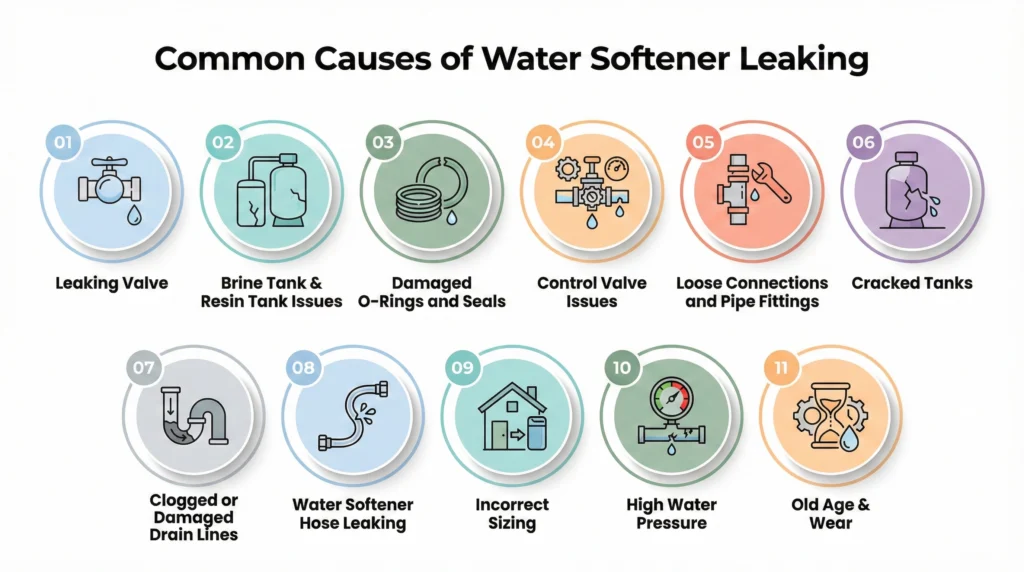
So, you’ve just discovered a puddle creeping across your laundry room floor, and your water softener looks like it’s crying. Before you panic and assume your home’s plumbing has developed a terminal illness, take a deep breath. Water softeners leak for a few common, often hilarious reasons—and I’m here to walk you through them without you needing a degree in “saltology.”
The Great Salt Bridge Disaster
Picture this: your water softener is a tiny medieval fortress, and inside, the salt has formed a solid crust across the top of the brine tank. That’s a “salt bridge,” and it’s basically your softener’s way of saying, “I refuse to eat my dinner.”
When this crust forms, water can’t reach the salt, so the system gets confused and decides to dump water everywhere. The fix? Take a broom handle and gently crack that crust like you’re breaking into a piñata—but please, no wild swings; we’re not at a carnival.
Must Read
Surprising fact: That crust can be as hard as concrete if you use cheap salt. Your softener is judging your grocery choices.
The Clogged Drain Line Meltdown
Imagine you’re trying to blow up a balloon, but the tiny opening is clogged with chewed gum. That’s what happens when your softener’s drain line gets blocked by slime, grit, or tiny brine crystals.
When it can’t drain properly, backpressure builds up, and—poof—water starts squirting out like a geyser during a toddler’s tantrum. Check the drain line for kinks or gunk; it’s often just a $2 fix that saves you from a $500 flood.
Playful exaggeration: I once saw a drain line clogged with what looked like a whole forest of mold. The softener was basically running a tiny swamp.
The “O-Ring” That Betrayed You
Inside your softener’s valve head, there are tiny rubber rings called O-rings. These little guys are the unsung heroes of your plumbing—until they dry out, crack, or just decide to retire without notice.
When they fail, water leaks from the top of the unit, dripping down like a slow-motion waterfall. Replacing an O-ring costs less than a fancy coffee, but ignoring it costs you a new floor.
 Why Is My Water Softener Leaking Water? Causes & Fixes
Fun fact: O-rings are made from the same stuff as gaskets in your car engine. So yes, your water softener’s gasket is basically a tiny car part—and it’s equally moody.
The Overfilling Brine Tank Fiasco
You know that feeling when you pour milk into a bowl of cereal and forget to stop? Your water softener can do the same thing if its float valve gets stuck. Overfilling leads to a salty waterfall cascading onto your floor.
Check if the float is obstructed by salt crust or a stray plastic shard. Sometimes the fix is just giving the float a gentle nudge—like reminding your teenager to clean their room, but with less attitude.
Surprising fact: The float valve is almost identical to the one in your toilet tank. So yes, your softener has a toilet brain.
The Cracked Tank Crisis
If you see a steady trickle from the bottom of the brine tank, and all the above checks are fine, you might have a tiny crack. This can happen if the tank was frozen during shipping or if you’ve used the softener in an unheated garage during a polar vortex.
Sadly, this is the “call a pro” moment—or if you’re brave, you can try patching it with marine epoxy. Don’t use duct tape unless you want your floor to look like a failed science experiment.
 Why Is My Water Softener Leaking? (7 Reasons & Solutions!)
True story: A friend’s softener cracked because a curious raccoon decided to sit on it for warmth. Raccoons: nature’s plumbing critics.
The Timer or Control Board Glitch
Modern softeners have a little computer brain that tells them when to regenerate. If that brain gets a short circuit or a power surge, it might decide to flood the house just for fun.
Unplug the unit for 30 seconds to reset its tiny psychiatric state. If the leak stops, you’re a genius. If not, the board may need replacing—which is cheaper than hiring an exorcist.
Weird but true: Some softeners glitch because of static electricity from your dryer. Your socks might be conspiring against your basement.
The Simple Fixes You’re Probably Ignoring
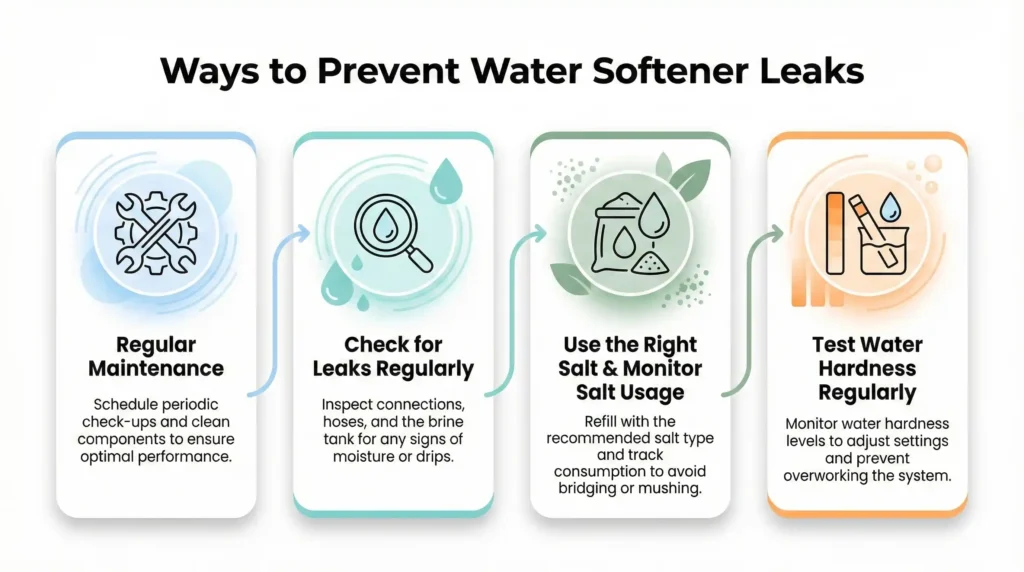
Before you call a plumber, check these three things: (1) Is the hose connecting your softener to the house water tight? Sometimes it’s just a loose nut. (2) Is the salt level too high? Fill it only halfway—your softener isn’t a bottomless salt pit. (3) Are you using the right type of salt? Rock salt will wreck your softener like a bad haircut.
Final survival tip: Water softeners are like cats—they purr when happy, but hiss and leak when annoyed. Listen to them, crack the salt bridge, and always keep a towel handy. You’ll be the hero of your own basement.
