How To Shut Off Water Under Sink

Let’s be honest: the scariest sound in your kitchen isn’t a burglar—it’s that drip-drip-drip turning into a gushing symphony of panic. You’re on your hands and knees, a wrench...
Let’s be honest: the scariest sound in your kitchen isn’t a burglar—it’s that drip-drip-drip turning into a gushing symphony of panic. You’re on your hands and knees, a wrench in one hand and a prayer in the other, wondering if you should call a plumber or start building an ark. But before you add “flood” to your resume, I’ve got the secret that plumbers don’t want you to know: shutting off the water under your sink is easier than parallel parking (and way less embarrassing).
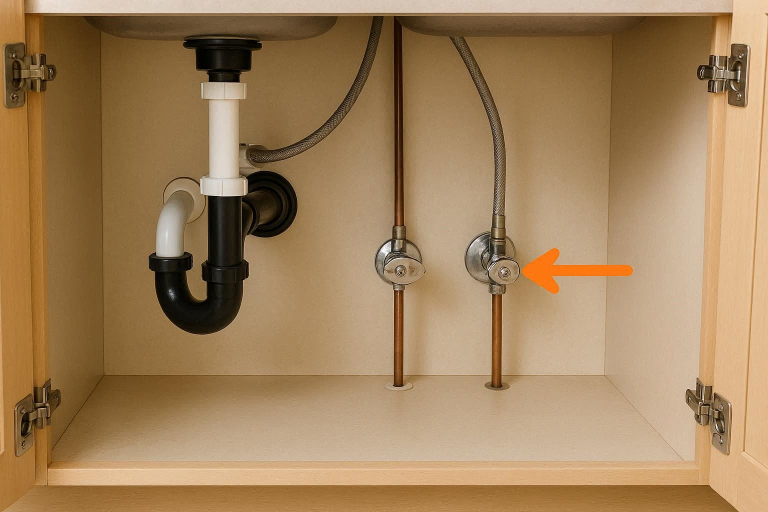
The heroes of this story live in a dark, cramped universe—your under-sink cabinet. Tucked behind a mountain of cleaning supplies, old sponges, and that mysterious bottle of “something from 2019,” you’ll find two little valves. They look like tiny chrome aliens, usually with a little handle or a knob that’s been waiting years for this moment of glory.
Fact: Those valves are called “angle stops” or “supply stops,” and they’re basically the bouncers at the water club. When you turn them, they say “No more water for you, thirsty pipe!” and suddenly the party stops. If you ever have a pipe burst or a sprayer attack you, these little guys are your only friends.
Must Read
Step One: Locate the Victims
Kneel down and look under your sink. You’ll see two or three metal braided hoses (they look like fancy snakes) running up from the floor or the wall to your faucet. Each hose has a little valve—one for hot water (usually on the left) and one for cold (on the right). If you have a sprayer, there might be a third, but ignore that drama for now.
Pro tip: If you can’t see them because of a towering fortress of cleaning sprays, just clear the cabinet with the fury of a person who truly needs to stop a leak. You are a treasure hunter, and the treasure is dryness.
The Handle Situation
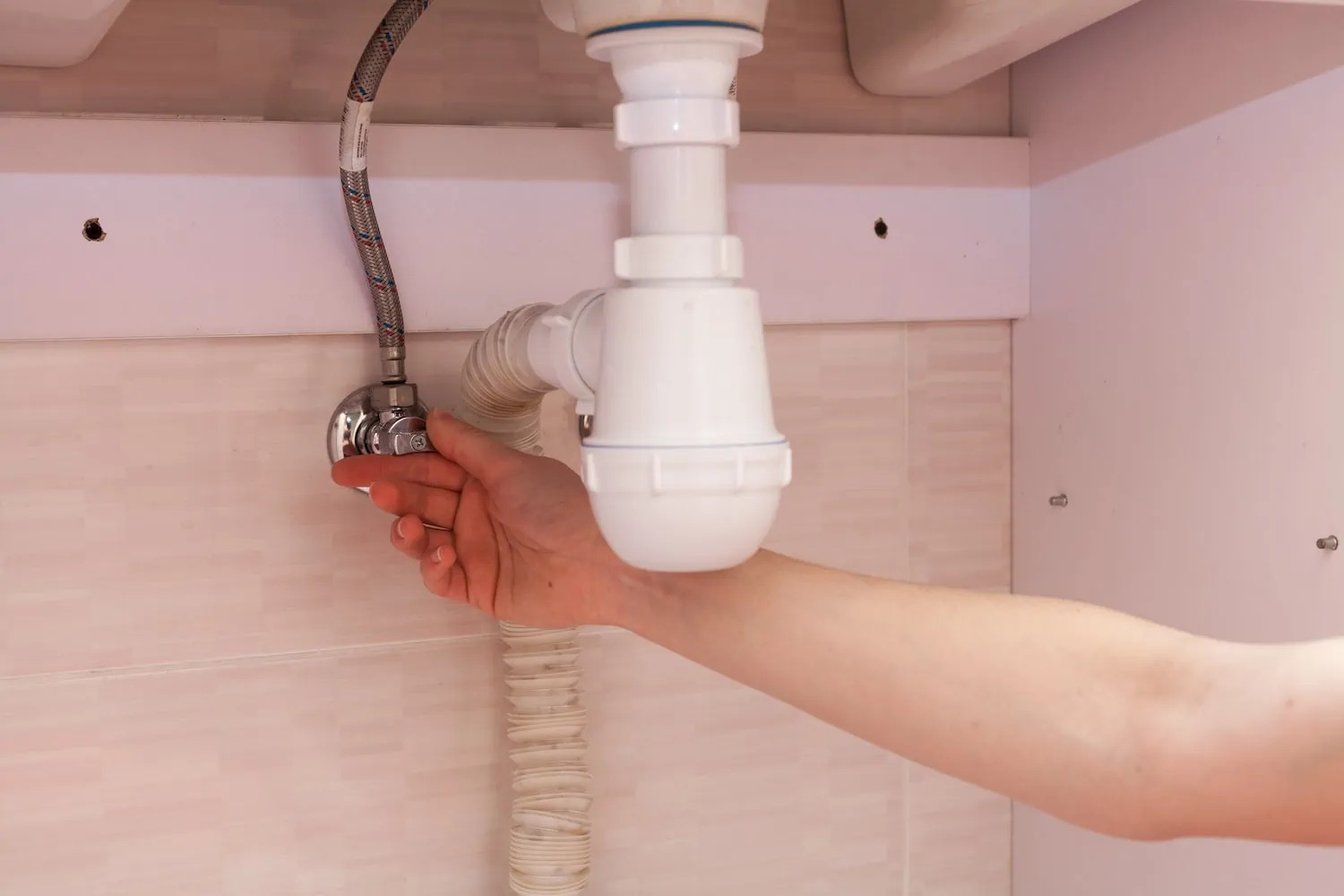
Now, look at the handle on each valve. Some are little levers that look like tiny runway gates, and some are round knobs that demand to be twisted. The handle will be parallel to the pipe (water flowing) or perpendicular (water blocked). If it’s a lever, treat it like a switch: turn it 90 degrees until it crosses the pipe.
 How to Turn Off Water Under Your Sink (Kitchen & Bathroom) | Checkatrade
If it’s a round knob, you’ll turn it clockwise (righty-tighty) until it stops. Don’t Hercules it—if it’s stuck, give it a gentle love tap with a wrench or a shoe. Surprising fact: You are now a human plumber, and humans have been doing this since the Romans invented indoor plumbing. You are literally continuing a 2,000-year-old tradition.
The Moment of Truth
Go ahead and turn off both valves—hot and cold. Don’t be shy. You won’t break the house, I promise. Once they’re shut, test your work by turning on the faucet. If only a few sad drops come out and then nothing, congratulations—you are now a water-wrangling Jedi.
If the water still flows like a fire hose at a clown college, you might have a valve that’s older than your grandma’s favorite toaster. In that case, find the main water shut-off for your whole house (usually near the street or in the basement). But don’t panic—this is rare, and you’re already a hero for trying.
Why You’ll Never Look at Your Sink the Same Way
Here’s the magical part: once you’ve done this once, you’ve unlocked a superpower. You can now fix a leaky faucet, replace a sprayer, or even install a whole new sink without drowning your floor. Homeowners insurance data shows that most water damage claims start under sinks, but 90% of them could be avoided if people just knew where these valves were. You know now.
 How To Shut Water Off Under Bathroom Sink at Andrew Freeman blog
Also, let’s be real—this is way more satisfying than that time you changed a light bulb. You’ve stopped a flood. You’ve bent the elements to your will. You’re basically Poseidon’s distant cousin, but with a wrench.
A Final Warning (and a Joke)
Be careful not to break the valve. If you crank a knob too hard and it snaps off (which happens in about 3% of DIY attempts), you’ll have a tiny geyser on your hands. If that happens, stuff a rag on the pipe and call a plumber while screaming “Avast, ye scurvy pipes!” into the void.
But really, 97% of you will be fine. You’ll close the cabinet, wipe your hands on your jeans, and smile like you just fixed a spaceship. And the next time a friend says, “Omg, my sink is leaking!” you’ll get to casually say, “Have you tried turning off the angle stop?” and watch them gasp like you’re a magician.
So go on. Open that cabinet. Confront the forgotten sponges and the ancient dust bunnies. Find those chrome bouncers, give them a twist, and become the master of your own wet destiny. You’ve got this. And if you don’t, well—that’s what towels are for. But you do got this.
