What Is Hard Water In Chemistry

So, you’re standing in your shower, waging war on a soap scum that seems to have taken a solemn oath to never leave your tiles. You’ve tried everything short of a flamethrower...
So, you’re standing in your shower, waging war on a soap scum that seems to have taken a solemn oath to never leave your tiles. You’ve tried everything short of a flamethrower, yet that filmy, white crust remains. Welcome to the world of hard water—a chemical phenomenon that turns your morning rinse into a mineral-based hostage situation.
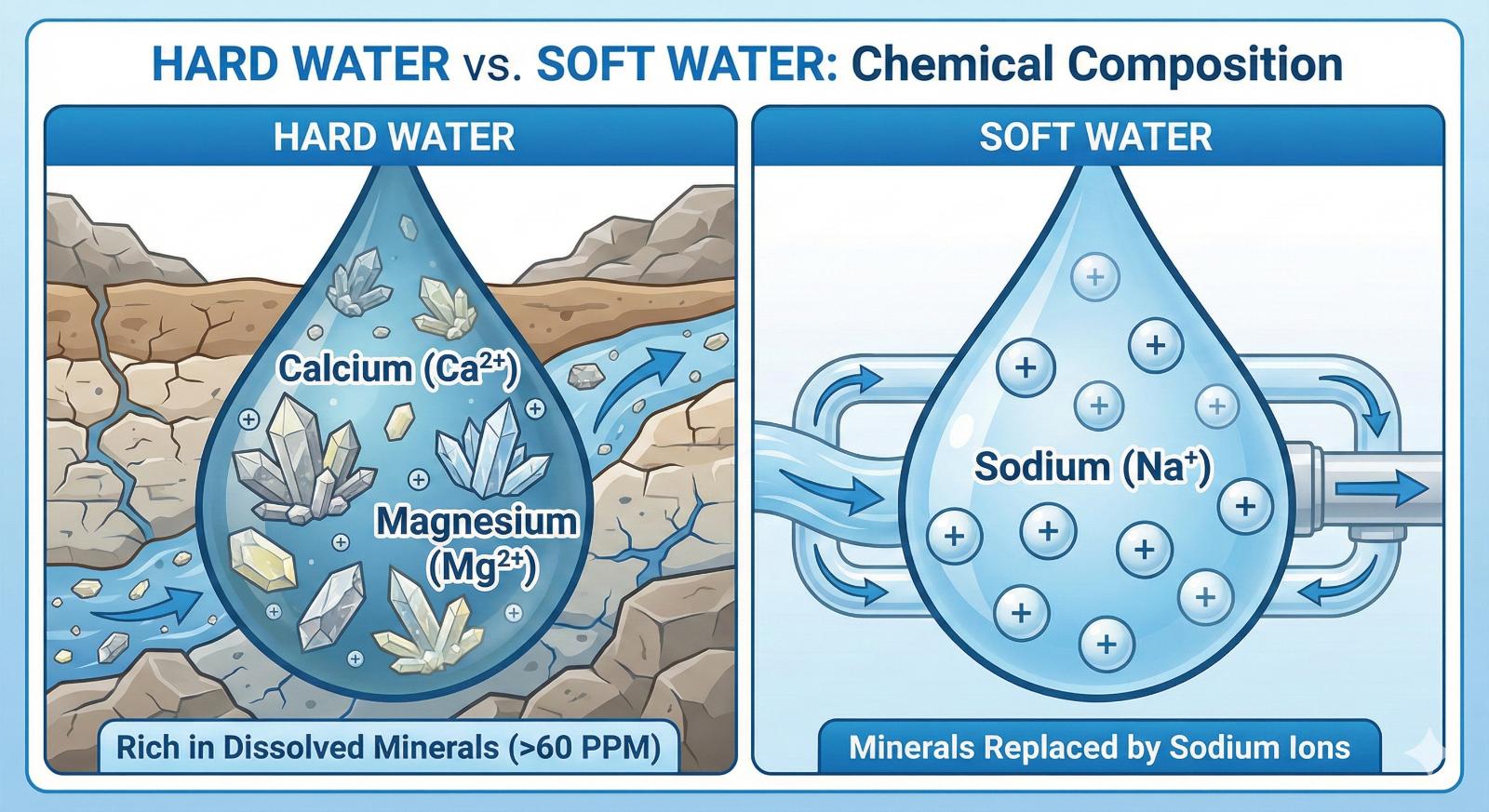
In chemistry, hard water is just regular H2O with a serious case of mineral baggage. It’s loaded with dissolved calcium and magnesium ions, picked up as rainwater journeys through limestone and chalk underground. Think of it as water that went to a rock buffet and forgot to stop eating.
You’d never guess it by looking at it—hard water looks perfectly clear and innocent. But the moment you add soap, the trouble begins. The calcium and magnesium ions grab onto soap molecules and form a sticky, gray curd that clings to your skin, your hair, and your bathtub like an unwanted houseguest.
Must Read
The Soap Sabotage
Here’s the hilariously annoying truth: hard water makes soap less effective. Instead of lathering up into a fluffy cloud, you get a sad, slimy scum. You end up using twice the soap, and you still feel like you’re rinsing off a science experiment gone wrong.
Your hair? It gets that flat, dull look because the mineral curd won’t let conditioner do its job. Your skin feels dry and itchy, like you just scrubbed with sandpaper made of chalk. It’s not you—it’s the water.
And don’t get me started on your laundry. Hard water turns white socks gray faster than a rainy day in London. The minerals bond with fabric fibers, trapping dirt and making your “clean” clothes smell funky.
The Kettle’s Revenge
If you’ve ever boiled a kettle in a hard-water area, you’ve seen the horror show firsthand: a thick, white crust called scale coating the heating element. That’s calcium carbonate doing its best impression of a coral reef inside your appliances.
Scale is a terrible heat conductor, so your kettle takes longer to boil, costing you electricity and patience. Your coffee maker, dishwasher, and even your pipes suffer the same slow, scaly death. It’s like a mineral version of plaque, except your plumber charges way more than a dentist.
 What is hard water? - h2x
In extreme cases, hard water can reduce the lifespan of your water heater by years. Surprising fact: some ancient Roman aqueducts were clogged by the same kind of mineral buildup—so you’re literally dealing with an empire-sized problem.
The Chemistry of “Temporary” vs. “Permanent”
Let’s get geeky for a moment, but keep it fun. Hard water comes in two flavors: temporary and permanent. Temporary hard water contains calcium bicarbonate, which breaks down when you boil it, releasing carbon dioxide and leaving behind that scale. That’s why your kettle looks like a stalactite farm.
Permanent hard water, on the other hand, contains calcium sulfate or magnesium sulfate. Boiling does nothing to it—you need a water softener or a chemical treatment to kick those stubborn minerals out. It’s like the “permanent” guest who refuses to leave the party after the host starts cleaning up.
Here’s a twist: hard water isn’t all bad. Those calcium and magnesium ions are actually good for your bones and heart. Some studies suggest drinking hard water may reduce your risk of cardiovascular disease. So while it’s wrecking your pipes, it might be quietly saving your heart.
The Many Ways to Fight Back
You can wage chemical warfare on hard water with water softeners. These devices replace calcium and magnesium ions with sodium or potassium ions, using a process called ion exchange. Suddenly, your soap lathers like a dream, and your hair feels like silk.
 Hardness Of Water
Another trick: use chelating agents like EDTA in your cleaning products—they grab minerals and keep them from scaling. Or just add a splash of vinegar to your laundry rinse; the acetic acid dissolves those pesky carbonate deposits. It’s not rocket science—it’s just simple chemistry with a vinegar smell.
If you want to get old-school, install a magnetic or electronic descaler. These devices claim to alter the mineral crystals so they won’t stick to surfaces. Is it science or wizardry? The debate continues, but desperate people will try anything to stop scrubbing that shower door.
The Final, Soap-Free Verdict
Hard water is a sneaky, mineral-packed trickster that turns everyday tasks into a battle of wills. It’s not dangerous—your pipes are just annoyed, and your skin is just confused. But now you know the chemistry behind the crust: it’s water that can’t let go of its rocky past.
Next time you see that white film on your glassware, just nod and say, “Ah, yes, calcium carbonate—my old frenemy.” You’ll sound like a mad scientist, but at least you’ll understand why your kettle looks like it belongs in a cave. And hey, at least it’s not lead—hard water is harmless, just infuriatingly clingy.
So go forth, lather wisely, and remember: if your soap doesn’t foam, it’s not the soap’s fault. It’s the ancient limestone ghosts haunting your tap. And honestly, that’s kind of amazing.
