What Is Ph Level Of Pure Water

You’ve probably seen the word “pH” on shampoo bottles, garden soil kits, or maybe even your fancy water bottle. It sounds scientific, like something from a lab coat. But let’s...
You’ve probably seen the word “pH” on shampoo bottles, garden soil kits, or maybe even your fancy water bottle. It sounds scientific, like something from a lab coat. But let’s be honest: most of us just want to know if our tap water is okay to drink.
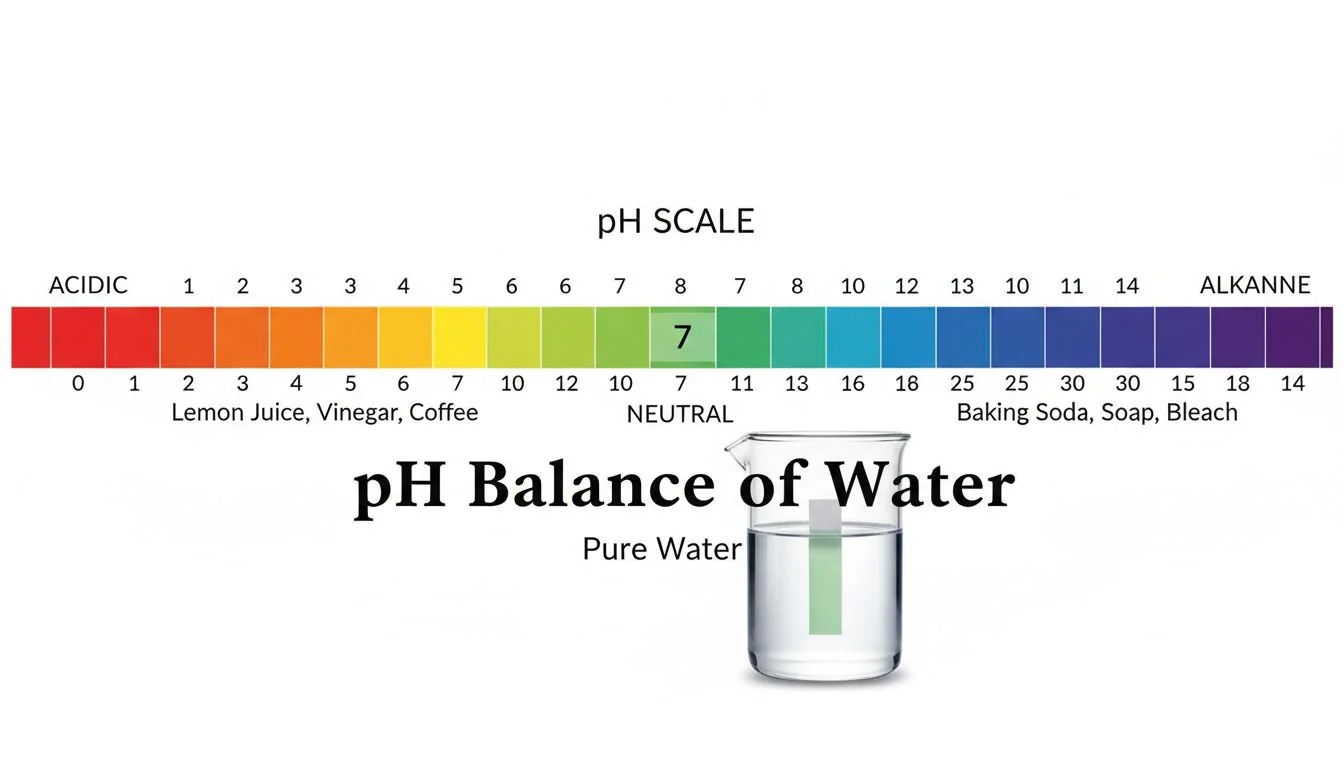
Here’s the simple truth: pure water has a pH level of exactly 7. Scientists call this “neutral.” Think of it as the Goldilocks of the water world—not too acidic, not too basic, just right.
But what does “neutral” actually feel like? Imagine biting into a lemon. That sour zing is acidity (low pH). Now think of baking soda—bitter and chalky (high pH). Pure water? It’s like a quiet Monday morning: no drama, no surprises.
Must Read
Why Is It Exactly 7?
Water is made of two hydrogen atoms and one oxygen atom—H₂O. When those atoms shake hands, some of them break apart into positive and negative ions. The number of those ions determines the pH.
In pure water, the balance is perfect: equal amounts of acid and base ions. That’s why it’s 7 on the pH scale, which runs from 0 (super acidic) to 14 (super basic). It’s nature’s version of a scale that’s perfectly level.
You can think of it like a seesaw. Pure water is the kid in the middle, legs dangling, not tipping one way or the other. That’s peace, my friend.
But Wait—Is My Tap Water Pure?
Here’s where it gets real. Your tap water is almost never pure water. Most municipalities add minerals, chlorine, or fluoride to keep it safe and tasty. These additives can shift the pH slightly above or below 7.
For example, my kitchen sink water reads about 7.5—a tiny bit basic. Yours might be 6.8 if you live in an area with soft water. That’s totally fine for drinking. It just means you’re not sipping science-lab water.
 What Does Ph In Water Do For You | Detroit Chinatown
Think of it like coffee. Pure water is like a plain cup of black coffee—neutral, unfussy. Your tap water is like a latte with a splash of milk—still coffee, but a little different.
Does It Matter for Your Health?
Honestly? For most people, not much. Your body is a pH-balancing superhero. Your stomach is super acidic (around pH 2), while your blood stays near 7.4. Drinking a glass of water at pH 6.8 or 7.2 won’t even make it blink.
But you might hear claims about “alkaline water” (pH 8 or 9) curing everything from acid reflux to laziness. Take those with a grain of salt—preferably a pink Himalayan one. The science just isn’t there for miracles.
Here’s a little story: I once bought a fancy ionizing water bottle that promised to make my water “super alkaline.” After a week, I felt exactly the same. The only thing that changed was my wallet—it got lighter.
Why You Should Care (In a Fun Way)
Knowing the pH of pure water helps you understand your world better. For instance, your aquarium fish are dramatic divas about pH. If your tank water is off, they might sulk or float upside down.
 How to choose a home water test kit? — Wateriga
Same with your garden. Hydrangeas turn blue in acidic soil (low pH) and pink in basic soil (high pH). You can literally change a flower’s color by messing with the pH. That’s like being a wizard with a watering can.
And if you make sourdough bread or brew kombucha, pH is your secret handshake. Those little yeast and bacteria buddies live for a specific pH sweet spot. Get it wrong, and your bread will taste like a science experiment gone bad.
The Bottom Line
Pure water’s pH of 7 is a beautiful, boring baseline. It’s the starting line, not the finish line. Most water you encounter will vary a little, and that’s okay—even delightful.
So next time you pour a glass, don’t stress about the number. Just appreciate that water is the universal solvent, the thing that keeps us all going. Whether it’s pH 6.8 or 7.2, it’s still your friend.
And if anyone asks if pure water has a taste? It doesn’t. It’s the silence of flavors. That’s why we add lemon, mint, or ice cubes. Pure water is the canvas; you’re the artist.
