Does Scotland Have Hard Water

Picture this: you’ve just moved into a charming Edinburgh tenement or a cozy Highland cottage. You fill the kettle, flick the switch, and wait for that first morning brew. But...
Picture this: you’ve just moved into a charming Edinburgh tenement or a cozy Highland cottage. You fill the kettle, flick the switch, and wait for that first morning brew. But when you pour the water, it looks a little cloudy, and a strange film skims the top of your tea. Welcome to Scotland’s not-so-secret secret: hard water.
The short answer is a resounding yes—most of Scotland has hard water, but it’s a tale of two landscapes. If you’re in the east, from Edinburgh down to the Borders, you’re living on ancient limestone and chalk. Those rocks release calcium and magnesium into the water supply, making it very hard. Head west to Glasgow or up to the Highlands, and you’ll find soft water, thanks to the granite and peat that barely dissolve minerals.
This isn’t just a boring geology fact. It’s the reason your Scottish grandmother insisted on using a pinch of salt in her tea. Hard water binds with the tannins in black tea, turning your perfect cuppa into a murky, bland disappointment. It’s a national crisis hiding in plain sight.
Must Read
The Science of the Scum
Hard water is basically liquid chalk. When you heat it, the calcium bicarbonate breaks down into calcium carbonate—that white, crusty stuff you see on your kettle element. It’s harmless to drink, but it’s a menace to your appliances. Your washing machine, dishwasher, and even your coffee maker will slowly suffocate under that mineral blanket.
You’ll also notice it in the shower. Soap doesn’t lather well in hard water; instead, it forms a sticky scum that clings to your skin and hair. If you live in Edinburgh and wonder why your hair feels like straw, it’s not your shampoo—it’s the water. A simple showerhead filter can be a game-changer for under £20.
Fun fact: Scotland’s hardest water is found in Fife and the Lothians, with readings upwards of 300 parts per million. For context, that’s triple the UK average. Meanwhile, in the Isle of Skye, the water is so soft it feels like silk sliding over your hands.
Cultural Quirks and Kitchen Hacks
Scots have adapted to this mineral invasion with what can only be described as quiet resignation. You’ll notice every pub in Edinburgh has a sign that says, “We filter our water for the perfect pint.” It’s not a marketing gimmick; it’s survival. Hard water ruins the head on a beer, turning a golden lager into a flat, soapy mess.
In the kitchen, the battle is real. Your kettle will develop a thick layer of limescale within weeks. The best tip? Descale it with white vinegar or citric acid once a month. Don’t waste money on expensive chemical descalers—half a cup of vinegar and a boil will do the trick. You can even save the leftover boiled potato water for your plants; the starch helps break down scale naturally.
 Map shows how hard water is in your area | Metro News
Another clever hack: add a water softening jug to your countertop. Brands like Brita or a simple Scottish-made filter can reduce the mineral content dramatically. Your tea will thank you, and your kettle will stop looking like a science experiment gone wrong.
Does It Actually Hurt?
Medically, hard water is not dangerous. In fact, the extra calcium and magnesium can be good for your bones and heart. But if you have sensitive skin or eczema, the mineral residues can aggravate dryness. Dermatologists often recommend installing a whole-house water softener if you’re in a hard water area—though that’s a pricey upgrade (think £500+).
On the flip side, soft water in the Highlands is so pure you barely need a filter. Locals joke that they can drink straight from the burn (that’s a stream, for you Sassenachs). But soft water is more corrosive to pipes, so it can leach copper or lead from old plumbing. No water is perfect—it’s all a trade-off.
Here’s a fun experiment: fill a clear glass with water from an Edinburgh tap, then one from a Highland tap. Leave them out for an hour. The hard water will leave a white ring; the soft water will stay crystal clear. It’s a party trick that never gets old.
The Laundry Lament
Ever wondered why your dark shirts come out of the wash looking gray and stiff? That’s hard water again. The minerals bind with detergent, reducing its cleaning power and leaving a residue on fabrics. The fix? Use half the recommended detergent and add a scoop of washing soda (sodium carbonate) to the drum. It softens the water and boosts the wash. Your clothes will feel softer and last longer.
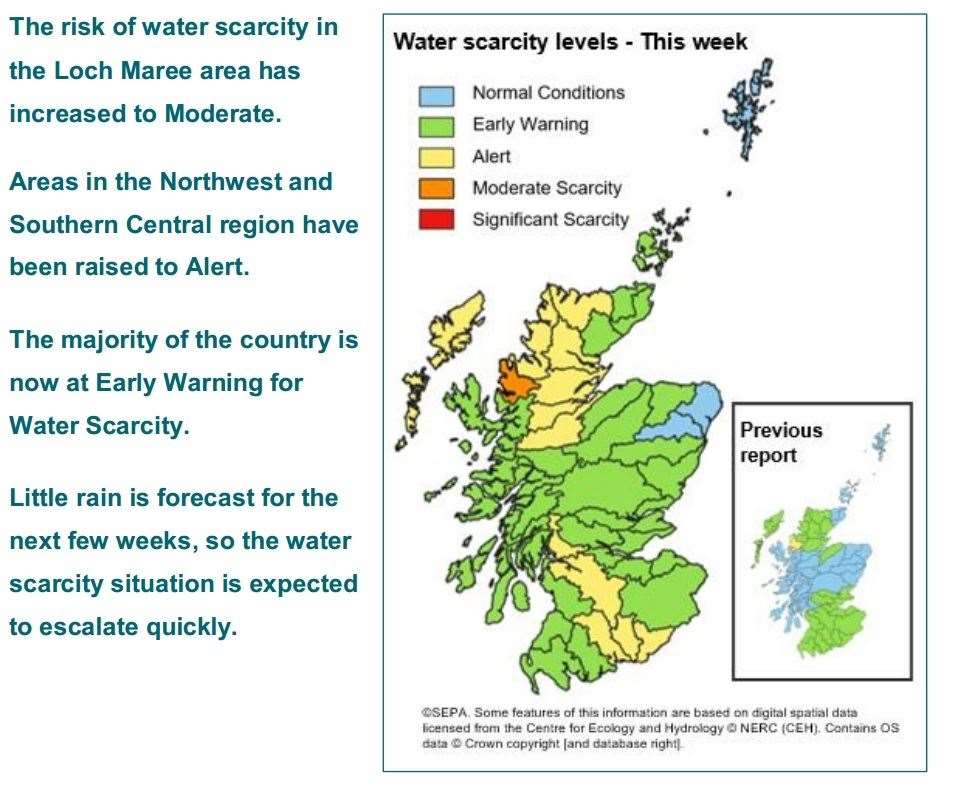 SEPA warns that the majority of Scotland is now affected by water scarcity
Oh, and if you have a white enamel sink, you’ve probably seen those stubborn brown rust stains. That’s iron in the water, not dirt. A paste of lemon juice and cream of tartar will lift them without scrubbing. Scrub too hard with bleach, and you’ll damage the enamel—a rookie mistake.
Many Scottish homes now have water softeners installed as standard in new builds. It’s become a sign of domestic sophistication, right up there with a heated towel rail. If you’re renting, ask your landlord about the water hardness before you move in—it’s a valid question.
The Final Pour
So, does Scotland have hard water? Yes, but only if you live in the east—and it’s not a flaw, it’s a character trait. The same water that frustrates your kettle is the water that built the limestone crags of Arthur’s Seat and the caves of Fife. It’s a geological fingerprint of the land itself.
Here’s the thing: hard water is not your enemy; it’s just a reminder that daily comfort requires a little local knowledge. A vinegar rinse, a filter jug, or a chat with your plumber can turn a mineral mess into a minor inconvenience. And you’ll still get a perfect cup of tea—you just have to educate the water a little first.
Next time you’re in a Glasgow café and the tea is glorious, raise your mug to the soft water. And next time you’re wiping that white film off an Edinburgh tap, smile. It’s just the rock you live on, insisting on being part of your day. Slàinte mhath—good health, with or without the calcium.
