What Is Tds In Water Analysis

So, you’re staring at a water test report, and you see “TDS.” Your brain goes, “Is that a TV show? A new energy drink?” Calm down. It’s just Total Dissolved Solids, and we’re...
So, you’re staring at a water test report, and you see “TDS.” Your brain goes, “Is that a TV show? A new energy drink?” Calm down. It’s just Total Dissolved Solids, and we’re about to make it hilarious.
Picture a glass of water. Now, imagine everything in it that isn’t H2O—bits of salt, minerals, and tiny organic particles. That’s TDS. It’s the dissolved party floating in your glass.
What the Heck Is TDS, Really?
Technically, TDS is the combined content of all inorganic and organic substances suspended in water. Think calcium, magnesium, sodium, and even a bit of potassium. It’s like the water’s résumé—listing every skill it picked up on its journey through rocks and pipes.
Must Read
Does that sound scary? Nope. A little TDS is totally normal. In fact, some of it tastes great—hello, spring water.
Why Should You Care About TDS?
Because your water’s personality depends on it. Low TDS water tastes flat—like drinking nothingness. High TDS water might taste salty, metallic, or vaguely like a swimming pool. You don’t want either extreme, right?
Also, high TDS can leave white scales on your coffee pot. Ever seen those crusty rings? That’s vengeful calcium showing off. Your kettle is not a science experiment.
How Do You Measure TDS?
You use a TDS meter—a little gadget that looks like a fancy thermometer. Dip it in water, and it spits out a number in parts per million (ppm). It’s basically a snob-o-meter for your tap water.
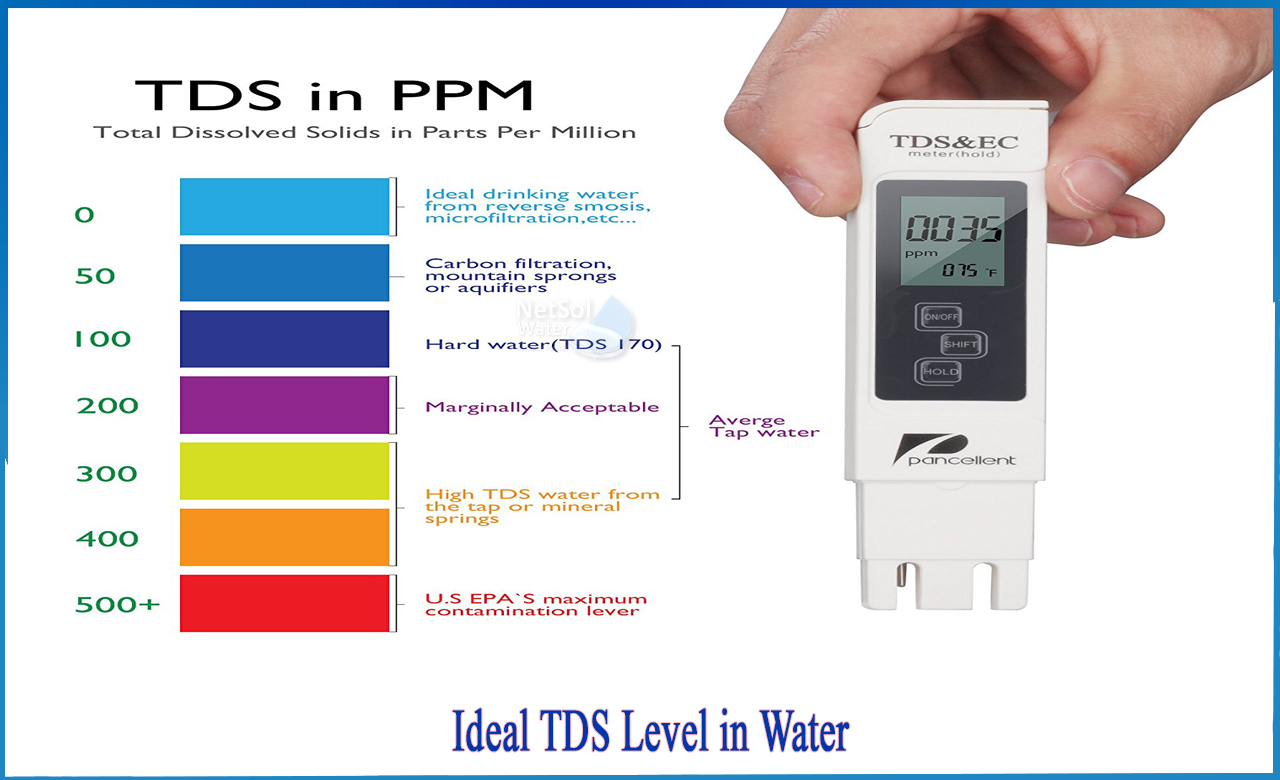
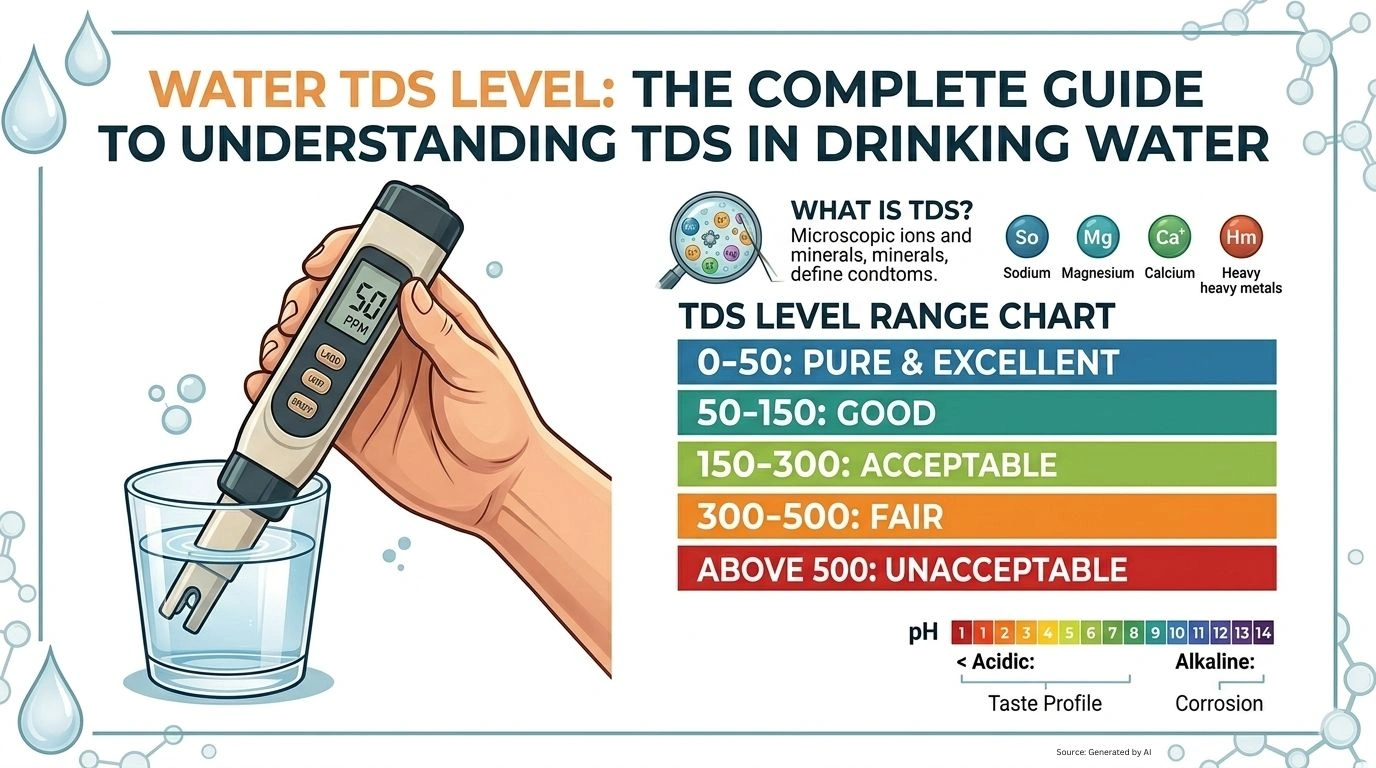
Here’s the cheat sheet: 0-50 ppm is ultra-pure (like distilled water—boring). 50-300 ppm is perfect, sweet spot range. 300-600 ppm is “okay but a bit extra.” Above 900 ppm? That water has attitude—and maybe a stomach ache waiting to happen.
Is High TDS Dangerous?
Honestly? Not usually. Most high TDS water is safe to drink, just annoying. But if TDS skyrockets past 2,000 ppm, your body might throw a tiny tantrum. You’d probably taste it first—like drinking from a salt lick.
 Water TDS Level: The Detailed Guide For Drinking Water TDS | ZeroB
The real danger isn't the TDS itself. It’s what those dissolved solids might hide—like heavy metals. So treat TDS as a neon sign, not a death sentence.
TDS vs. Hardness: The Sibling Rivalry
People confuse TDS with water hardness. They’re not the same. Hardness is just the calcium and magnesium part of TDS. TDS is the whole family reunion—including that weird uncle, “Dissolved Silica.”
Think of it like this: Hardness is one flavor in your water. TDS is the entire buffet. You can have high TDS without hard water, and vice versa. Confusing? Yeah, water is dramatic.
Should You Remove TDS?
Only if you must. Removing TDS with a reverse osmosis system makes water taste dead—like drinking a hug from a ghost. Plus, you lose those healthy minerals your cells love.
But if your TDS is over 500 ppm and leaves crusty residue, go ahead and install a filter. Just don’t strip it all out. Your water needs a little character.
The “Mountain Spring” Trick
Ever wonder why mountain spring water tastes so good? TDS around 150 ppm—that’s the sweet spot. It’s like the Goldilocks zone for your taste buds. Too low? Flat. Too high? You’re licking a rock.
 Tds In Water Analysis
So when you buy bottled water, check the label. Most brands boast about their TDS, usually around 200-300 ppm. They’re basically saying, “Our water has just enough dirt to be interesting.”
Fun Experiment for Your Coffee Date
Brew two cups of coffee: one with tap water (TDS ~150 ppm) and one with distilled water (TDS ~0 ppm). The distilled cup will taste sour and hollow—like betrayal. The tap one? Rich and balanced. You’re welcome.
Now you know: TDS is why your morning coffee isn’t a disaster. It’s the unsung hero of flavor.
The Real Takeaway
TDS is not the enemy. It’s just a number that tells you how “busy” your water is. Don’t obsess over it. Unless you see 2,000 ppm—then maybe call a plumber or a wizard.
Next time someone says, “My water has high TDS,” you can nod wisely and say, “Ah, a complex vintage.” Then walk away like a water sommelier. You’ve earned it.
Now go drink some water. You’re probably dehydrated.
