What Does The Root Di Mean

Ever stumbled across a word like diameter or dilemma and wondered, "Wait, what does that little di- part actually mean?" You’re not alone. It’s one of those sneaky prefixes th...
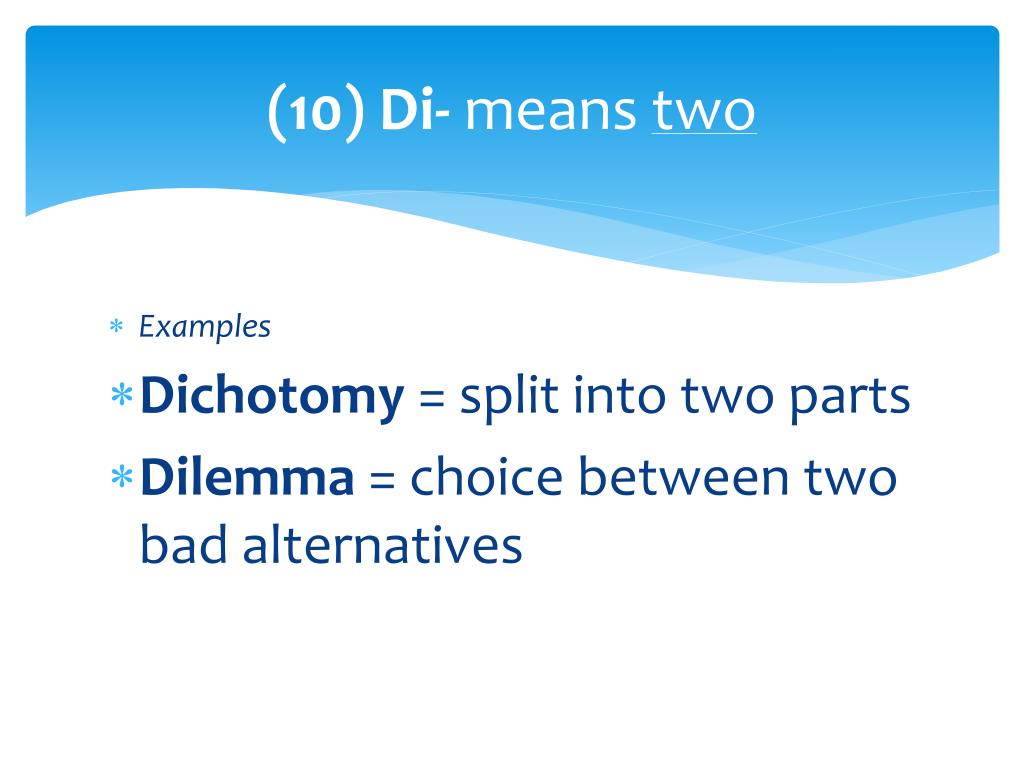
Ever stumbled across a word like diameter or dilemma and wondered, "Wait, what does that little di- part actually mean?" You’re not alone. It’s one of those sneaky prefixes that shows up everywhere, quietly shaping the meaning of words without making a big fuss.
So, let’s crack the code. The root di comes from ancient Greek, and it has a super simple job: it usually means two or double. Think of it as the language’s way of saying, "Hey, we’ve got a pair here!"
Why is that cool? Because once you know this tiny nugget, a whole bunch of everyday words suddenly make way more sense. It’s like getting the cheat code for the English language.
Must Read
Di in the Wild: It’s All About Pairs
Let’s start with a classic: dilemma. You’ve probably faced one—maybe choosing between pizza or tacos. The word literally breaks down to di (two) plus lemma (a proposition or premise).
So a dilemma isn’t just any tricky situation; it’s one where you’re stuck between two equally tough choices. See how that little prefix pinpoints the problem? It’s like having a built-in GPS for the word’s meaning.
Then there’s diameter. Picture a circle. The diameter is the straight line that passes through the center, connecting two opposite points on the edge. It’s the line that literally says, "I measure you from one side to the other—two sides, thank you very much."
More Than Just Numbers
But di isn’t only about counting things. Sometimes it pops up to suggest separation or apart. Take divorce: you’ve got di (apart) and vorce (from Latin for "to turn"). So, to divorce is literally to turn apart—a powerful image of two people going their separate ways.
 myteix - Blog
Or consider divide. When you share a pizza, you di-vide it—splitting it into two or more pieces. But the root itself is all about that basic act of making a separation. It’s the opposite of combining.
Pretty wild, right? A simple two-letter prefix can carry the weight of both "double" and "apart," like a linguistic Swiss Army knife.
How to Spot It in the Wild
Next time you read a word, play a little detective. Look for that di at the beginning. Dioxide? Yep—two oxygen atoms. Digraph? Two letters that make one sound, like "sh" or "th." It’s like finding a hidden pattern in a puzzle.
But careful—di can be a trickster. Sometimes it comes from Latin dis, meaning "away" or "not," like in disagree. That’s a different root, even if it looks similar. Context is your buddy here.
Still, when it’s the Greek di, you’re almost always dealing with two of something. It’s a trusty rule of thumb that’ll make you feel like a word wizard.
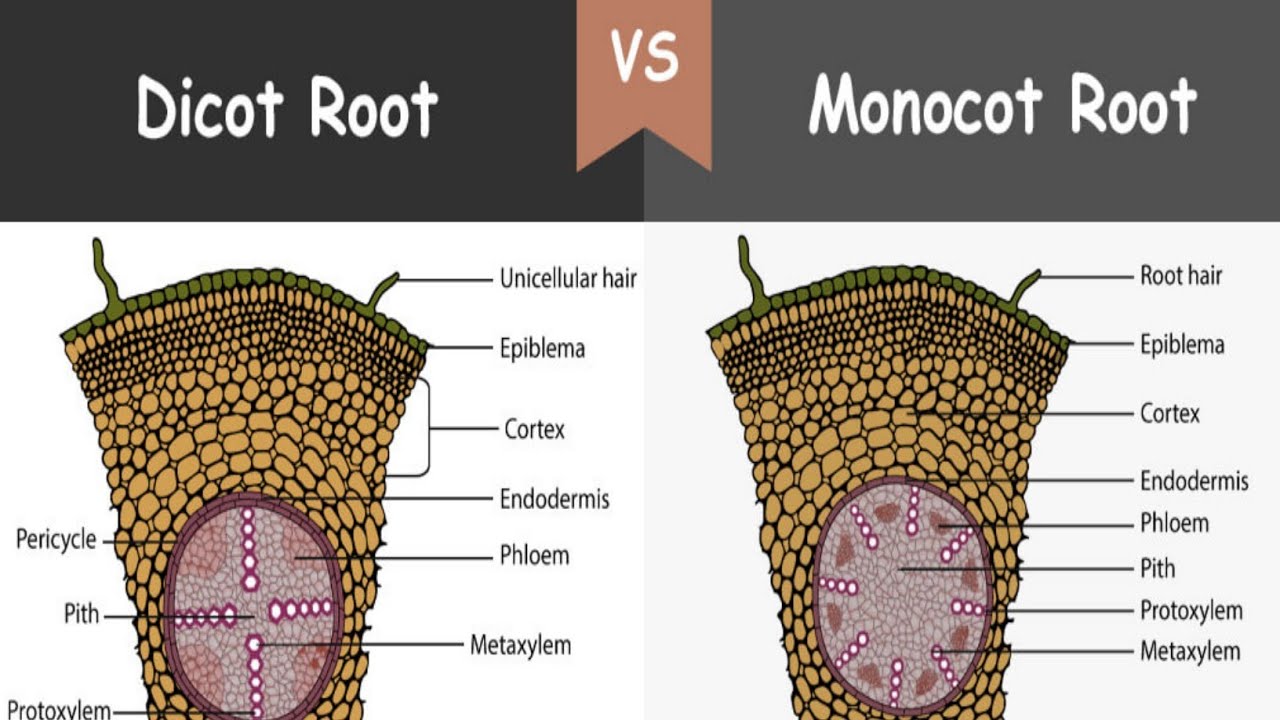 Difference Between Monocot Root And Dicot Root
Why This Matters (Besides Being Fun)
Knowing roots like di isn’t just for showing off at parties—though that’s a bonus. It helps you guess the meaning of unfamiliar words. Ever heard of a dichotomy? It’s a fancy word for a split into two opposing parts, like good vs. evil or cats vs. dogs.
Without the prefix, you might panic. With it, you go, "Ah, it’s about a pair of something—I can figure this out." It takes the scary out of big vocabulary.
In a way, di is like a gentle nudge from language, reminding us that the world is full of pairs: sun and moon, left and right, yes and no. Even our own brains come in two halves! No wonder we keep using that little prefix.
A Final Thought
So next time you hear dilemma, diameter, or even dipthong (that’s two vowel sounds gliding together), pause and smile at the di. It’s ancient, it’s compact, and it’s still doing its job—connecting ideas across thousands of years.
Pretty cool for a two-letter combo, don’t you think? Now go out there and spot some di-words. They’re everywhere, just waiting to be noticed.
