What Is An Ro Water Filter

Ever taken a sip of water and thought, “Hmm, that tastes a little… weird?” Maybe it’s a faint hint of metal, a whisper of chlorine, or just a flat, boring feeling. You’re not...
Ever taken a sip of water and thought, “Hmm, that tastes a little… weird?” Maybe it’s a faint hint of metal, a whisper of chlorine, or just a flat, boring feeling. You’re not alone. That’s usually the moment someone mentions an RO water filter, and it sounds like some top-secret lab equipment.
But honestly, it’s simpler (and cooler) than you think. Let’s geek out on what it is, why it’s kind of a big deal, and whether your kitchen needs one. No science degree required, just a curious mind and a thirsty glass.
The Secret Sauce: Reverse Osmosis in Plain English
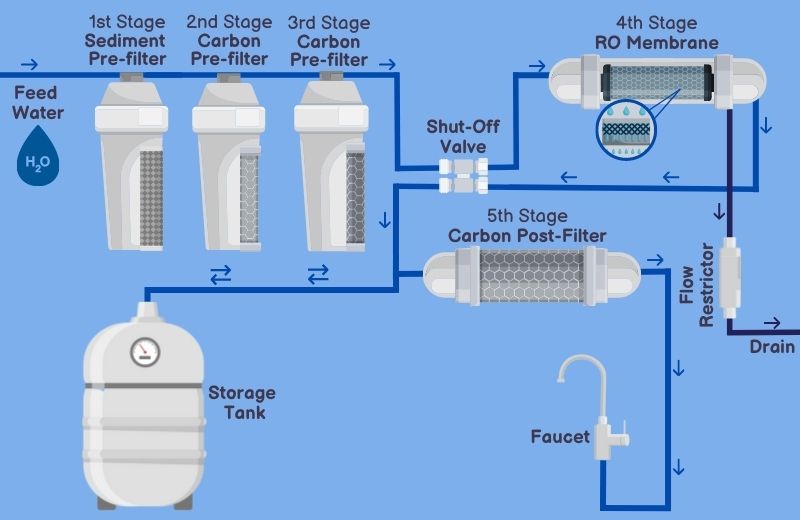
Imagine you’re trying to strain pasta, but instead of trapping the noodles, you’re trying to trap invisible stuff. That’s a regular filter. But an RO system? It’s like a bouncer at the world’s strictest club.
Must Read
It uses pressure to push water through a super-tiny membrane—think of a sieve with holes so small, only pure water molecules can squeeze through. Everything else? The lead, the fluoride, the weird pesticide runoff? They get kicked to the curb.
In fact, those holes are about 0.0001 microns. To put that in perspective, a human hair is about 70 microns wide. So we’re talking microscopic-level precision. It’s not just filtering; it’s rejecting the bad stuff like a picky eater at a buffet.
Why Isn’t Every Glass of Water Doing This Already?
Great question! Regular tap water is usually safe—your city does its job. But “safe” and “pristine” are different leagues. Tap water can still carry dissolved minerals, chlorine byproducts, and even tiny pharmaceuticals that slide past standard filters.
An RO system is like upgrading from a bicycle helmet to a full racing suit with airbags. It’s for the person who wants water that tastes like melted glacier—clean, crisp, and neutral. Ever notice how fancy bottled water feels “lighter”? That’s the low mineral content. RO does that, but from your tap.
 Reverse Osmosis Water: Pros & Cons (2023 Guide)-NEWater
Plus, it’s a game-changer for coffee and tea. Without mineral impurities, your brew tastes exactly as the roaster intended. Suddenly, your morning cup goes from “meh” to “whoa.”
The Cool Factor: What RO Can Do (and What It Can’t)
Here’s where it gets fun. RO is so effective that it can remove up to 99% of contaminants. That includes arsenic, nitrates, sodium, and even some viruses. It’s the same technology used to make seawater drinkable on submarines. Yes, submarine water. How cool is that?
But it’s not magic. It needs a little maintenance—like changing cartridges every few months. And it does produce some waste water (usually about 3-4 gallons for every gallon of clean water). That sounds wasteful, but many modern systems are getting way more efficient.
Also, RO removes everything, including good minerals like calcium and magnesium. Some folks add a remineralization filter afterward to put the “good stuff” back. It’s like taking a shower to get clean, then spraying on a little perfume. Choice is yours.
 Best Water Filters in UAE | Filtersco
Is It For You? Let’s Check Your Lifestyle
Do you live somewhere with hard water that leaves chalky spots on your glasses? RO fixes that instantly. Are you paranoid about lead pipes or old plumbing? RO is your knight in shining armor. Or do you just want a fridge pitcher that doesn’t taste like plastic? Not a bad reason either.
The fun comparison? A Brita filter is like a quick nap—it helps a little. An RO system is like a full night’s sleep in a luxury hotel. You feel the difference.
But here’s the kicker: you can actually taste the purity. When you drink RO water for the first time, it might even feel “thin” because your tongue is so used to the mineral-laden tap version. Give it a week, and you’ll never go back.
The Bottom Line (No Boring Conclusion, I Promise)
An RO water filter is basically a home science project that pays you back in every sip. It’s a little investment, a little wizardry, and a lot of peace of mind. You don’t need to be a water snob to enjoy it—just someone who’s ever wondered, “Is my water as clean as it could be?”
So next time you fill a glass, think about those tiny membranes doing the hero’s work. Or better yet, just drink it and enjoy the silence. No chlorine aftertaste, no metallic burps. Just pure, quiet hydration. And honestly? That’s pretty cool.
