How To Fill Water Softener

Let's be honest, dealing with a water softener can feel a bit like trying to fix a spaceship. You look at the brine tank, see the big block of salt, and think, "What have I go...

Let's be honest, dealing with a water softener can feel a bit like trying to fix a spaceship. You look at the brine tank, see the big block of salt, and think, "What have I gotten myself into?" But I promise, it’s way easier than assembling that IKEA bookshelf you’ve been avoiding. And unlike that bookshelf, this chore actually makes your entire life softer—literally.
Think about it: hard water is the enemy of your cozy morning shower. It leaves that weird scum on your skin, makes your shampoo feel like it’s not working, and turns your favorite coffee mug cloudy. Nobody has time for a cranky coffee mug. Filling your water softener is basically giving your whole house a spa day, and you are the spa manager.
When Your Softener Screams for Salt (and You’re the Hero)
Your water softener is a lot like a hungry goldfish. It needs food (salt) to do its job, and if you forget, it gets grumpy. The first clue is that your water feels a little tough again, like you’re washing your hands with sandpaper. You might also see a crusty white ring around your faucet, which is the water's way of saying, "Feed me, Seymour."
Must Read
Don't panic. This is normal. The softener doesn't hold a grudge. Once you refill it, it’ll go back to being your best friend, happily removing all that calcium and magnesium that makes your skin dry and your dishes spotty. Remember that time you put a sweater in the wash and it came out stiff? Hard water did that. You are now the defender of soft sweaters.
Step 1: The Prep Work (It’s Not Brain Surgery)
First, find your softener. It’s usually in the garage, basement, or laundry room, looking like a big, white, quiet robot. You’ll see a large tank (the brine tank) and a smaller one (the resin tank). Your job is only with the big one. Open the lid—it’s usually just sitting on top, no tools needed. Unless you’re me, and you wedged it on too tight from last time. In which case, give it a gentle, frustrated wiggle.
Look inside. You’ll probably see a pile of salt that looks like a sad, half-eaten bag of pretzels. If the salt level is below the halfway point, or if you see a big chunk of salt that’s bridged (forming a hard crust over a hollow space), you need to act. A bridged tank is like an empty pizza box—looks full, but it’s a lie. Break that crust up with a broom handle or a long spoon. Be dramatic. Pretend you’re a knight slaying a dragon of mineral deposits.
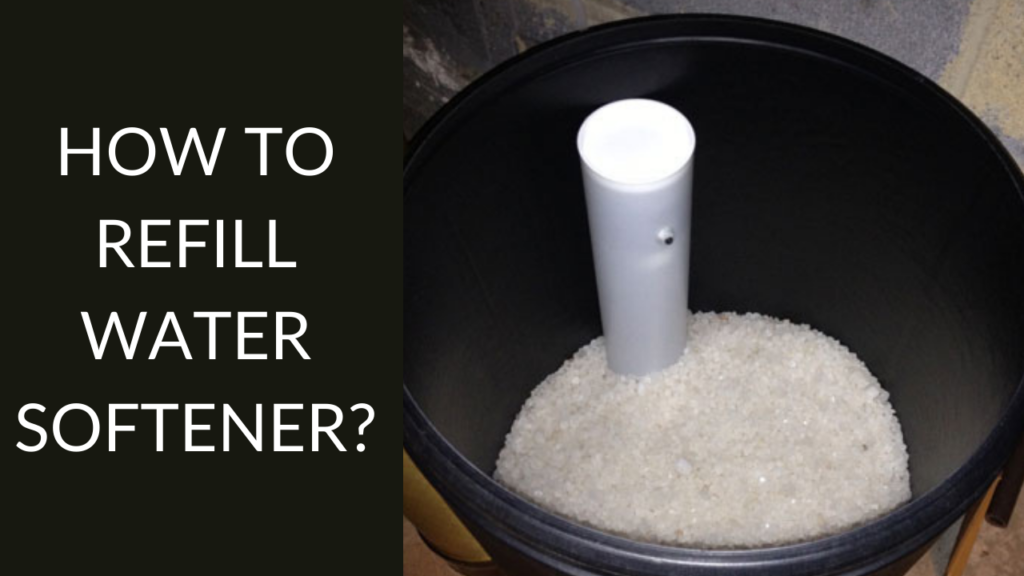 How to Refill Water Softener with Easy Method? (Process Explained
Step 2: The Pouring (Your Moment of Glory)
Now, get your salt. You can use pellets or crystals—pellets are cleaner, like the neat kid in class, while crystals are more like the messy artist. Both work fine. Do not use rock salt; it’s too dirty and will clog your system faster than a toddler with a crayon. Grab a bag (usually 40 or 50 pounds) and carry it over. If you’re my neighbor, you’ll grunt and pretend it’s light.
Open the bag (cut, don’t rip, or you’ll have a salt explosion) and pour it slowly into the tank. Don’t be a hero—you don’t need to fill it to the very top. Just fill it until the salt is about halfway to three-quarters full. Think of it like a gas tank. You wouldn’t jam the nozzle in until gas spills everywhere, right? Same vibe here. Stop when you see the salt piling up nicely, and close the lid.
But Why Bother? (The Feel-Good Payoff)
I know it’s tempting to skip this. You think, "I’ll do it next week." But next week, your hair will feel like straw, and your dishwasher will get angry. Here’s the fun part: a properly filled softener means your soap works better. You use less laundry detergent, less dish soap, and your skin stops feeling like a reptile. Plus, your pipes won’t clog up with limescale, saving you from a plumber’s bill that could buy you a nice weekend trip.
 Water Softener Refill Cycle : How To Fill And Regenerate Your Water
And here’s a secret: that "spa day" vibe I mentioned? It’s real. The first shower after a fresh fill is glorious. The water feels slick and silky, like you’re bathing in a cloud. You’ll get out of the shower and think, "Wow, I’m a brand new person." That’s worth the five minutes and a small backache.
When in Doubt, Check the Manual (or Just Wing It)
Every softener is a little different. Some have a float that tells you when to stop filling, like a toilet tank. Others just rely on your eyeballs. If you feel lost, just find the instruction booklet—it’s probably buried under three years of takeout menus. But honestly, as long as you don’t pour salt into the little resin tank (the smaller one), you can’t mess this up. It’s practically idiot-proof.
So next Saturday, when you’re sipping your coffee and avoiding chores, just do it. Open the lid, pour the salt, and pat the machine on its plastic side. You’ve earned your easy-going badge for the week. Your water will thank you, your skin will thank you, and that cloudy coffee mug? It’ll finally sparkle. Now go be the soft water hero your home deserves.
