Water Softener What Is It

So, you’ve heard the term “water softener” thrown around, and you’re thinking, “Is that some kind of fancy pillow for my plumbing?” Not quite, but you’re on the right track to...

So, you’ve heard the term “water softener” thrown around, and you’re thinking, “Is that some kind of fancy pillow for my plumbing?” Not quite, but you’re on the right track to comfort! Let’s break this down like a good, crumbly cookie.
What in the World is Hard Water?
First, let’s talk about the villain of our story: hard water. Imagine water that’s been on a mineral-collecting spree, picking up calcium and magnesium like a kid picks up shiny rocks.
It’s not dangerous to drink, but it’s a total drama queen in your home. It leaves chalky white deposits on your faucets, makes your soap refuse to lather, and turns your hair into a sad, straw-like mess.
Must Read
Enter the Water Softener: The Superhero
A water softener is basically a mineral-removing machine for your home’s water supply. Think of it as a bouncer at a club, only letting the good water molecules in and tossing those pesky calcium ions out on their ear.
It uses a clever process called ion exchange, which sounds complicated but is just swapping bad minerals for good ones. It trades those rock-hard calcium ions for soft, friendly sodium or potassium ions.
How Does This Magic Box Work?
Inside the softener, there’s a tank full of special resin beads. These beads are like tiny, super-hungry magnets that love grabbing onto calcium and magnesium.
As hard water flows over them, the beads latch onto the hardness minerals and let go of a little bit of salt. The result? Silky, soft water that feels like a spa day for your whole house.
Note: Your water won’t taste salty, promise. The amount of sodium added is tiny—less than what you’d find in a slice of bread.
The Regeneration Party
Those resin beads can’t work forever without a break. Eventually, they get full of minerals and need to regenerate. This is the softener’s version of a deep-cleaning spa treatment.
The system flushes itself with a strong brine solution (salty water) to strip off all the captured minerals and recharge the beads. It’s like the machine taking a nap and a shower at the same time.
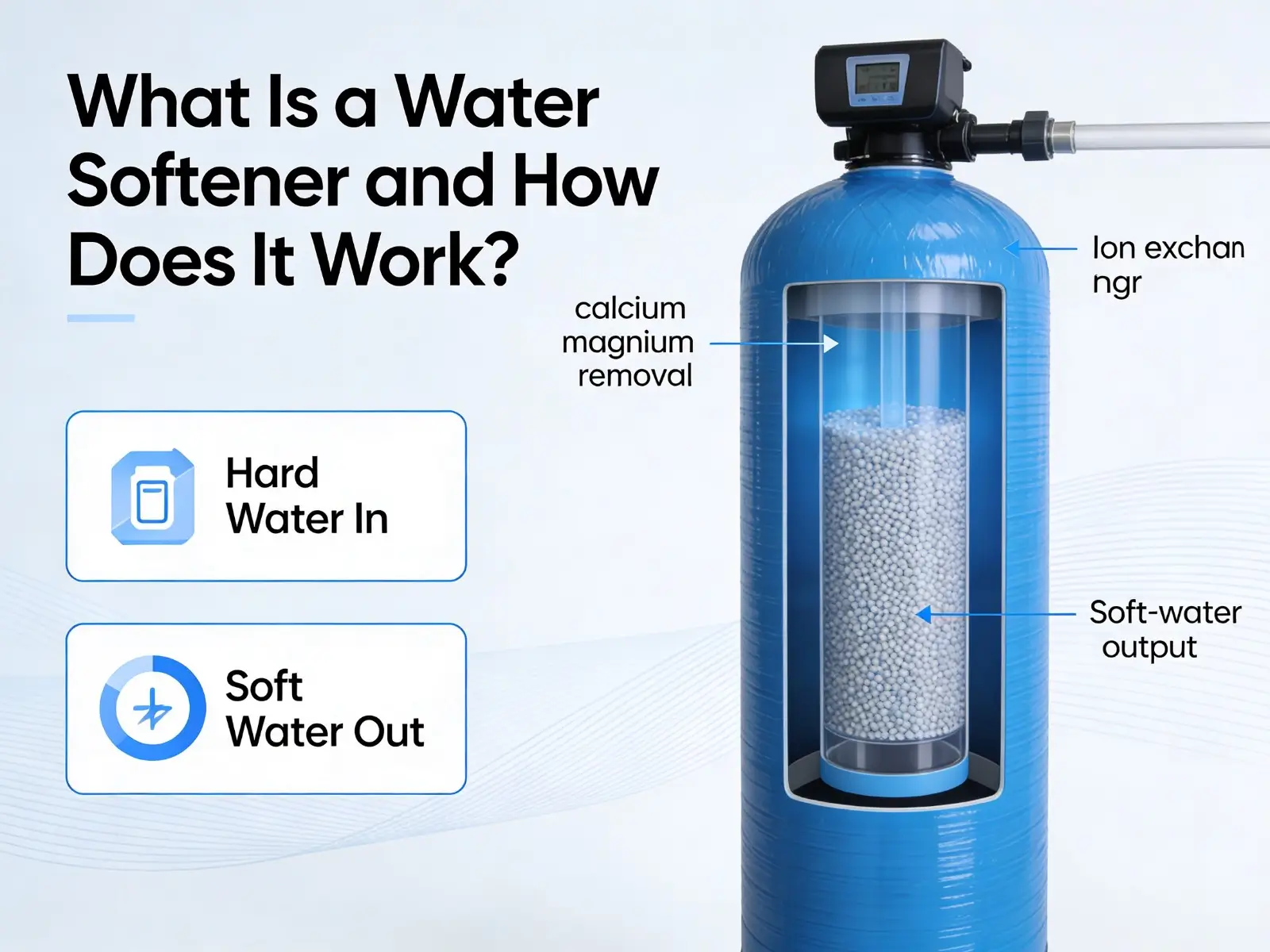 What is Water Softener & How It Works | Complete Guide 2026
This usually happens in the middle of the night, so you won’t even notice. Unless you sleep in the basement, in which case, sorry for the occasional gurgle.
Why Should You Care? The Glorious Benefits
Let’s talk about the good stuff. A water softener makes your life easier, cleaner, and frankly, more luxurious.
- Your skin and hair will thank you. Soft water rinses soap off completely, leaving you feeling silky, not sticky. Goodbye, dry winter itch!
- Your appliances will live longer. No more scale buildup clogging your coffee maker, dishwasher, or water heater. They’ll run like champions.
- Your clothes will look brighter. Hard water makes detergent less effective and leaves a gray film on fabrics. Soft water gives you that “fresh from the store” glow.
- Your cleaning time gets cut in half. No more scrubbing white spots off glasses or using harsh chemicals on shower doors. Just a quick wipe, and done!
Oh, and your dishes will sparkle. You might find yourself admiring your own reflection in a drinking glass. I won’t judge.
But Wait, Is There a Catch?
Nothing in life is perfect (except maybe pizza). A water softener does require a bit of upkeep. You’ll need to buy bags of water softener salt and refill the brine tank every few months.
It’s not hard work, but it’s a chore. Think of it as feeding your magical plumbing pet. And yes, some people worry about the extra sodium, but there are potassium-based salts for those with health concerns.
Also, softened water isn’t great for watering plants. The extra sodium can annoy your ferns. Spritz your garden with untreated water from an outside spigot instead.
Do You Actually Need One?
If your water leaves white rings in your toilet, your soap feels like it’s wrestling your skin, or your hair feels like straw, then yes, you probably have hard water.
A quick test: fill a water bottle halfway, add a few drops of dish soap, and shake it. Lots of fluffy suds? You’re good. No suds and cloudy water? You’ve got a hard water situation.
 How Water Softeners Work | Benefits, Diagram & More
You can also buy a cheap test strip at a hardware store. It’s way more fun than checking your oil, I promise.
The Cost vs. The Joy
A decent water softener system costs a few hundred dollars, plus installation. Salt bags are about $10 each, and you’ll go through one a month (depending on usage).
But think of the savings: no more expensive descaling solutions, fewer repairs for appliances, and less money on body lotion. You’ll save enough to treat yourself to a fancy coffee—or two.
A Little Joke to Lighten the Water
Why did the water softener break up with the hard water? Because it was too clingy! (Get it? Clingy, like scale?) I’ll see myself out.
All jokes aside, a water softener is one of those unsung heroes that quietly make your daily life smoother. You don’t realize you need it until you have it, and then you can’t imagine life without it.
The Uplifting Conclusion (You Made It!)
So, whether you’re battling crusty faucets or just tired of frizzy hair, a water softener might be your new best friend. It’s a small change that brings a big dose of comfort and joy to your home.
Think of it as giving your pipes a warm hug. And let’s be honest, we could all use a little more softness in our lives. Go ahead, take a bath in that silky water, and enjoy the sparkle. You deserve it.
Now go forth and make your water behave!
