What Is A Rising Main

Ever walked down a street, noticed a small manhole cover, and wondered, “What is that thing for?” You’re not alone. Today, we’re diving into something that sounds like a plumb...

Ever walked down a street, noticed a small manhole cover, and wondered, “What is that thing for?” You’re not alone. Today, we’re diving into something that sounds like a plumbing superhero: the rising main. It’s not a pipe that climbs a mountain—though that would be cool—but it’s almost as impressive.
So, what exactly is it? In the simplest terms, a rising main is a pressurized pipe that carries wastewater or water uphill. Think of it as the opposite of gravity’s usual lazy river flow. Without it, we’d be in a stinky mess.
Here’s the weird part: we usually let gravity do all the work in sewers. Pipes slope downhill, and waste just slides away. But what happens when a city is flat, or a building sits below the main sewer line? That’s when a rising main jumps into action.
Must Read
The Magic of the Pump
You can’t push water uphill without a helper. That helper is a pump, usually tucked inside a small wet well or pumping station. The pump creates pressure, forcing the liquid through the rising main like a straw you suck too hard on.
Imagine trying to blow a bubble through a long tube of toothpaste. That’s the rising main’s job, but with water, sewage, or storm runoff. It’s a muscular artery in the city’s hidden circulatory system.
You’ll find these systems in everything from skyscrapers to tiny subdivisions. Without them, we’d have to dig trenches at crazy angles, which is expensive and often impossible when you hit rock or train tracks.
Why It’s Actually Cool
Let’s be real: most people don’t think about pipes until one bursts. But the rising main is a perfect example of engineering irony. We use a massive amount of energy to move something we usually want to get rid of—just so it can gravity-flow again later.
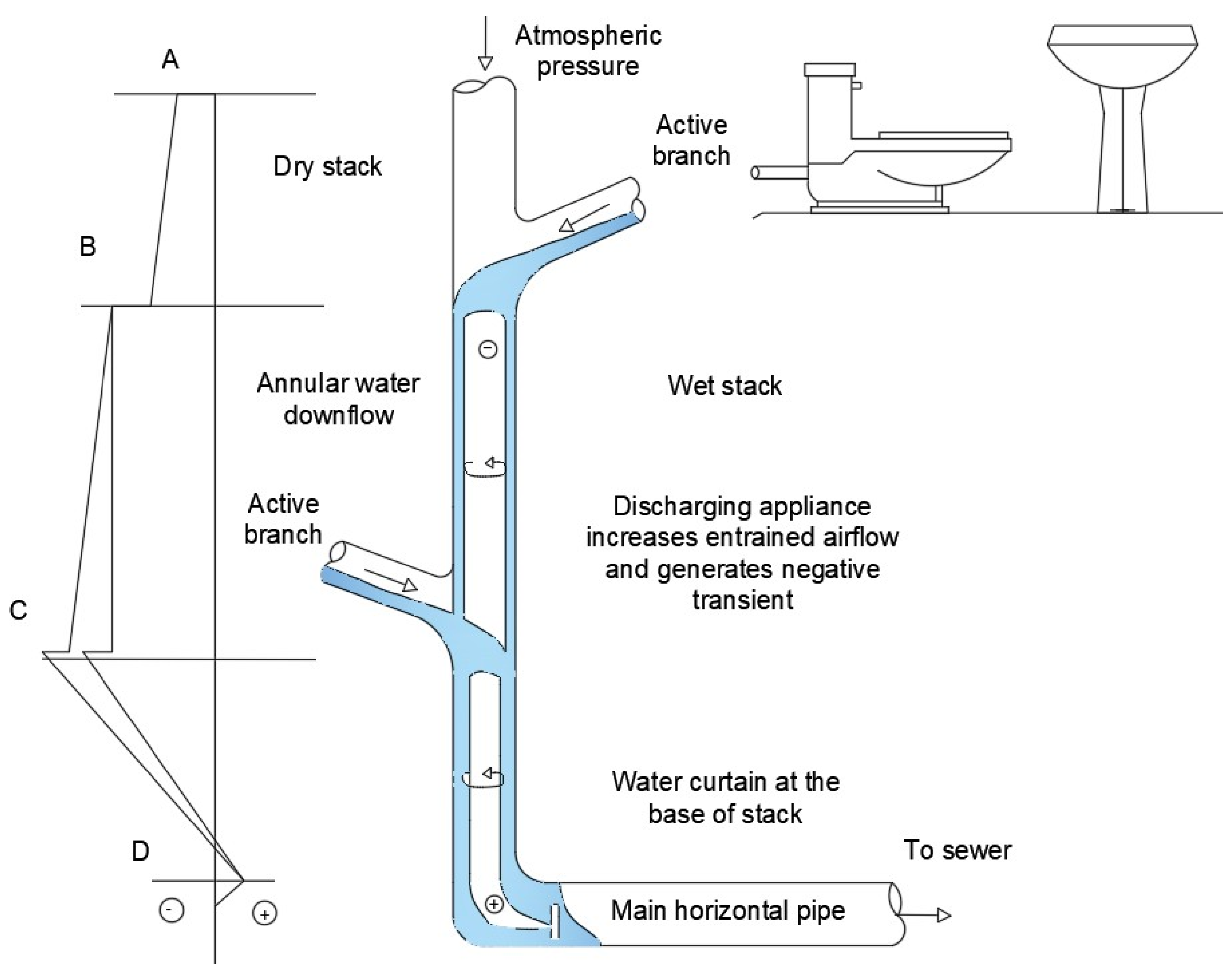 Hydraulic Design Of Rising Main at Lauren Greer blog
Think of it as a relay race for dirty water. The pump passes the baton uphill, then gravity takes over for the final sprint to the treatment plant. Every rise and fall feels clever when you picture it.
Also, rising mains are surprisingly durable. Many are made of ductile iron or high-density polyethylene, designed to handle constant pressure and corrosive stuff. They’re the tortoises of the plumbing world—slow, steady, and tough.
The Silent Hero in Your Basement
Ever flushed your toilet during a huge storm and heard a gurgle? That’s your home’s connection to a rising main, probably. In many low-lying areas, your own house has a small pump that kicks on to lift waste up to the street sewer.
That little pump is basically a personal rising main. It saves you from having a basement that smells like a swamp. So next time you hear that hum, give it a silent nod.
And in big cities, rising mains can be absolute beasts. Some are over 48 inches wide, moving millions of gallons a day. That’s enough water to fill an Olympic swimming pool every few minutes—uphill, no less.
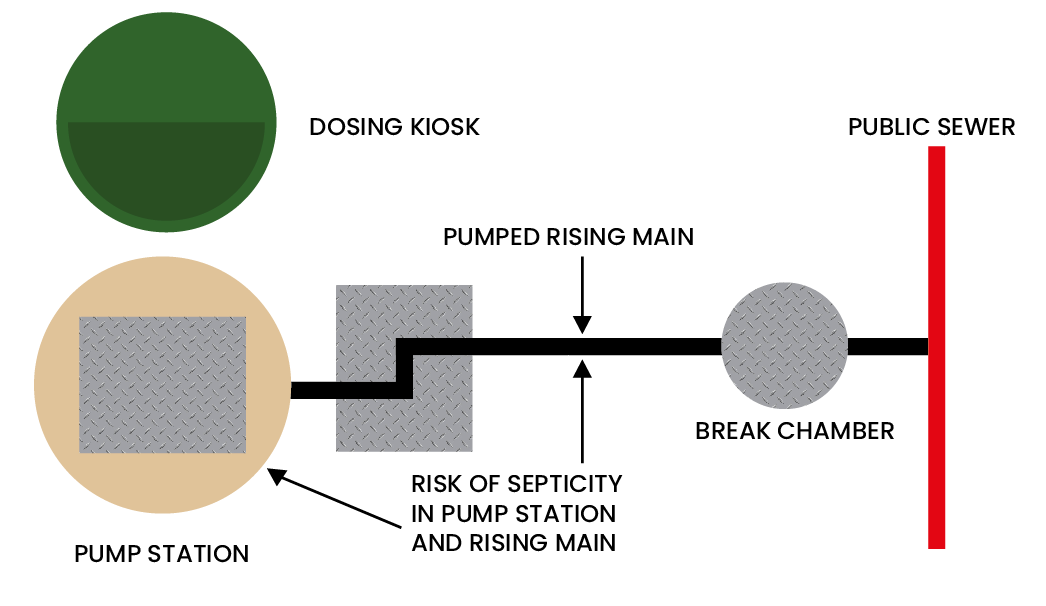 The New Harlequin 2500L Chemical Dosing Kiosk for Septicity Control
The Weirdest Part? Maintenance Is a Drama
Because a rising main is always under pressure, when it breaks, it erupts. We’re not talking a little drip—imagine a geyser of mystery juice. Crews have to shut down the pump, drain the pipe, and sometimes use giant vacuum trucks.
But here’s the fun part: engineers often design them with air valves to prevent water hammer (a shockwave that can crack the pipe). It’s like burping a baby, but for industrial plumbing. Entire textbooks exist on this.
So, is a rising main just a fancy pipe? Yes—but it’s also a little rebellion against physics. It says, “Gravity, you’re not the boss of me.” And honestly, that’s kind of inspiring for a Tuesday.
Final Thought
Next time you’re on a hill, look for a small green box or a concrete hut. That’s probably a pumping station, the heart of a rising main. It’s doing the quiet, pressurized work that keeps your life from getting messy.
Rising mains remind us that not all progress is visible. Some of the most important infrastructure is buried, humming away, lifting what we don’t want to see. Kind of poetic, right?
