How To Use Tds Tester

Alright, let’s talk about a gadget that sounds like a science fair reject but actually unlocks a world of water wisdom: the TDS tester. You know, that little pen-like thing th...

Alright, let’s talk about a gadget that sounds like a science fair reject but actually unlocks a world of water wisdom: the TDS tester. You know, that little pen-like thing that measures Total Dissolved Solids. It’s not just for lab coats—it’s for you, the curious soul who wants to know what’s really swimming in your glass.
What’s the Big Deal About TDS?
Think of TDS as the mineral fingerprint of your water. It tells you the combined content of everything dissolved—good stuff like calcium and magnesium, and not-so-good stuff like heavy metals. Testing it is like peeking behind the curtain of your tap, your filter, or even your favorite bottled spring.
Why should you care? Because water quality affects everything from your coffee’s taste to your plants’ mood. A TDS tester turns you into a hydration detective, and trust me, that’s way more fun than it sounds.
Must Read
Getting Your Hands on the Tester
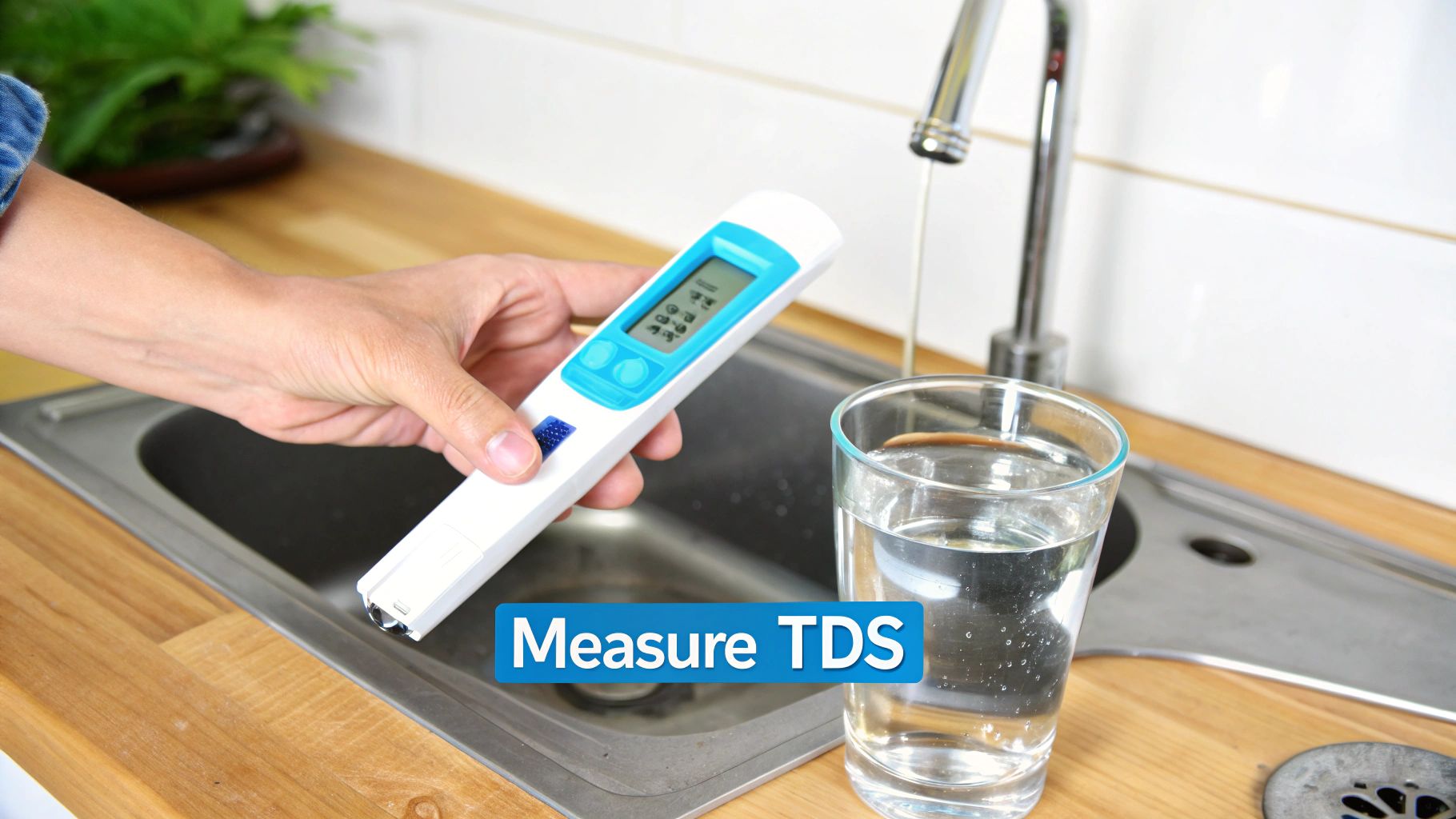
First, grab your TDS meter—it usually looks like a chunky thermometer or a sci-fi pen. Just remove the cap, and turn it on (usually one button). You’ll see a tiny screen light up, ready to spill the tea on your water.
Don’t be shy—dip the tip into a glass of water. No need to submerge the whole thing; just enough to cover the sensors. Stir it gently for a few seconds to release any bubbles, then hold it steady.
Now, wait for the number to stabilize. That blinking zero or random jump will settle into a steady reading. That’s your TDS level, measured in parts per million (ppm).
What Do Those Numbers Mean?
Here’s the fun part: interpreting the secret code. A reading below 50 ppm is about as pure as distilled water—great for batteries, not great for flavor. 100–300 ppm is what most spring waters and good tap waters show, with balanced minerals for a crisp taste.
 How to Reduce TDS in Water for a Cleaner, Tastier Drink
If you see numbers above 500 ppm, you’re looking at water that’s hard or might have excess minerals—sometimes it’s fine, but your coffee maker might start screaming. Anything over 900 ppm? You might want to consider a filter, unless you enjoy chewing your water.
Pro tip: Test your tap water now, then test it again after it goes through a Brita or a reverse osmosis system. The drop in numbers is oddly satisfying, like watching a villain lose his evil powers.
When to Test (and Why It’s Fun)
Test your morning coffee water—if it’s high in TDS, your coffee might taste flat or bitter. Low TDS water extracts flavors beautifully. Seeing that difference is like a magic trick for your taste buds.
Test your aquarium or houseplant water. Plants are dramatic—if your TDS is too high, they’ll drop leaves like a diva. A quick measurement can save your ficus from a meltdown. And pools and hot tubs love a TDS check too; high levels mean it’s time to refresh the water.
 What Is A Tds Meter Used For: Unlocking Water Quality Secrets - RO System
The Uplifting Science Bit
Here’s where it gets inspiring: you’re not just measuring numbers. You’re demystifying something invisible. Water is the most common substance on Earth, yet we often treat it like magic. A TDS tester makes it tangible.
Every time you dip that pen, you’re saying, “I want to understand my environment.” That curiosity is the same spark that led people to explore oceans, invent clean water systems, and brew perfect tea. You’re part of that lineage, my friend.
Final Splash of Encouragement
So go ahead—test your tap, your filtered bottle, even that puddle after a rainstorm (I won’t judge). Each reading is a tiny victory of knowing. And the best part? You can share the results with friends, make weirdly enthusiastic comparisons, and feel like a hydration guru at parties.
Remember: life’s little tools—like a ten-dollar TDS pen—nudge us to pay attention. Attention is a gift. Once you start testing, you’ll see water not as boring H2O, but as a living, mineral-dusted story. Go on, become the water whisperer you were always meant to be. Your coffee, plants, and taste buds will thank you.
