Best Water Softener System For Home

You know that feeling when you step out of the shower and your skin feels like you just got into a fight with a roll of sandpaper? Or when your favorite coffee mug looks like...

You know that feeling when you step out of the shower and your skin feels like you just got into a fight with a roll of sandpaper? Or when your favorite coffee mug looks like it’s growing a tiny, chalky mustache after one rinse? Yeah, that’s hard water doing its best impression of a villain in your home.
It’s not just annoying—it’s actually waging a silent war on your appliances. Your dishwasher works double shifts, your water heater groans like it’s running a marathon, and your plumbing slowly turns into a limestone cave system. That’s why finding the best water softener system for your home isn’t a luxury; it’s practically an act of self-defense.
The “Before” Life: Living with Hard Water
Let’s be honest: living with hard water is like dating someone who never puts the toilet seat down—it’s a constant, low-grade irritation. You spend forever trying to rinse shampoo out of your hair, only to have it feel like straw. And don’t get me started on the soap scum. It’s like the shower wall is trying to become a permanent foggy window.
Must Read
I remember my first apartment with hard water. I thought the white spots on my glasses were just “character.” Turns out, character is just calcium carbonate with a sassy attitude. After a year, my washing machine started singing a sad, grinding song every cycle. That’s when I realized: soft water isn’t a preference—it’s a divorce from hard-water drama.
What Actually Makes a Water Softener “The Best”?
You’d think picking a water softener would be like picking a TV—just grab the one with the most buttons. Nope. It’s more like choosing a pet: you need one that fits your lifestyle, doesn’t eat your shoes, and actually does its job quietly. The “best” system mostly comes down to three things: capacity, regeneration type, and whether it uses salt or something fancy like salt-free descalers.
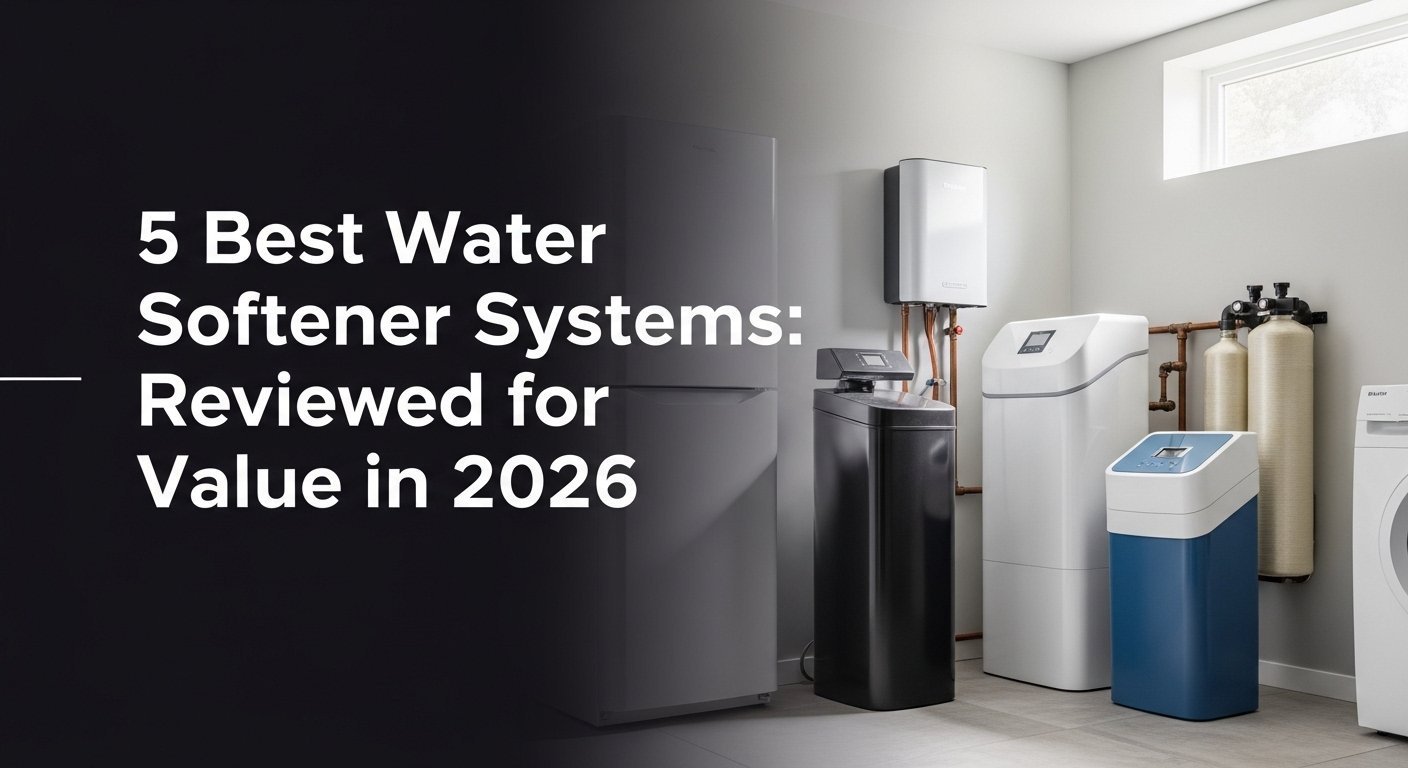 5 Best Water Softener Systems: Reviewed For Value In 2026
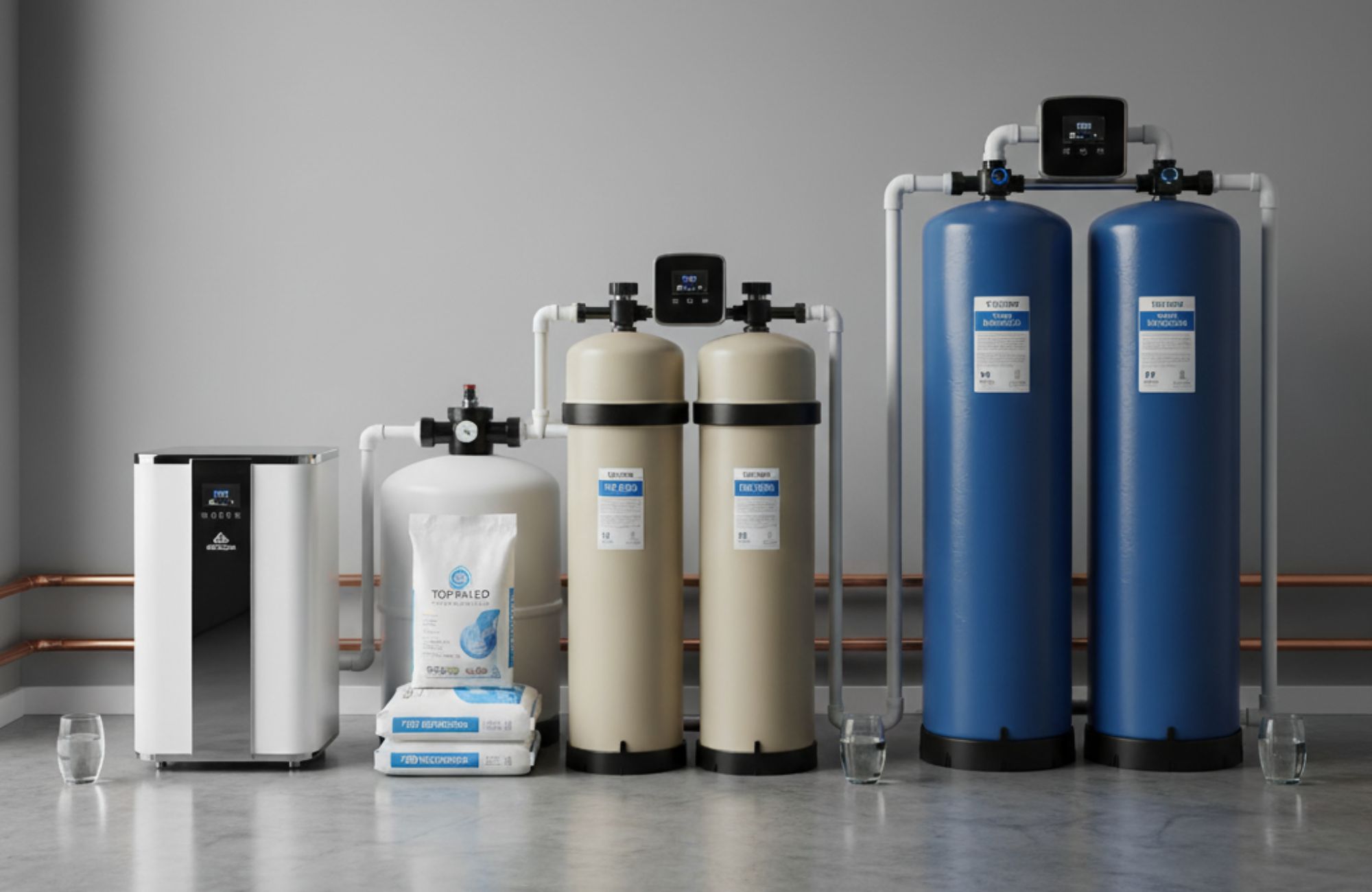
Salt-based systems are the heavy lifters. They swap out those angry calcium ions for nice, soft sodium ions. They’re like the bouncers of your water supply—tough, effective, and they don’t let any hard minerals crash the party. On the flip side, salt-free systems (which are technically conditioners) don’t remove the minerals; they just make them behave. Think of them as a gentle nudge: “Hey, calcium, stop sticking to my faucets, okay?”
If you have very high water hardness (over 10 grains per gallon), you need a salt-based system. Period. It’s like using a sledgehammer to crack a nut—but that nut is your water bill. If your water is moderately hard and you don’t want to lug bags of salt around, a salt-free conditioner is your lazy-but-smart cousin.
 Best Water Softener Systems in Wolcott, CT (2025) - Housatonic Valley
The Real MVP: Metered vs. Timed Regeneration
Here’s where it gets funny. Old-school water softeners regenerate on a timer, like that friend who calls you at the exact same time every week, even if you’re busy. A metered system, however, only regenerates when it actually uses up its softening capacity. It’s like eating only when you’re hungry—efficient and not wasteful.
I learned this the hard way. I bought a cheap timer-based system, and it would regenerate at 2 AM, wasting 50 gallons of water and salt just because the clock said so. My wife called it the “water vampire.” Do yourself a favor: spend the extra $100 on a metered system. Your wallet—and your marriage—will thank you.
Size Matters: Don’t Buy a Bulldog When You Need a Chihuahua
A common mistake is buying a system that’s way too big for your home. It’s like using a fire hose to water a bonsai tree. A system that’s too large will waste salt and water, never fully exhausting its capacity. On the other hand, a too-small system will regenerate constantly, like a hamster on a wheel. Calculate your household water usage (number of people times average gallons per day) and match it to a system’s grain capacity.
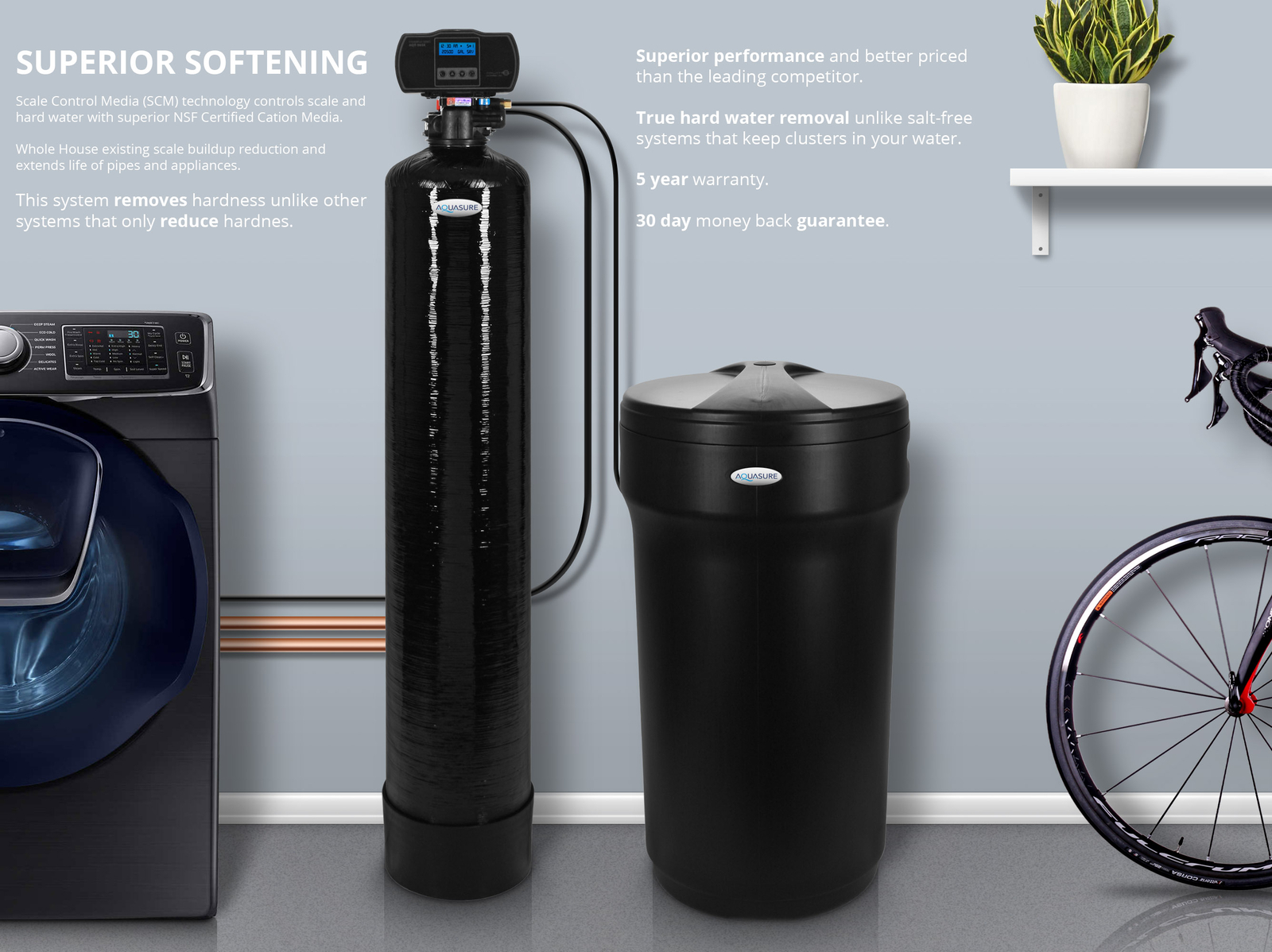 Aquasure Water Softener System Whole House Digital, 1-2 Bathrooms
For a typical family of four with slightly hard water, a 30,000-grain system is the sweet spot. For a bigger family or very hard water, jump to 48,000 grains. It’s like buying jeans—you want a comfortable fit, not something that requires a crane to lift.
The Funny Side of Installation
Here’s a story from my own kitchen. I decided to install my first water softener myself. I am not a plumber. I am the guy who thinks “handy” means having a good grip on a coffee cup. Two hours later, I was sitting in a puddle of water, holding a wrench, and contemplating moving to a desert island with naturally soft rainwater. Installation is not a joke.
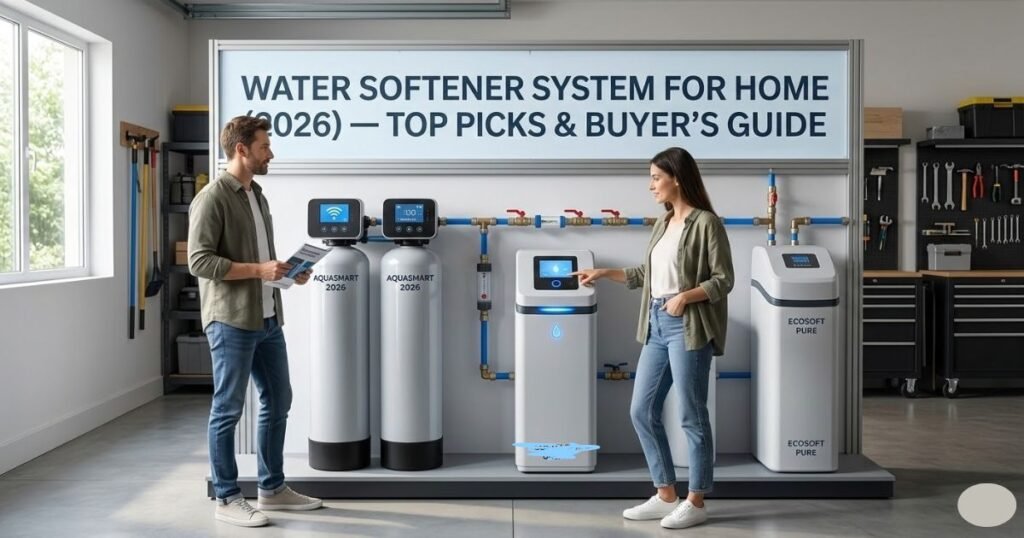 Best Whole House Water Softener System for Home (2026) — Top Picks
If you don’t have basic plumbing skills, hire a professional. It’s worth the $200 to avoid the “waterfall in your basement” look. Plus, many pros will teach you how to refill the salt and clean the brine tank—which is basically just vacuuming the floor of a plastic tub. Easy.
The Final Choice: Which One to Buy?
After all that, the best water softener system for home is the one that fits your water hardness, your family size, and your patience level. I personally love the Fleck 5600SXT metered system—it’s boring, reliable, and has been the same design for decades. It’s the Corolla of water softeners. For a salt-free option, the iSpring ED2000 is my favorite, a quiet little box that just works.
Remember: your pipes are like your veins. Hard water clogs them slowly. A good softener keeps your plumbing young and your dishes spotless. And the best part? You’ll never again have to explain to a guest why your drinking glass looks like it sneezed chalk dust. Go ahead, treat yourself to soft water. Your skin, your coffee, and your washing machine will write you a thank-you note.
