Best Iron Filter For Well

So there I was, standing in my kitchen, watching my perfectly clear glass of tap water turn a horrifying shade of burnt orange before my eyes. I blinked, hoping it was a trick...
So there I was, standing in my kitchen, watching my perfectly clear glass of tap water turn a horrifying shade of burnt orange before my eyes. I blinked, hoping it was a trick of the morning light. Nope. It looked like someone had brewed rusty nails and called it a beverage. That was the day I realized my well water had a serious iron problem, and my "delicious" morning drink had become a chemistry experiment. Fun times, right?
If you’re reading this, you probably know the struggle. You’ve got the stained toilets, the orange streaks on your laundry, and that metallic taste that makes you question your life choices. You’re not alone. I spent weeks researching, picking the brains of plumbers, and reading Amazon reviews until my eyes glazed over. So let me save you the headache—here’s the lowdown on finding the best iron filter for your well.
The Iron Villain in Your Water
First, let’s talk about the enemy. Iron in well water usually comes in two flavors: ferrous and ferric. Ferrous iron is the sneaky one—it’s dissolved, clear when it comes out, but oxidizes and turns orange like my morning glass of doom. Ferric iron is already oxidized, showing up as those nasty red flakes. Charming, I know.
Must Read
Most filters work by oxidizing the iron so it becomes a solid particle you can trap. But not all filters are created equal. Pick the wrong one, and you’re just buying an expensive paperweight. Your choice depends on your iron level, your water’s pH, and whether you have other minerals like manganese or sulfur. Side note: if your water smells like rotten eggs too, you’ve got a whole other party happening.
The Heavy Hitters: Ion Exchange vs. Oxidation
Let’s break down the two main contenders. First up: the ion exchange filter. This is basically a water softener on steroids. It swaps iron ions for sodium or potassium, and it’s fantastic for low to moderate iron levels (under 5 parts per million). Pros? It also softens your water, making your soap lather like a dream. Cons? It needs salt refills, and if you’ve got more than 5 PPM of iron, the resin bed gets gunked up and fails. You’ll end up with salty, orange water—double the disappointment.
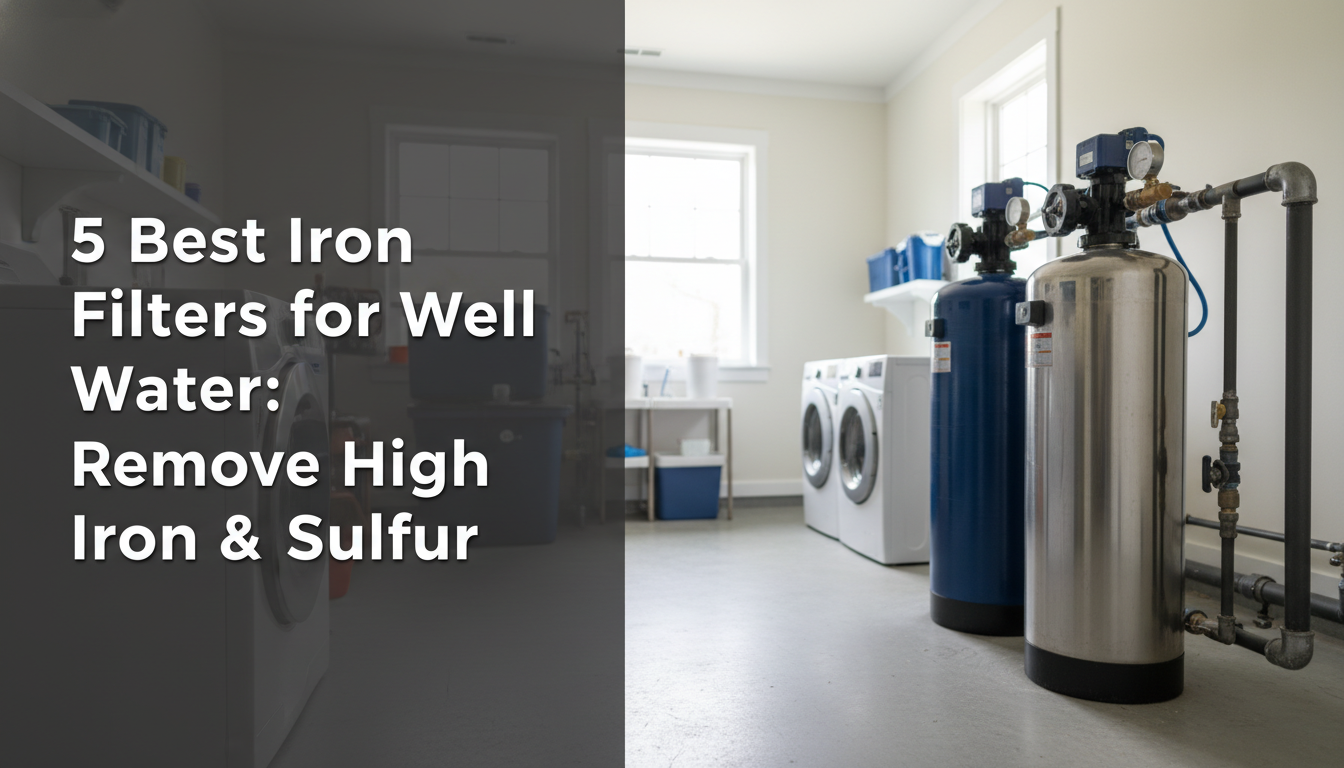 5 Best Iron Filters For Well Water: Remove High Iron & Sulfur
Now, the oxidation filter. This is the brute-force approach. It uses something like air, chlorine, or a media called manganese greensand to chemically change the iron so it can be filtered out. These systems can handle serious iron levels—up to 15 PPM or more. They’re workhorses, but they’re also more complex, often needing backwashing and a bit of maintenance. Worth it? Absolutely if your water is a rusty nightmare.
The All-in-One Hero: The Catalytic Carbon Filter
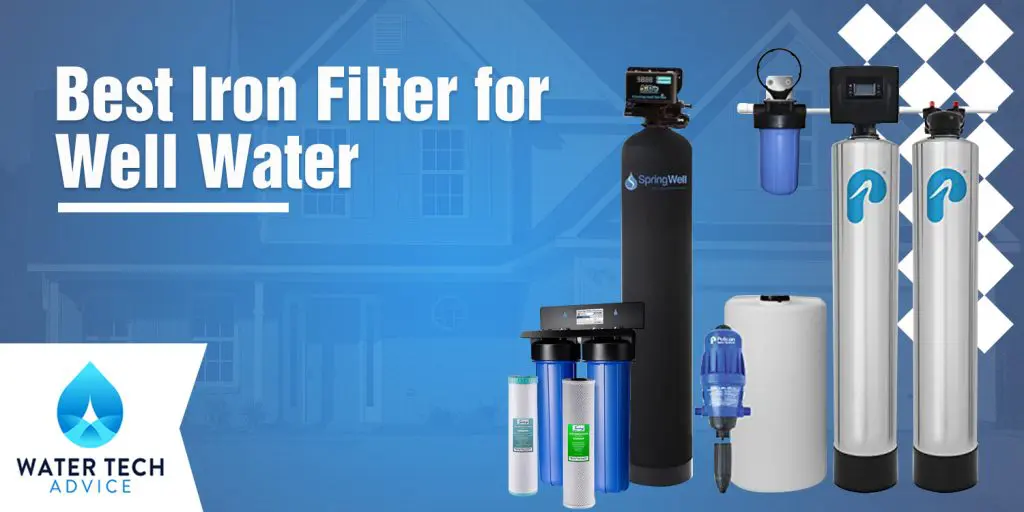
Here’s where things get exciting. A catalytic carbon filter, like those from brands like SpringWell or iSpring, uses a special carbon media that oxidizes iron without chemicals. It’s a hybrid—simple, efficient, and low-maintenance. What’s the catch? It struggles with really high iron (above 10 PPM) and works best with balanced pH. But for most homes with moderate iron, this is the sweet spot. I installed one, and my water went from "rusty swamp" to "crystal clear" in one backwash cycle. Side note: check your water pressure first—these need a bit of flow to work their magic.
 Best Iron Filters For Well Water In 2024 | Whole House Systems - Water
The Rust-Busting Legend: The Birm Filter
If you’re a DIY type who loves simplicity, meet the Birm filter. It’s a catalytic media that uses the dissolved oxygen already in your water to oxidize iron. It’s cheap, requires no chemicals, and handles iron up to about 15 PPM. But here’s the kicker: it needs a pH above 6.8 to work. If your water is acidic, the Birm will dissolve and ruin your day. I tried one—my pH was 6.2, and I ended up with a filter full of goo. Always test your pH first, or you’ll be crying into your orange water.
The Decision Matrix (Your Cheat Sheet)
Okay, let’s get practical. If your iron is under 5 PPM and you want softer water, get an ion exchange softener. If it’s 5–10 PPM and your pH is neutral, go for a catalytic carbon filter. If it’s over 10 PPM or you have bacteria, you need an oxidation system with aeration or chlorination. And if you’re unsure, pay for a lab test—it’s $50 well spent.
 5 Best Iron Filters for Well Water: Definitive Guide (January 2024
One last thing: maintenance matters. You can’t just install a filter and forget it. Backwash weekly, check the media every few years, and replace salt or chemicals as needed. Your filter is a relationship, not a transaction. Think of it as a grumpy pet that needs feeding.
So go ahead, grab a test kit, pick your fighter, and say goodbye to orange water. Your coffee—and your white socks—will thank you. Now, go drink some clean water. You’ve earned it.

