Best Commercial Water Softener

So there I was, staring at my coffee maker like it had personally betrayed me. The white, crusty scale had built up so thick that the machine actually hissed at me when I turn...

So there I was, staring at my coffee maker like it had personally betrayed me. The white, crusty scale had built up so thick that the machine actually hissed at me when I turned it on. I swear it was laughing. That’s the moment I realized my home’s hard water had officially declared war on my appliances.
I started looking into water softeners for the whole house, but quickly got lost in a sea of specs. Then a buddy who runs a small car wash told me, “Forget the home units—go industrial. Get a commercial water softener.” I thought he was nuts. Why would I need a giant tank meant for a factory?
But he had a point. A commercial-grade system isn’t just for businesses. It’s for anyone who’s tired of replacing water heaters every three years. It’s for the person who wants their shower glass to stay clear longer than a week. And honestly? It’s for people like you and me who secretly hate scrubbing mineral deposits off faucets.
Must Read
What actually makes a water softener “commercial”?
Here’s the lowdown: commercial units use bigger tanks and higher-flow valves than residential ones. That means they can handle multiple bathrooms running at once without losing pressure. Your typical home unit chokes if you flush a toilet and start the dishwasher at the same time. A commercial one? It just shrugs and keeps going.
They also regenerate (clean themselves) on actual water usage, not just a stupid timer. You know how annoying it is when a timer-based system decides to regenerate at 2 PM on a Saturday? With a commercial unit, it watchess your household’s flow and only regenerates when it’s actually needed. Smarter, not harder.
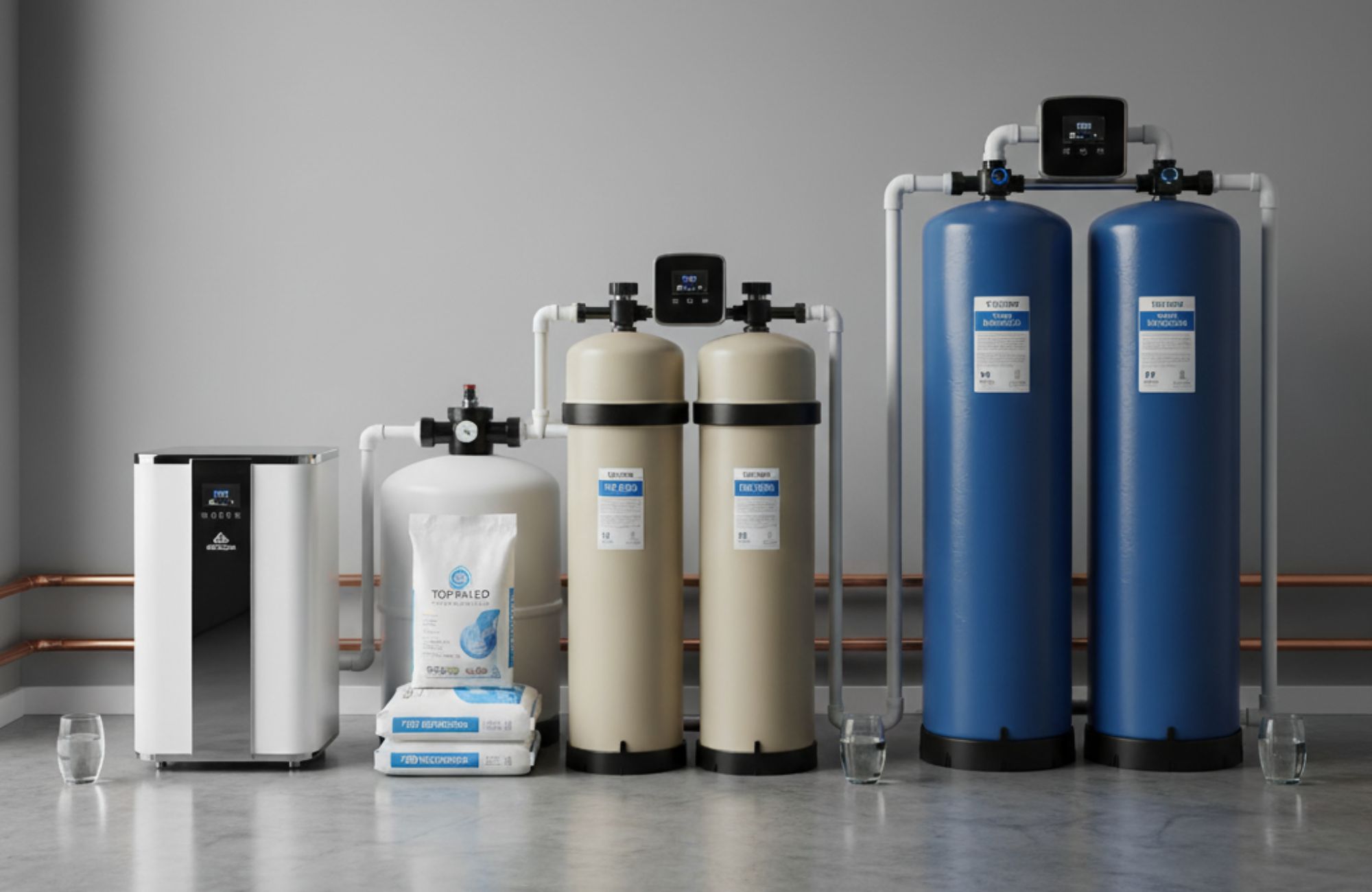 Best Water Softener Systems in Wolcott, CT (2025) - Housatonic Valley
And the build quality is night and day. Resin tanks are thicker, and the control heads are often made of brass or stainless steel, not cheap plastic. You’re basically buying something that might outlive your house. (I’m only half-joking.)
Who is this really for? (Spoiler: it might be you)
If you have a family of four or more, or an insanely large house with multiple bathrooms, a residential unit will feel like a toy. A commercial water softener gives you buffer capacity—so when friends visit and take 20-minute showers, your water stays soft. No scale, no soap scum, no salt-bridge nightmares.
It’s also a godsend for people who love their luxury soaking tubs or rain showerheads. Those things clog up fast in hard water. A commercial system delivers the flow they were designed for, without that ugly white crust forming around the nozzles. Your bathtub will thank you.
 7 Best Water Softeners In 2024: Explained, Reviewed – IDOCTJ
And yes, there’s a performance difference in taste. I know, water is water—but soft water makes coffee taste smoother and tea less bitter. Plus, your soap lathers up instantly, so you use less. Your skin feels less tight. Your hair doesn’t feel like straw. It’s almost weird how simple life gets.
The catch: it’s not a plug-and-play toy
Okay, let’s be real for a second. Commercial water softeners are big. We’re talking tanks that can be 12 inches in diameter and 5 feet tall. You need a dedicated spot in your basement, garage, or utility room. You also need a drain line and a bypass valve that a plumber should install.
 SoftPro® Commercial Pro Water Softener
They also use more salt per regeneration. But here’s the ironic part—they actually waste less water overall because they regenerate so much more efficiently than residential models. So while you buy bigger bags of salt, you’re not dumping 50 gallons of brine down the drain every few days. Trade-offs, right?
Oh, and the upfront cost? Expect to pay anywhere from $1,500 to $3,500 for a good one. That sounds steep until you realize you’re not buying a new water heater, dishwasher, or coffee maker every few years. Math works out in your favor over a decade.
How to pick the right one without losing your mind
First, get a water test kit. You need to know your water’s hardness in grains per gallon (gpg). Most municipal tap is around 10 to 20 gpg. Well water can be 30+. A commercial unit is rated by “capacity”—how many grains it can remove before regenerating. Aim for a unit that handles double your daily usage. That gives you safety margin.
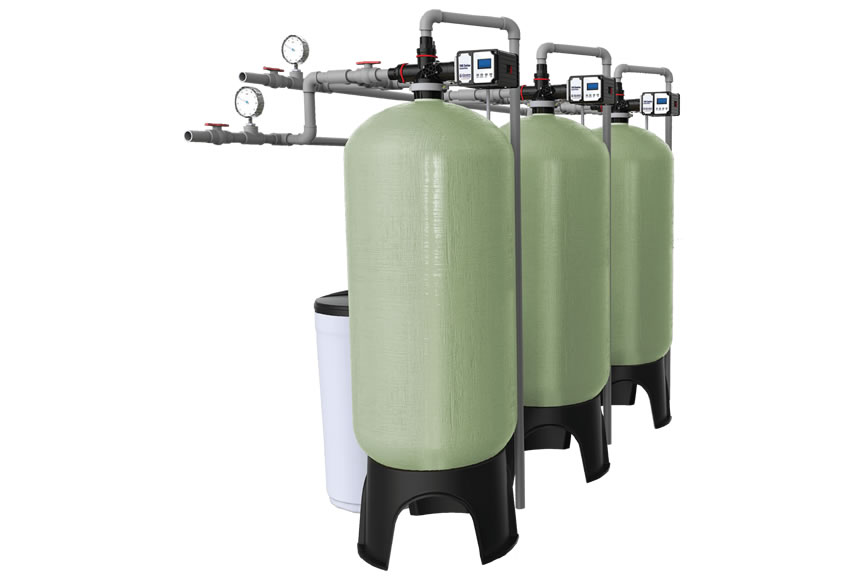 Commercial Water Softener Systems for Business - Paragon H2O
Second, look for NSF certification. Not all units are certified, and if you care about drinking water, you want one that’s been tested to reduce contaminants. Brands like Pentair, Culligan, and Water-Right are solid. I’m not getting paid to say that—they just don’t break.
Finally, check the valve type. The best ones use a meter-based valve. Avoid “cabinet” style all-in-one units—they look neat but limit your resin volume. A two-tank system (one for resin, one for brine) is the gold standard. More resin = better performance. Period.
So yeah, my coffee maker and I are on good terms again. I swapped the hissing machine for a commercial-grade system, and now my water tastes like it came from a mountain spring. No more scale. No more arguments with the faucet. And every time I take a long, soft shower, I think about that friend at the car wash and smile. Sometimes the overkill solution is exactly the right one.
