The Best Water Softener Systems

So, you’ve got that weird, filmy feeling on your hands after washing them? Or maybe your dishes look like they’ve been in a foggy dream? Welcome to the world of hard water. It...
So, you’ve got that weird, filmy feeling on your hands after washing them? Or maybe your dishes look like they’ve been in a foggy dream? Welcome to the world of hard water. It’s not a life crisis, but honestly, it’s a little annoying.
Your pipes are probably grumbling, your coffee maker is getting crusty, and your skin? It might be drier than a desert lizard. But don't worry—there’s a chill solution: a water softener. And yes, it’s way cooler than it sounds.
What’s the Big Deal with Hard Water Anyway?
Think of hard water as that friend who never leaves the party but brings all their heavy baggage. It’s packed with calcium and magnesium. These minerals aren’t dangerous to drink, but they love to cling to everything—your faucets, your shower, your laundry.
Must Read
Ever notice white, chalky buildup on your showerhead? That’s scale, the hard water’s calling card. It’s like the mineral version of graffiti, and it’s not the artistic kind.
A water softener works like a bouncer for your home’s pipes. It swaps those annoying minerals for sodium or potassium ions, making the water feel silky smooth. It’s basically magic, but with science.
Why You Should Get Curious About Softeners
Here’s the fun part: soft water makes everything feel different. Your soap will lather up like a shampoo commercial. Your hair won’t feel like straw, and your skin might just thank you with a little glow.
And your appliances? They’ll live longer. A water heater with soft water can last years longer than one fighting scale. It’s like giving your washing machine a spa day, every day.
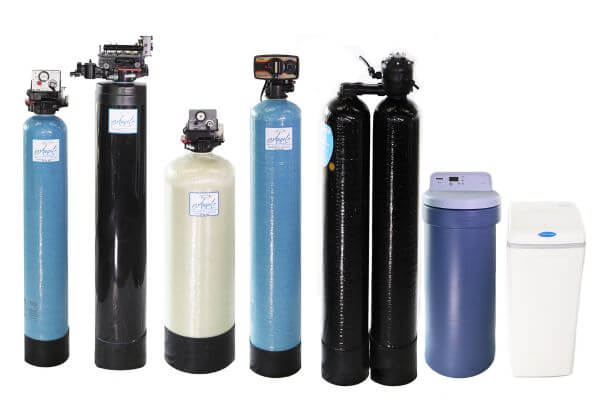 Discover the Best Water Softeners of 2025: Your Ultimate Guide
But the real question is: which system is right for your home? Let’s break it down without the boring tech jargon.
The Classic: Salt-Based Ion Exchange
This is the old reliable, the heavyweight champion of water softeners. It uses salt to flush out the minerals, delivering that soft, luxurious water. If you want the best all-around performance, this is your go-to.
It’s a little like a fish tank filter, but for your whole house. You’ll need to refill the salt tank every few months—kind of like feeding a pet, but less demanding. Expect to pay a bit more upfront, but the payoff is huge in water quality.
The Low-Tech Hero: Salt-Free Water Conditioners
Wait, no salt? Yep. These systems don’t remove the minerals—they crystallize them so they can’t stick to your pipes. Think of it as making the minerals chill out and stop causing drama.
 5 Best Water Softening Systems: For Every Home In 2026
They’re perfect if you don’t want to lug heavy bags of salt home. But here’s the catch: they don’t give you that true, slick soft water feel. They’re more like a gentle suggestion to the minerals, not a hard ejection.
If you’re environmentally conscious or have a salt-restricted diet, this could be your jam. Just know it’s not a full softener, but a solid middle ground.
The Gadget Lover’s Pick: Magnetic or Electronic Descalers
This one sounds like sci-fi—it uses a magnetic field to zap the minerals. You just clip it onto your pipe, and it’s supposed to do the job. It’s the lowest maintenance option ever.
Honestly, the science is a bit fuzzy, and results vary wildly. Some people swear by it; others say it’s like putting a sticker on a leaky bucket. It’s worth a look if you want a no-chemical, no-mess solution, but don’t expect miracles.
 5 Best Water Softener Systems: Expert-Tested In 2026
Size Matters: One Softener Doesn’t Fit All
So, how do you pick? It comes down to two simple things: how many people live in your home, and how hard your water is. Think of it like buying a coffee maker—you wouldn’t buy a single-cup for a family of six.
A good rule of thumb: measure your water’s hardness in grains per gallon (GPF). Most test kits are cheap and easy. Then, match that with the system’s grain capacity. It’s like matching puzzle pieces, but way more satisfying.
Don’t oversize it, though. A giant system for a tiny home just wastes salt and water. You want the Goldilocks of softeners—just right.
The Real Cost: Is It Worth It?
Okay, let’s talk money. A decent salt-based system can cost $400 to $1,500, plus installation. Salt-free ones are a bit cheaper, but magnetic descalers are often under $200. It’s an investment, sure.
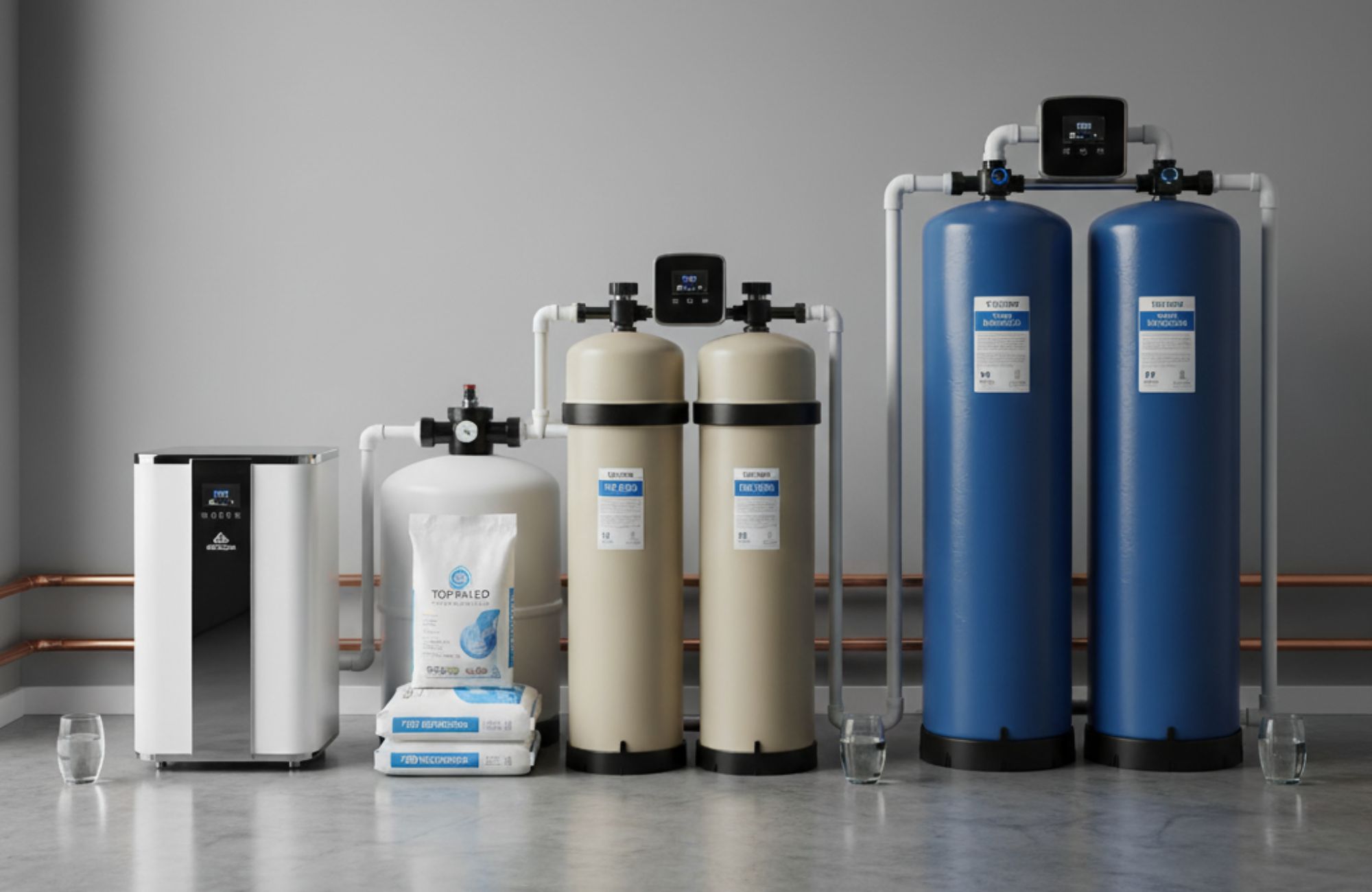 Best Water Softener Systems in Wolcott, CT (2025) - Housatonic Valley
But think about this: you’ll use less soap, less detergent, and your appliances won’t die young. Over a few years, the savings can actually balance out the cost. It’s like buying good hiking boots—they pay for themselves in comfort.
Plus, your dishes will sparkle. Isn’t that worth a little bit of money? Your future self, soaking in a scale-free shower, will thank you.
Final Thoughts: No Pressure, Just Options
So, what’s the best water softener? Honestly, it’s the one that fits your home, your budget, and your vibe. If you want pure softness, go with an ion exchange system. If you’re low-maintenance, try a salt-free conditioner.
Hard water isn’t the enemy—it’s just a quirky roommate. With the right system, you can make your water feel like a gentle cloud. So, grab a test kit, do a little research, and give your pipes the love they deserve.
Because life’s too short for scratchy towels and foggy glasses. Your water should be a friend, not a foe.
