Best Water Testing Kit For Home

So, you’ve decided to test your home’s water. Congratulations! You’re either a responsible homeowner, a nervous germaphobe, or you just watched one too many documentaries abou...

So, you’ve decided to test your home’s water. Congratulations! You’re either a responsible homeowner, a nervous germaphobe, or you just watched one too many documentaries about lead pipes. Whatever your reason, you’ve stumbled into the surprisingly hilarious world of home water testing. Let’s be honest, most of us assume our tap water is fine until we see a glass that looks like a weak cup of tea—then panic sets in.
Here’s a shocking fact to wake you up: the average tap water can contain over 2,000 different contaminants. That’s more characters than a season of a reality TV show. And while most of them are harmless, some are like that annoying house guest who won’t leave: lead, chlorine, nitrates, and bacteria. You don't need a lab coat to find them; you just need the right kit.
The Three Contenders (And One Absolute Weirdo)
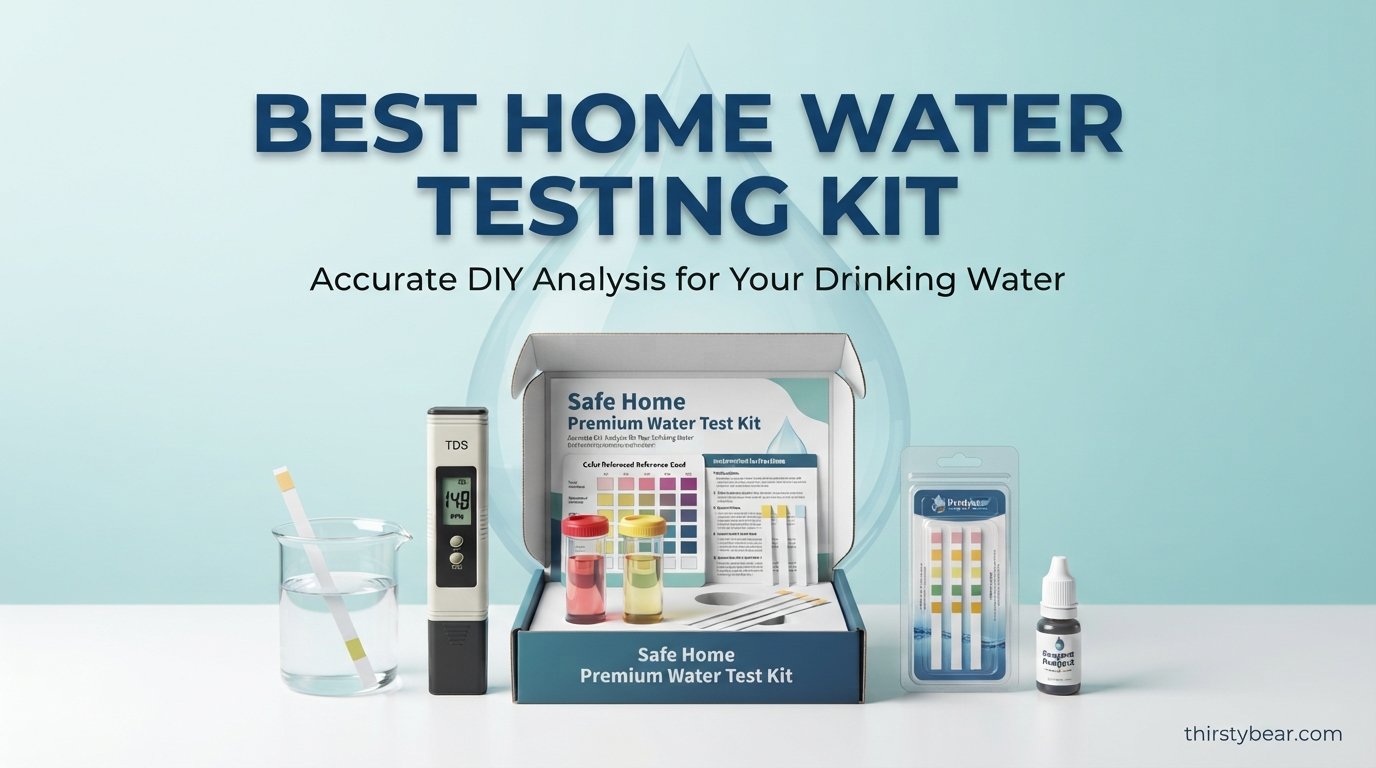
First up, we have the digital TDS meter. This little wizard measures Total Dissolved Solids—basically, how much stuff is floating in your water that isn’t H2O. It’s like a snooty sommelier for your sink. You dip it in, it gives you a number, and you instantly judge your water’s purity.
Must Read
Surprising fact: a TDS reading of 50 ppm is considered excellent, but many bottled waters score higher. So yes, your tap might be fancier than your store-bought Evian. The drawback? A TDS meter doesn’t tell you what the solids are. It’s like getting a bill with a total, but no list of items. Annoying, right?
Second, we have the test strip strips. These are the lazy person’s dream—and my personal favorite because you feel like a mad scientist. You dip a paper strip in a cup of water, wait 60 seconds, and compare colors to a chart. It’s like a mood ring for your plumbing.
:max_bytes(150000):strip_icc()/Varify-Premium-Drinking-Water-Test-Kit-595a811b9efd4e9a90f5be2d17896453.jpg) Our Top Water Testing Kits You'll Want to Grab Now
Our Top Water Testing Kits You'll Want to Grab Now
Pro tip: if the strip turns neon green for chlorine, don’t freak out. That’s normal unless you start smelling bleach in your morning coffee. The real gold here is testing for pH, hardness, and lead. Just don’t sneeze near the strip—it’s surprisingly sensitive.
The Surprising Twist: The Bacteria Test
Now for the heavy hitter: the home bacteria test kit. This is the most dramatic of the bunch. You fill a vial with water, add a powder, and then incubate it for 48 hours. If it turns cloudy, you’ve got coliform bacteria. If it doesn’t, you’re a hero. I once did this and left the vial on my fridge. My roommate thought I was making a science fair project.
 Can You Trust Home Water Test Kits? | Updated for 2023
Funny but true: one study found that 15% of private wells in the U.S. contain E. coli. But don’t panic—your tap water from a city system is almost always safe. The real threat is if you own a well or live in an old house. Still, watching that little vial turn yellow is peak drama.
The Winner: The All-in-One Kit That Spares Your Sanity
After testing five kits (and one very confused garden hose), the best for most homes is the Safe Home Ultimate Kit. It checks for lead, pesticides, bacteria, hardness, and pH in one go. It’s like the Swiss Army knife of paranoia. The instructions are clear enough that even your uncle who still uses a flip phone can follow them.
 10 Best Home Water Testing Kit (August 2026) Expert Reviews
What makes it hilarious? The company includes a chart that ranks your water’s “drinkability” on a scale of 1 to 10. I got a 9.2, and I swear I felt a little more hydrated. Plus, it comes with a bonus test for copper—which means you can finally prove your water isn’t turning into a penny.
Surprising fact: the kit detected traces of arsenic in a sample from a friend’s well. She’d been drinking it for years. Now she uses a filter and jokes that she’s “too toxic to die.” The kit literally saved her from a slow, boring trip to the doctor.
 Best Water Test Kits for Home Use: Beginner's Guide 2026
Final Weird Recommendation
If you’re on a budget, go with JNW Direct’s 16-in-1 Test Strips. They’re cheap, fast, and cover the basics. Just don’t trust the fluoride test—those strips are notoriously moody. For a laugh, test your water after a rainstorm. The results will make you question your life choices.
One last surprising fact: your toilet water is actually cleaner than your kitchen sink water in most homes. No, I’m not joking. Biofilm builds up in sink aerators. So next time you feel fancy, test the toilet tank. Just don’t drink it. Please. I’m begging you.
In conclusion, testing your water is cheap, easy, and surprisingly entertaining. You’ll find out if your home has “hard water” (which sounds like a wrestling move) or if you’ve been drinking liquid metal. And if all else fails, remember: the best water test is just listening to your gut. If it glugs, it’s probably fine. If it smells like a swimming pool, buy a kit. Your kidneys will thank you.
