Distilled Water Vs Reverse Osmosis Drinking

So, you’re standing in the water aisle at the grocery store, staring at two fancy-looking jugs. One says “Distilled,” the other boasts “Reverse Osmosis.” You just want a clean...
So, you’re standing in the water aisle at the grocery store, staring at two fancy-looking jugs. One says “Distilled,” the other boasts “Reverse Osmosis.” You just want a clean sip of water, and now your brain is doing calculus. What’s the real difference, anyway? Let’s unpack this like we’re chatting over a cup of—well, water.
The Science Made Simple (No Lab Coat Needed)
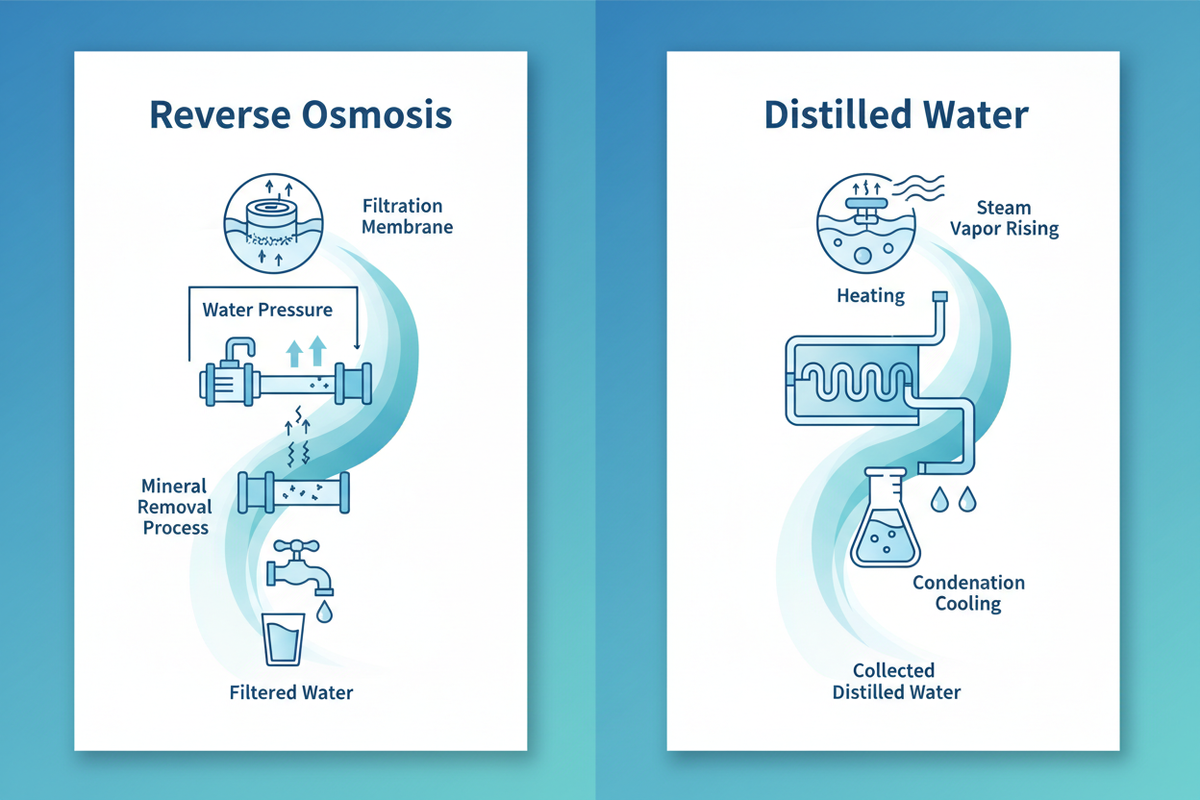
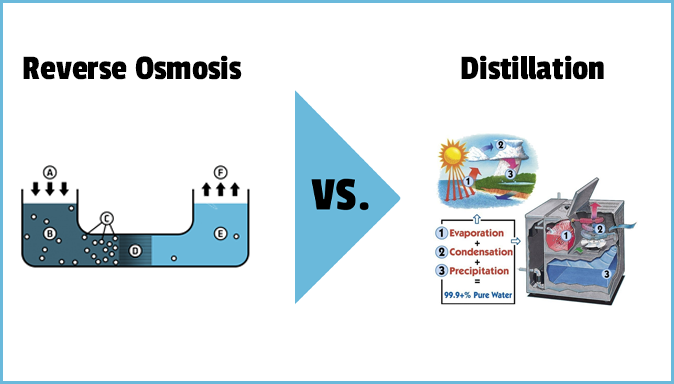
Distilled water is basically cloud water. You boil the H2O until it turns to steam, catch that steam, and let it cool back into liquid. Everything else—minerals, bacteria, heavy metals—gets left behind in the boiling pot.
Reverse osmosis, or RO, is more like a bouncer at a very strict club. It pushes water through a super-fine membrane that only lets the tiny water molecules pass. Salts, chlorine, lead, and even microscopic plastic bits get rejected at the door.
Must Read
Both processes strip out the stuff you don’t want. But they do it with completely different vibes. One is a hot steam bath; the other is high-pressure filtration.
The Taste Test: Is There a Winner?
Have you ever sipped distilled water and thought, “Huh, that’s… nothing”? You’re not crazy. Distilled water tastes flat because it’s missing the minerals that give water a little character. It’s the vanilla pudding of hydration.
Reverse osmosis water usually has a crisper, “lighter” mouthfeel. It’s still stripped of most minerals, but some RO systems leave a tiny trace or add a remineralization stage. RO often wins the taste test because it feels more like the water you’re used to—just cleaner.
But here’s the kicker: if you’re chasing pure, zero-flavor solvent, distilled is your champion. It’s like drinking a ghost.
The Cool Factor: What Do They Actually Take Out?
This is where it gets fun. Distillation kills everything with heat. Bacteria, viruses, and heavy metals are no match for a good rolling boil. It’s the apocalypse-proof method.
Reverse osmosis, though? It’s like a surgical strike. It removes dissolved solids, pesticides, pharmaceuticals, and even some viruses (if the membrane is tight enough). It catches stuff you didn’t even know you were drinking in that tap water.
For a fun comparison: Distilled water is that friend who burns the house down to clean the kitchen. RO is the friend with a tiny, precise laser scalpel. Both get the job done, but one is a lot more dramatic.
 Reverse Osmosis Versus Distillation Archives - My Pure Water
What About Your Body? Is One “Better” for You?
Here’s the part where everyone starts arguing online. Some people freak out that distilled water “leaches” minerals from your body. Should you worry?
Let’s be chill: Drinking distilled water won’t hurt you unless you’re literally drinking nothing else for weeks and eating zero food. Your body gets its minerals from food, not your tap.
Reverse osmosis water is slightly more common for daily drinking because it doesn’t taste weird. And many folks believe the trace minerals left behind (like calcium and magnesium) are a gentle bonus for your teeth and bones. Neither is a miracle cure, and neither is poison. It’s just really clean water.
The Practical Stuff: Which One Should You Actually Buy?
If you’re a coffee nerd or a plant parent, listen up. Use distilled water in your espresso machine, steam iron, or car battery. It prevents scale buildup because there’s nothing in it to deposit. Your appliances will thank you with a longer life.
For your houseplants? Skip the distilled. It can actually burn roots because it lacks minerals. RO water is usually better for your leafy friends—it’s clean but not aggressively empty.
And for your glass? Reverse osmosis is the daily driver. It tastes neutral, it’s cheap if you have a home system, and your body won’t notice the difference. Distilled is a niche tool, not a lifestyle.
The Final Sip
So, distilled vs. reverse osmosis—are they rivals? Not really. Think of distilled as the specialist (great for labs, humidifiers, and scientific precision). Think of RO as the all-rounder (great for your kitchen pitcher, your fish tank, and your hydration habit).
Whichever you choose, you’re already winning. You’re ditching the chlorine, the mystery metals, and the weird tap aftertaste. That’s the real victory—not which fancy word is on the jug. Now go hydrate, you magnificent human.
