How Deep Should A Well Be For Drinking Water

So, you want to build a well. Maybe you’re tired of that city water bill that tastes like regret, or you just fancy yourself a pioneer without giving up central heating. Eithe...
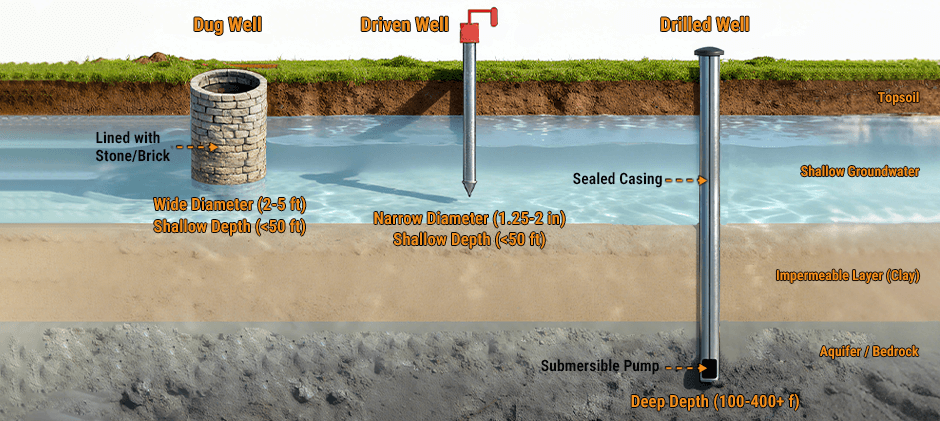
So, you want to build a well. Maybe you’re tired of that city water bill that tastes like regret, or you just fancy yourself a pioneer without giving up central heating. Either way, the big question looms: just how deep do you have to stab the earth to get a decent glass of water? Spoiler alert: it’s not as simple as “dig until you’re thirsty.”
First, Let’s Talk Dirt (Literally)
You might think water is just down there, waiting like a polite guest in the basement. Actually, groundwater lives in two distinct layers. The first is the “unsaturated zone” – that’s just damp dirt, the geological equivalent of a half-wet towel on the bathroom floor.
Below that is the “saturated zone,” where all the pores are filled with actual water. Your well needs to punch through the damp towel and dive deep into the real pool. If you stop too early, you’ll get a muddy trickle that would make a camel weep.
Must Read
The Magic Number: 100 Feet (But Don’t Quote Me)
Industry talk usually throws around 100 feet as the sweet spot for a residential well. That’s about the height of a ten-story building, which sounds insane because you’re not drilling an elevator shaft – you’re just thirsty. But here’s the kicker: some people hit perfect water at 30 feet, while others go down 400 feet and still get sludge that tastes like old pennies.
It all depends on where you live. If you’re in a valley near a river, you might be sipping clear water at 40 feet, feeling smug. Build a well on a rocky hillside? Congratulations, you’re now a part-time mining operation. That 400-foot hole is your new identity.
The “Minimum Depth” Delusion
There’s no official “minimum depth” for drinking water, but there is a very official “minimum depth for not dying of dysentery.” You need your well casing to go at least 20 feet down to avoid surface runoff. That means all the cow poop, fertilizer, and your neighbor’s questionable septic tank stay out of your morning coffee.
Think of it like this: the top 20 feet of soil is the “yuck zone.” If your well is shallower than that, you’re basically drinking rainwater that just finished washing a raccoon. Not ideal. Professionals often require casing to extend 50 to 100 feet just to be safe.
Surprising Fact #1: Your Aquifer Has Mood Swings
Aquifers – those underground water layers – aren’t static bathtubs. They ebb and flow with the seasons, like a teenager’s attitude. During a drought, the water table can drop tens of feet overnight. A well that was perfect in May might guzzle a tumbleweed in August.
That’s why drillers aim for a depth that guarantees flow even when the planet is having a dry tantrum. They look for a “static water level” – the distance from the surface to the water when the well is resting. But they drill 50 to 100 feet below that to store a reserve. Yes, you’re building a backup tank for a rain-check world.
The “Pumper’s Guide to Emotional Well-being”
Here’s a fun number: a typical household guzzles about 100 gallons per day (that’s washing, flushing, drinking, and your epic showers). Your well must be deep enough to recharge fast enough to keep up. If it’s too shallow, you’ll get a gurgle, a cough, and then dry silence while you’re mid-lather.
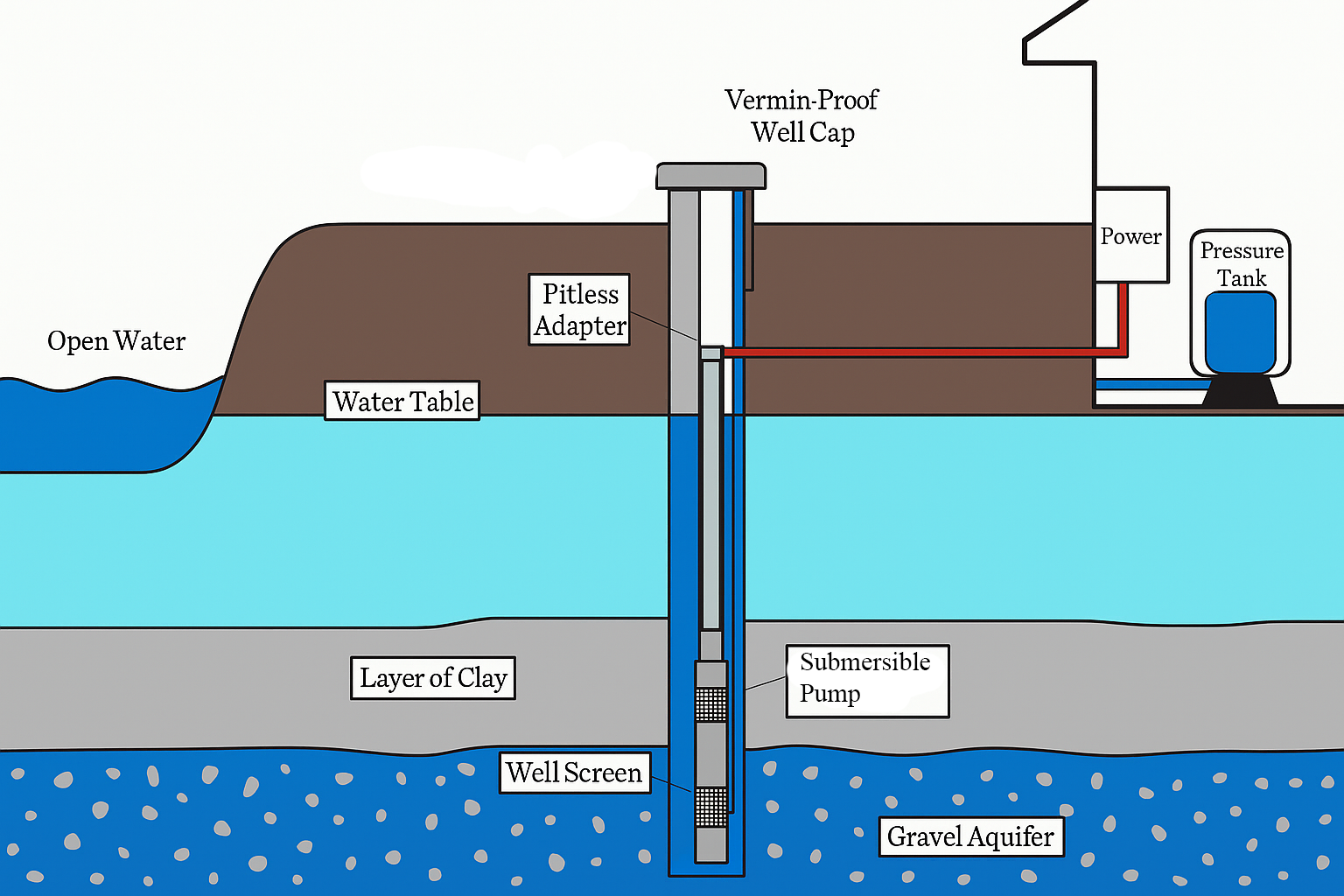 Drinking Water Well Diagram Information Water System Applications
This is called “drawdown,” and it’s the reason wells have pump intake screens placed far below the static water level. Pro tip: if your pump starts sucking air, you’ve got a well that’s either too shallow or a very expensive paperweight.
Surprising Fact #2: The “Diggers” Rule
In many places, there are legal minimums for well depth, but they’re about distance from contaminants, not thirst. You need the well to be at least 10 feet from your property line, 50 feet from a septic tank, and – if you’re feeling fancy – 100 feet from a manure pile. (Yes, “manure” is a technical term in planning codes.)
But the actual depth? The government doesn’t care if you hit water or hit bedrock. They only care if your well is grouted properly – that’s cement pumped down the outside to seal the hole. Without grout, your well is basically a straight shot for bacteria to ride an elevator to your glass.
What About The “Hand Dug” Option?
If you’re feeling nostalgic, you can dig a well by hand. They’re usually around 20 to 30 feet deep – manageable for a desperate human with a shovel and a death wish. But hand-dug wells are notoriously shallow and often collapse, which is why we invented machinery and not digging our own graves.
Modern drilled wells typically go 100 to 300 feet. That’s not just arbitrary hubris; it’s because we want water that’s been filtered through hundreds of feet of rock. That rock acts like a Brita filter that took 10,000 years to build. Who says nature isn’t patient?
The Verdict (Served with Ice)
So, how deep? At least 100 feet for most residential setups, but check with a local driller who knows your dirt. Don’t trust a website from a guy in a café (that’s me) for legal specifics. Instead, hire a pro who will stick a camera down the hole, measure the yield in gallons per minute, and laugh at your “I thought 20 feet was fine” naivety.
Remember: a deep well costs more upfront but gives you security. A shallow well saves cash but might taste like Mr. Clean’s day-old mop water. Choose wisely, drink deeply, and never, ever let anyone convince you that “it’s probably fine” is a valid well depth.
