Difference Between Sterile Water And Distilled Water

Last week, I watched my friend pour what she swore was "just water" into a new humidifier. She grabbed a bottle from her pantry labeled "distilled." I, of course, had to pipe...
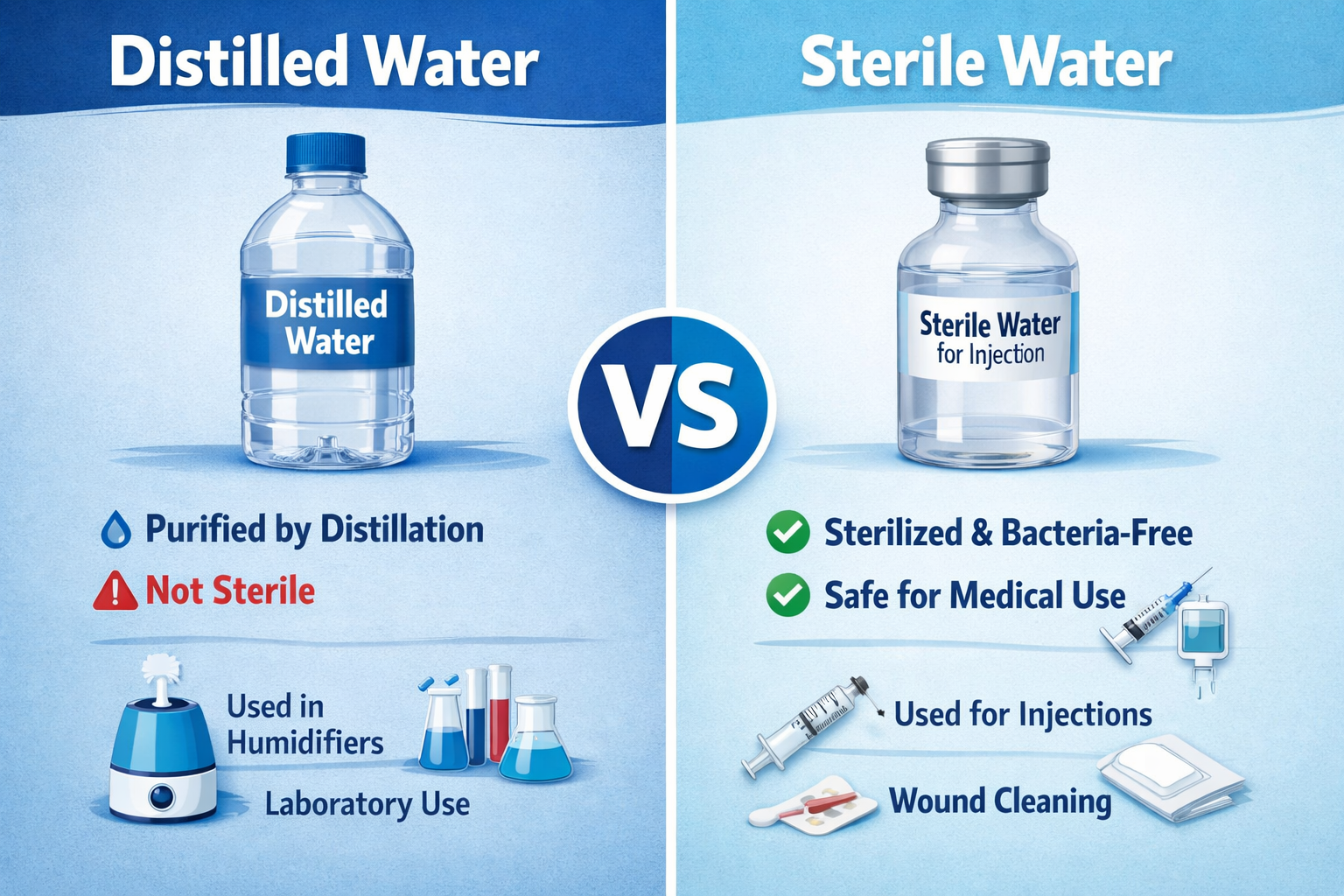
Last week, I watched my friend pour what she swore was "just water" into a new humidifier. She grabbed a bottle from her pantry labeled "distilled." I, of course, had to pipe up. "That's fine for your coffee maker," I said, "but try putting that in a hospital IV drip and... well, you might have a problem."
She stared at me like I had three heads. And honestly? I get it. We throw words like sterile and distilled around like they’re interchangeable twins. Spoiler alert: they are not twins. They are more like distant cousins who went to very different schools.
The Quick Scene-Setter: What Both Waters Have In Common
First, let’s clear the air. Both distilled and sterile water are about as pure as H2O gets in the wild. We’re talking zero dissolved minerals, zero bacteria, zero—well, almost everything except hydrogen and oxygen.
Must Read
They’re the overachievers of the water world. But how they achieve that purity? Completely different stories. And the difference actually matters.
Distilled Water: The Heat-Steaming Drama Queen
Distilled water goes through a very dramatic process. You boil the living daylights out of it, catch the steam, and then cool that steam back into liquid. It’s like evaporation on steroids—just with a little more effort than waiting for a puddle to dry up. (You’ve probably done this in a high school science class, and if you didn’t, you probably saw it on YouTube.)
This boiling step kills most microbes—yes, bacteria and viruses hate a good boil. But—and here’s the kicker—distilled water is not guaranteed to be free of every last bug. It's also not bottled in a completely sterile environment. Think of it as "super clean" but not "surgery-ready."
Where you’ll find it: In your car battery (please don't drink it), in steam irons, in fish tanks, and in CPAP machines. It’s fantastic for keeping your appliances scale-free. But does it belong inside your bloodstream? Hard no.
Sterile Water: The Autoclaved, Controlled-Environment Perfectionist
Now, sterile water is a whole different beast. It doesn’t just get boiled—it gets put through a validated sterilization process. This usually involves an autoclave (a fancy, industrial-pressure cooker on steroids) or exposure to ethylene oxide gas. We’re talking zero living organisms. None. Zip. Zilch.
Here’s the part that trips people up: sterile water can be distilled water, but only if that distilled water is then re-packaged and sterilized in a sealed, clean container. The sterile label isn't about how it's made; it's about the final state of the water in that specific container. No bacteria, no spores, no sneaky viruses.
And guess what? Sterile water often is not distilled. It can be purified by reverse osmosis or deionization, then sterilized. The point is the end result, not the journey.
 Is Distilled Water Sterile? Distilled Water VS Sterile Water – Frizzlife
The "You Could Die" Difference (Okay, A Little Dramatic)
Let me hit you with a real-world example. Hospitals use sterile water for injections, wound cleaning, and IV drips. If they accidentally used distilled bottled water from a grocery store? Even if it looked clear? That could introduce non-sterile microbes straight into a person’s bloodstream. That’s a fast track to septic shock. Not cute.
On the other hand, if you pour sterile water into your steam iron? It’s fine. But you just wasted money because that iron doesn’t care about sterilization. It just cares about minerals. See the irony?
You can actually make distilled water sterile by boiling it again in a clean container—but it’s tricky. The moment it touches a non-sterile surface, bam, it's no longer sterile. Distilled water is just "mostly dead," but sterile water is "completely dead." (Princess Bride fans, I see you.)
Can You Drink Them? The Honest (Slightly Boring) Answer
You can drink distilled water. It tastes flat and lifeless—like licking a clean glass—but it won’t harm you in small amounts. Long-term? It might leach minerals from your body because it's so thirsty for electrolytes. (Your teeth might protest.)
Sterile water, on the other hand, is technically drinkable, but good luck finding it at a price that doesn't make you wince. A bottle of sterile water can cost ten bucks in a pharmacy—and honestly? It tastes the same as boiled tap water. Your wallet will curse you.
So, if you’re buying water for your bedroom humidifier, grab the cheap distilled stuff. If you’re cleaning a deep cut or mixing baby formula (check your local guidelines!), reach for sterile. But for your morning coffee? Just use tap. Please. Your taste buds will thank you.
And my friend? She’s now the proud owner of a humidifier filled with $8 sterile water. Because I scared her. Oops. You’re welcome, science.
