Leased Water Treatment Systems Remote Monitoring Factories Northern Ohio

You know that feeling when your basement floods, and suddenly you’re starring in your own personal disaster movie? Leased water treatment systems in Northern Ohio are rewritin...

You know that feeling when your basement floods, and suddenly you’re starring in your own personal disaster movie? Leased water treatment systems in Northern Ohio are rewriting that script, especially for factory managers who sleep better knowing their process water is under surveillance. Remote monitoring is the quiet hero here, turning industrial water management from a reactive headache into a smooth, hands-off operation. It’s like having a smart thermostat for your factory’s most vital resource—minus the creepy robot voice.
The Secret Life of Your Water
Think of a leased system as a subscription service for clarity. You don’t own the equipment; you rent peace of mind. Remote monitoring means a digital brain in your factory is constantly checking pH levels, flow rates, and chemical dosages, often from a control room miles away. This isn’t sci-fi—it’s everyday tech for plants in places like Toledo, Akron, and Cleveland, where water quality varies as much as the weather.
Fun fact: The first remote water monitors were used in the 1970s for nuclear plants. Today, your local auto parts factory in Sandusky uses a similar concept to keep coolant systems humming. No radiation suits required.
Must Read
Why Lease? Because Owning is Overrated
Capital expenditures are so last decade. Leasing shifts the burden of maintenance, upgrades, and emergency repairs onto the provider, while you focus on making widgets (or beer, or steel). Northern Ohio’s factories love this because it turns a fixed cost into a predictable monthly line item. No surprise breakdowns, no surprise bills.
Cultural reference: Remember Ross Geller’s “Pivot!” scene from Friends? Leasing is the anti-pivot—smooth, planned, and devoid of shouting. Your provider handles the heavy lifting.
How Remote Monitoring Actually Works (Without the Jargon)
Picture this: sensors in your treatment tanks chat with a cloud-based dashboard via cellular or Wi-Fi. If the pH drifts even a little, an alert pings your phone or the provider’s 24/7 team. It’s like having a lifeguard for your water chemistry, but one who never takes a bathroom break.
Practical tip: Ask your leasing vendor if their system offers predictive analytics. Some can catch scale build-up or resin exhaustion weeks before they cause a shutdown. That’s the difference between a quick fix and a three-day nightmare.
The Northern Ohio Advantage
This region is a water management paradox. We’ve got Lake Erie right there, but factory water often needs heavy treatment for hardness, iron, or bacteria. Leased systems with remote monitoring are tailor-made for this reality, allowing rapid adjustments based on seasonal changes—like spring runoffs or summer algae blooms.
Fun fact: The Cuyahoga River used to catch fire in 1969. Today, that same industrial corridor uses remote monitoring to ensure their discharge is cleaner than the river itself. Progress is a beautiful thing.
Six Practical Tips for Factory Managers
1. Demand a mobile dashboard. You want to check your water quality while waiting for coffee, not while crawling under pipes. Most quality systems offer real-time push notifications.
2. Clarify who handles alarms. Some leased systems auto-call a service tech; others just send you a text. Know the difference before 2 a.m. on a Saturday.
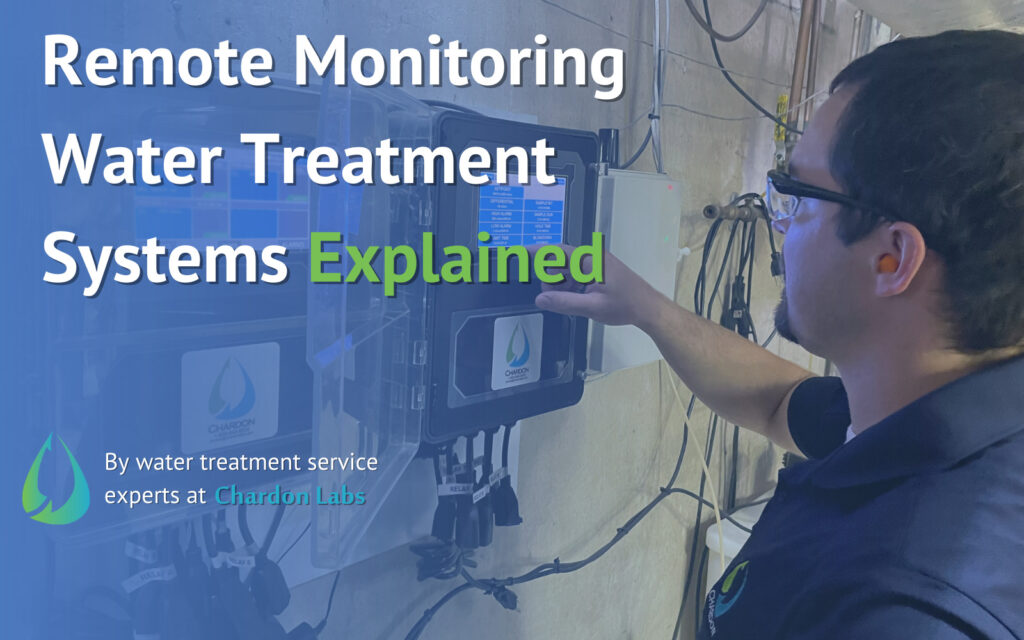 Remote Monitoring Water Treatment Systems | Chardon Labs
3. Opt for leak detection. Water leaks are the silent budget killer in factories. Many monitors can flag a 1% flow change—saving you thousands in damage and water bills.
4. Check for EPA compliance data logs. Remote monitoring automatically generates reports you’ll need for audits. Paperwork never felt so effortless.
5. Negotiate a performance guarantee. Ask for a service-level agreement that promises response times. Northern Ohio winters can freeze unprotected lines; you want rapid support, not a voicemail.
6. Test the user experience. If your team can’t read the dashboard without a degree in chemistry, it’s a bad fit. Look for visual, color-coded alerts that even the night shift can interpret.
Cultural Nugget: The "Ohio Work Ethic" Meets IoT
There’s a reason Cleveland was once the world’s manufacturing capital—resilience. Leased remote monitoring systems honor that grit by eliminating guesswork. It’s not about replacing human intuition; it’s about giving factory teams superpowers through data. Think of it as the industrial equivalent of a Fitbit for your facility’s water health.
Fun fact: The world’s first municipal water treatment plant opened in Poughkeepsie, New York in 1870. One hundred fifty years later, you can monitor that same chemistry from a smartphone in your pocket. We’ve come a long way, baby.
A Short Reflection on Daily Life
On the surface, this is an article about pipes and sensors. But really, it’s about trust—the quiet confidence that comes from knowing the invisible systems supporting our factories are being watched with care. Every time you drive past a plant in Lima or a brewery in Columbus, remember: remote monitoring is quietly ensuring your car’s parts are made with clean water and your beer tastes crisp.
And isn’t that a little magical? The next time you turn on a tap, you’re not just getting water. You’re getting the result of clever people, smart sensors, and a leasing agreement that lets everyone sleep easier. That’s the lifestyle of modern industry.
