How To Set The Hardness On A Water Softener

Let’s be honest: nobody wakes up thinking, “I can’t wait to tweak my water softener’s hardness setting today.” Yet here we are, staring at a little dial or digital screen that...

Let’s be honest: nobody wakes up thinking, “I can’t wait to tweak my water softener’s hardness setting today.” Yet here we are, staring at a little dial or digital screen that holds the secret to better showers, shinier glasses, and softer laundry. It’s the quiet hero of modern plumbing—and getting it right is easier than you think. Think of it as tuning a guitar: one wrong note and everything feels off, but when it’s dialed in, life just flows better.
Why Your Water Softener Cares About Hardness
Your water softener isn’t a mind reader—it’s a machine that needs a number to do its job. That number is the hardness of your water, measured in grains per gallon (GPG). If you set it too low, your softener will act like a lazy barista, leaving behind calcium deposits that cloud your dishes and crust your showerhead. Set it too high, and you’ll waste salt and water like a leaky faucet in a comedy sketch.
The sweet spot? It’s where your water feels silky on your skin, your soap lathers like a dream, and your pipes stay scum-free. Most homes fall between 10 and 30 GPG, but local water reports or a simple test kit can give you the exact number. Pro tip: call your municipal water company—they often post hardness data online, saving you a chemistry lesson.
Must Read
Fun fact: The term “hard water” dates back to the 18th century, when early scientists noticed that certain waters made soap “hard” to lather. Gabriel Fahrenheit himself would probably have approved of this modern convenience, though he might have been more interested in temperature than grain counts.
Step One: Find Your Local Hardness
Before you twist any dials, you need a baseline. Grab a water hardness test strip from your local hardware store—they cost about the same as a fancy latte and work in seconds. Dip it in a glass of tap water, wait for the color change, and match it to the chart. Boom: your GPG is revealed, like a secret handshake between you and your pipes.
Alternatively, look up your city’s water quality report online. These are public documents, often written in dry bureaucratese, but they hold the key to your setting. For example, if your report says “120 mg/L,” multiply by 0.07 to get roughly 8.4 GPG. Math is annoying, but so is a shower that feels like you’re rinsing in chalk dust.
Cultural reference moment: In the UK, where water hardness varies from Edinburgh’s soft rain to London’s iconic “hard” Thames, locals often joke about tea tasting different depending on the postcode. Your softener setting is the difference between a perfect cuppa and a tragic, scummy brew.
Step Two: Enter the Maintenance Zone
Most water softeners have a manual dial or a digital keypad. For the old-school turn-knob style: locate the “hardness” setting (often labeled with a grain icon). Turn it to your number—simple as setting an alarm clock from the 1990s. For digital models: press the “set” or “menu” button, scroll to “hardness,” and input your GPG. Some fancy units even adjust automatically, but don’t trust them blindly—they’re only as smart as the sensor you buy.
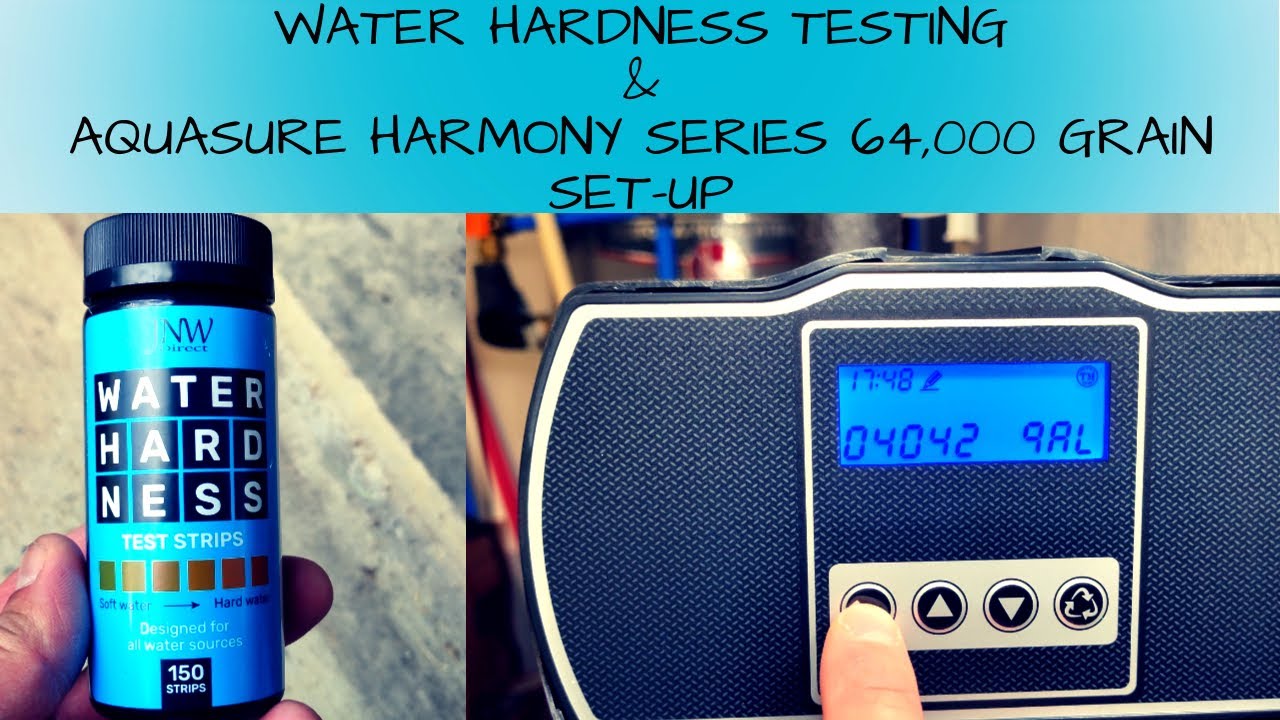 San Antonio Water Softener Hardness Setting
If you have an iron problem (and who doesn’t love a little rust in their life?), adjust the setting upward by 4 to 5 GPG. Iron messes with the softener’s mojo, making it think the water is harder than it is. Think of it as adding a “mood factor” to the machine—like giving it a caffeine boost so it works harder.
Practical tip: Write your GPG number on a piece of waterproof tape and stick it near the softener. Trust me, six months from now when you forget, you’ll thank your past self. It’s the same logic as labeling leftovers: future you is always a bit forgetful.
Step Three: Test the Results
After you set it, give your system at least two full regeneration cycles (usually 48 hours) to balance out. Then play the “soap test”: wash your hands with a bar of soap—if it lathers like a bubble party, you’re golden. If it feels slimy or leaves a residue, your setting might be too high (a common mistake). Slimy water means the softener is overworking, adding too much sodium to your water.
Another quick check: pour a glass of water and let it sit. Look for cloudiness or white sediment. Crystal-clear? You’re winning. Milky? Time to tweak down by 2 GPG and try again. It’s a little like Goldilocks and the Three Bears, but with more calcium and less porridge.
Fun fact: Water softeners were first invented in the 1920s, originally using zeolite minerals. Today’s models are so efficient that they can reduce your energy bills by up to 15%—because clean pipes mean hot water travels faster. Your wallet will thank you, even if your teenager still leaves wet towels on the floor.
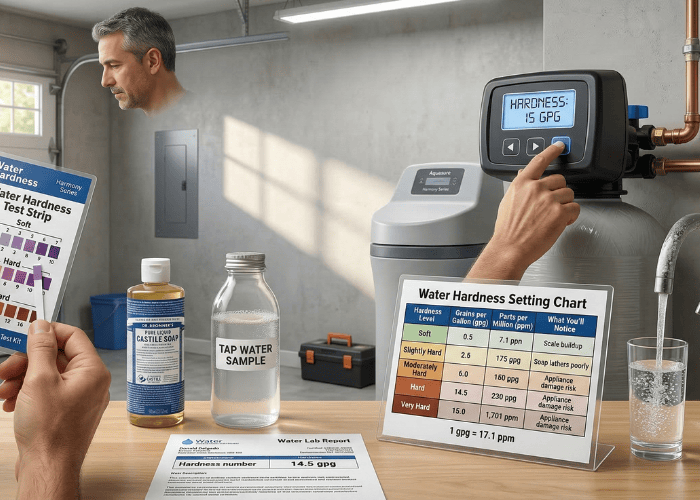 How to Measure Hardness in Water (and Using a Water Softener Hardness
Common Pitfalls and How to Dodge Them
Don’t set the hardness based on what your neighbor uses—their water is from a different well or pipe system. Water chemistry is personal, like a fingerprint or your coffee order. Also, avoid guessing: a wrong setting can waste up to 40% more salt, which is bad for your budget and the environment. Accuracy matters more than arrogance.
If your softener has a “bypass mode,” use it during gardening or outdoor spigot use—your plants don’t need softened water, and they’ll appreciate the minerals. It’s a small tweak that keeps your garden happy and your water bill lower. Think of it as giving your lawn its own “hard water happy hour.”
Finally, check your salt level monthly. A softener set perfectly with no salt is like a car with a full tank of gas but no engine. Pointless. Use high-quality salt pellets, preferably solar or evaporated salt, to minimize buildup in the brine tank. Dirty salt = dirty softener = frustration.
Reflection: The Quiet Pleasure of a Well-Set Dial
There’s a subtle satisfaction in knowing you’ve tuned a machine to your life’s exact rhythm. Setting the hardness on your water softener isn’t just a chore—it’s a small act of control over the invisible elements that shape your daily comfort. That first morning shower? Smoother. The glasses you pull from the dishwasher? Sparkling. The laundry that smells like nothing but clean? You did that.
In a world cluttered with apps and notifications, sometimes the best fixes are analog. A twist of a dial, a glance at a test strip, a sip of crystal-clear water. It reminds us that the best things—soft water, a hot bath, a quiet cup of tea—are often the ones we set just right. So go ahead, be the person who knows their GPG. Your hair, your kitchen, and your water heater will thank you.
