How Much Is A Water Softener System Cost

So, picture this: my mom, a woman who once convinced me that dishwashers were a communist plot, called me in a panic. Her new Keurig had started making coffee that tasted like...
So, picture this: my mom, a woman who once convinced me that dishwashers were a communist plot, called me in a panic. Her new Keurig had started making coffee that tasted like a salty tear. After some frantic Googling (and me shouting “hard water!” like I was on a detective show), she asked the million-dollar question: “How much is a water softener system cost?”
That’s the real kicker, isn’t it? You don’t care about the science of ion exchange until your shower leaves you feeling like a leftover French fry. Suddenly, your faucets look like they’ve been dusted with cocaine, and your laundry feels like sandpaper. You just want to know the number.
The short, painful answer
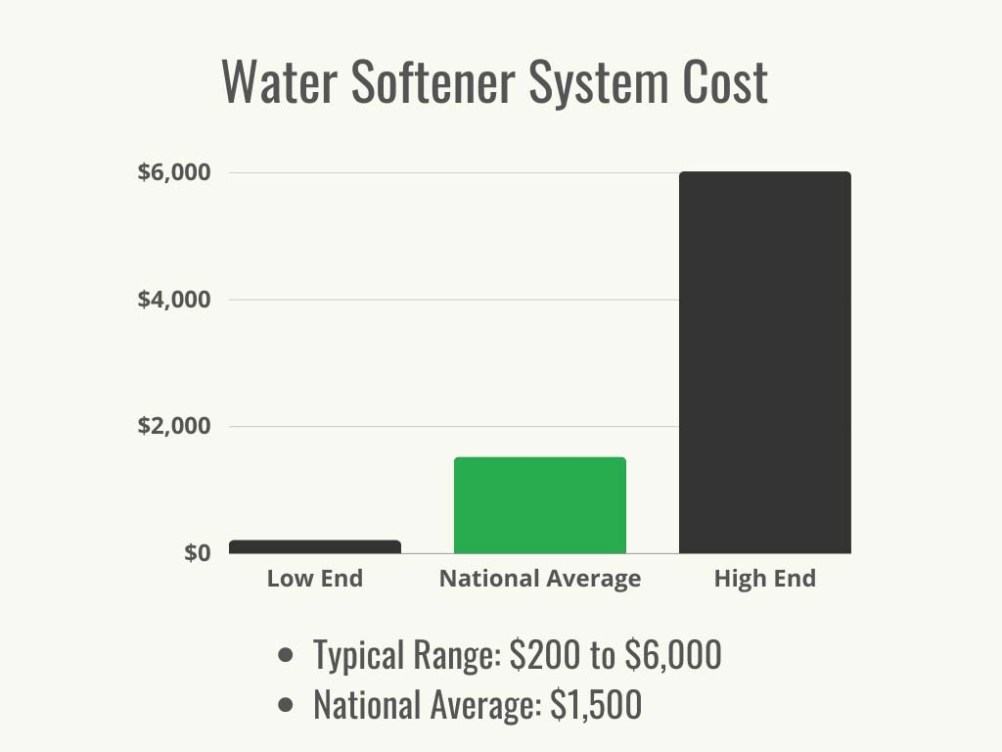
Let’s rip the band-aid off: a whole-house water softener system can cost you anywhere from $400 to $6,000. Yes, that’s a bigger range than my emotional state during a Monday morning commute. The price depends on whether you’re buying a glorified bucket or a high-tech fortress.
Must Read
And don’t forget installation—that’s another $150 to $1,000, depending on how much your plumber hates your current pipes. (Hint: they usually do.)
The budget-priced “starter” softeners
If you’re on a tight budget (or just mildly annoyed by hard water), you can grab a basic model for $400 to $800. These are usually twin-tank or “portable” units you hook up yourself. They work, but they’re like the economy seat of water treatment—functional, but you’ll feel every bump.
You’ll also have to refill them with salt every two weeks. And when the brine tank gets that weird pink slime? Yeah, that’s your new hobby. (You’re welcome.)
The “I want something decent” mid-range
Most homeowners land in the $800 to $2,500 sweet spot. This buys you a metered system that regenerates only when needed, saving salt and water. These units usually come with a digital display and maybe a fancy bypass valve.
 Fixr.com | Water Softener Installation Cost | Water Softener System Cost
You also get a warranty that doesn’t expire before the system does—usually five to ten years. That’s starting to sound reasonable, right? Don’t get too comfy; installation alone can eat another $500.
The luxury “smart” softeners
Now we’re talking $3,000 to $6,000 for systems that connect to your Wi-Fi and text you when the salt is low. (Because you’re a busy person who can’t be bothered to look at a tank, I guess.) These often include sediment filters, UV lights, and carbon filters.
Pro tip: your water pressure will feel like a Russian supermodel—tall, strong, and slightly intimidating. But you’ll also pay a plumber an extra $200 to configure the app for you. (I’m not joking.)
The hidden costs they don’t tell you about
Let’s get real: salt. You’ll buy a 40-pound bag every month or two for $10 to $20. That’s $120 to $240 a year just to keep your water soft. And if you live somewhere with serious hard water? You might need a pre-filter too—another $100 to $300.
Oh, and annual maintenance. You’ll want to clean the venturi valve and maybe replace resin beads every 15 years. Total cost over a decade? Easily $2,000 just in salt and parts. (But hey, no more salty coffee.)
 Water Softener System Cost Guide: What to Expect (Budget Guide)
So, what’s the verdict for you?
Here’s the truth: if your water is only slightly hard (like 3-7 grains per gallon), a cheap $500 softener is fine. You’ll get suds, spotless glasses, and a slightly salty taste in your tea. You’ll survive.
But if your water is “scale-in-your-kettle-in-a-week” hard (hello, Midwest), you need the $1,200 to $1,800 range. Pay for a good plumber, because a DIY install with copper pipes is a one-way ticket to a basement flood.
The ironic twist
My mom? She bought a $1,200 system, paid $600 for installation, and now her Keurig makes coffee that tastes like… coffee. She’s also started drinking tap water “for the minerals.” (I didn’t have the heart to tell her the softener removes them.)
The real cost? Not the cash—it’s the time you’ll spend reading reviews, arguing with plumbers, and asking yourself why you didn’t just buy jugs of water from the store. But hey, welcome to homeownership.
Now, go check your faucet for white spots. You know you want to.
