Does A Brita Filter Remove Pfas

You finally bought a Brita pitcher. Congratulations, you’re now an official “adult” who drinks water that doesn’t taste like a swimming pool. But then, a friend whispers the t...
You finally bought a Brita pitcher. Congratulations, you’re now an official “adult” who drinks water that doesn’t taste like a swimming pool. But then, a friend whispers the three little letters that ruin everything: PFAS.
Suddenly you’re imagining tiny, invisible Teflon ninjas setting up camp in your kidneys. You look at your Brita. Does this thing even care? Let’s dive into the swamp of truth, and yes, I brought waders.
What the heck are PFAS, anyway?
PFAS stands for per- and polyfluoroalkyl substances. That’s a mouthful, so just call them “forever chemicals” because they outlive your car, your marriage, and quite possibly the sun. They’re in non-stick pans, rain jackets, pizza boxes, and your tap water if you live near an airport or a factory that hates joy.
Must Read
They’re called “forever” because they don’t break down in nature. They just hang out, high-fiving each other, laughing at your liver. Fun fact: PFAS have been found in polar bears and in the blood of 97% of Americans. Polar bears. That’s not cute—that’s heinous.
The million-dollar question: does Brita remove them?
Short answer: It’s complicated, like your Aunt Carol’s relationship with crossword puzzles. The classic Brita pitcher—the white one with the basic carbon filter—is about as effective as a screen door on a submarine when it comes to PFAS. It will grab a few, but most will laugh and swim right through.
Why? Because PFAS molecules are tiny, stubborn jerks. Basic carbon filters work like a bouncer at a club. They grab big, rowdy contaminants (like chlorine, that drunk guy), but PFAS are slippery little ninjas who slide past the velvet rope. Sorry, buddy.
But wait! There’s a Brita upgrade that actually works
Enter the Brita Longlast+ filter. This is like the beefed-up, gym-rat version of your standard filter. It uses activated carbon and ion exchange resin, which together have a better chance of grappling with PFAS. Independent lab tests show the Longlast+ can remove up to 70% of certain PFAS—specifically PFOA and PFOS, the two head honchos of the forever family.
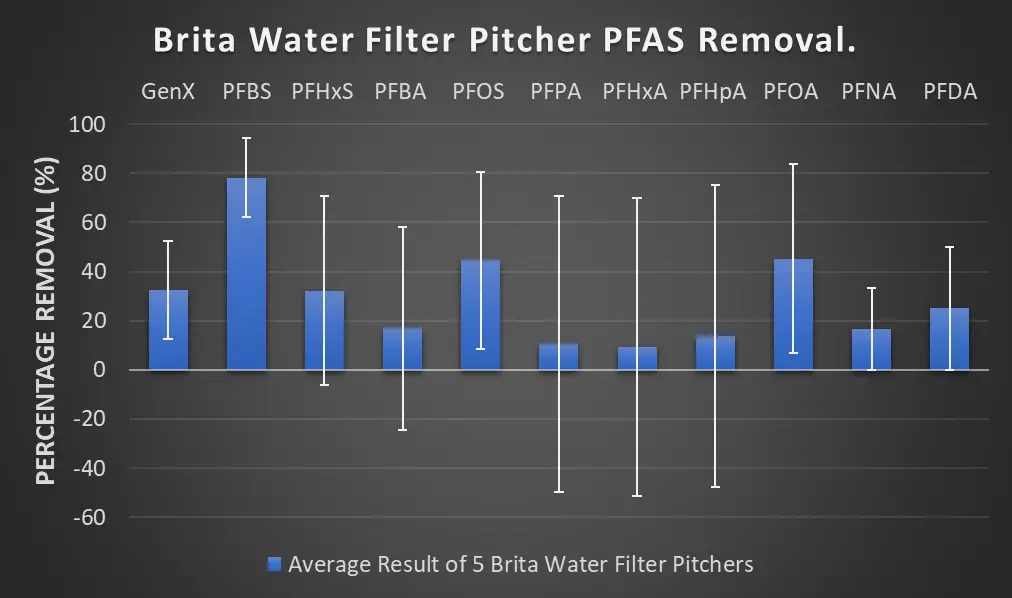 Brita Filters And PFAS Removal - With Laboratory Testing - Water
Seventy percent is decent, but it’s not perfect. If your water is basically a PFAS soup (looking at you, cities near old military bases), you still need more firepower. The Brita Stream filter (the one that looks like a weird plastic banana) does a similar job. Just don’t expect a miracle.
The dirty little secret: it depends on your filter’s age
Here’s a plot twist: a brand-new filter grabs more PFAS than an old, clogged one that smells like regret. Change your filter every 40 gallons, or roughly every two months if you’re a thirsty camel. If you leave a filter in for six months, it stops filtering anything and just becomes a plastic container for stagnant dreams.
Also, Brita filters are not certified by NSF International specifically for PFAS removal (like some fancy, $500 systems are). They’re certified for taste and odor. So you’re basically playing PFAS roulette with a plastic pitcher. Risk your health? Ehh, I’d pass.
Should you throw your Brita in the trash and cry?
No, you dramatic noodle. Brita is still great at removing chlorine, lead, copper, and that weird metallic taste that makes you think you’re licking a penny. It’s a solid “first date” water filter—it cleans up the obvious problems. But for PFAS, it’s more like a “casual fling” that leaves you wanting.
If your tap water is safe on PFAS (check your local water report—yes, it’s boring, but do it), a Brita with a Longlast+ filter is fine. If you live in a PFAS hotspot, you need a reverse osmosis system or a filter with activated carbon and anion exchange resin specifically rated for PFAS. That costs more than a Brita, but so does a new liver.
 Do Brita Filters Remove PFAS? A Comprehensive Guide – Alkaline Pitcher
A surprising fact to ruin your day (and make you laugh)
Here’s a mind-bender: Your Brita filter might actually harbor bacteria if you don’t change it. That’s right—for every PFAS it doesn’t catch, it can grow a tiny biofilm of uninvited guests. So you’re not drinking pure water; you’re drinking a microbial frat party with a side of forever chemicals. Bottoms up!
Also, PFAS are so persistent that they’ve been found in breast milk and umbilical cord blood. Yes, humans are now born pre-loved with toxic chemicals. So if you’re pregnant, probably just buy the expensive filter or move to a glacier. (Kidding. Mostly.)
The final verdict: should you Brita?
Yes, but with eyes wide open. Get a Longlast+ filter and swap it on schedule. It’s not perfect, but it’s better than nothing—like wearing a raincoat in a drizzle versus a hurricane. For most people, a Brita reduces PFAS enough to lower your lifetime risk, but it won’t eliminate it.
If you want to be a PFAS-eliminating superhero, invest in a certified countertop or under-sink system. Or just accept that we all have a little Teflon in our souls now. Welcome to the 21st century, where even your water is a plot twist. Stay hydrated, and don’t forget to laugh—you’re probably 0.0001% plastic by now anyway.
P.S. – No, a Brita does not remove microplastics either. That’s a whole other horror story for another day.
