How To Check Lead In Water

Let’s be honest: the phrase “lead in water” sounds like something from a dystopian sci-fi novel, not your morning coffee routine. But here we are, in the 21st century, still s...

Let’s be honest: the phrase “lead in water” sounds like something from a dystopian sci-fi novel, not your morning coffee routine. But here we are, in the 21st century, still side-eyeing our tap like it’s a mysterious character in Severance. The good news? Checking for lead isn’t a chemistry exam—it’s a simple, empowering act of modern home care.
First, a quick reality check: lead is a neurotoxin with zero safe level in drinking water, especially for kids and pregnant people. It often sneaks in from old pipes, solder, or fixtures installed before 1986. Think of it as the unwelcome guest who arrives through the plumbing—silent, invisible, but definitely not invited.
The “Let’s Not Guess” Mindset
You can’t see, taste, or smell lead, which is honestly rude. So, skip the “it looks fine” logic and embrace a test-first philosophy. Your taste buds are great for wine, not for heavy metal detection.
Must Read
Start with a free or low-cost water testing kit from your local health department or a certified lab. Many cities offer them after flint-style crises made everyone paranoid—which, frankly, is a justified paranoia. Ordering one online reputable lab kit is also perfectly fine; just ensure it’s EPA-approved.
Fun fact: the CDC estimates that 10-20% of childhood lead exposure comes from water. That’s a wild stat to chew on while you’re sipping from a reusable bottle, isn’t it?
How To Collect Your Sample Like a Pro
Here’s where you channel your inner scientist—minus the lab coat. Always test water that has sat in pipes for at least six hours, like first-morning water or after work. Collect a “first draw” sample (don’t flush the tap) in a clean bottle the kit provides.
Then, collect a “flushed” sample after letting the water run for 1-2 minutes. This shows you if the lead is coming from the pipes in your home or the city line. It’s like a plot twist for your plumbing—knowing which villain is causing the drama.
Label everything clearly, because mixing up samples is the kind of oops you don’t want. Mail it off and wait—which is the hardest part. Use the downtime to google cute pipe memes; they exist.
Reading The Results Without Panicking
If your report shows lead below 15 parts per billion (ppb), you’re under the EPA’s “action level.” That’s a relief, but remember: no level is truly “safe.” Think of it as a green light, not a gold medal. If it’s higher than 15 ppb, don’t spiral—action is your new best friend.
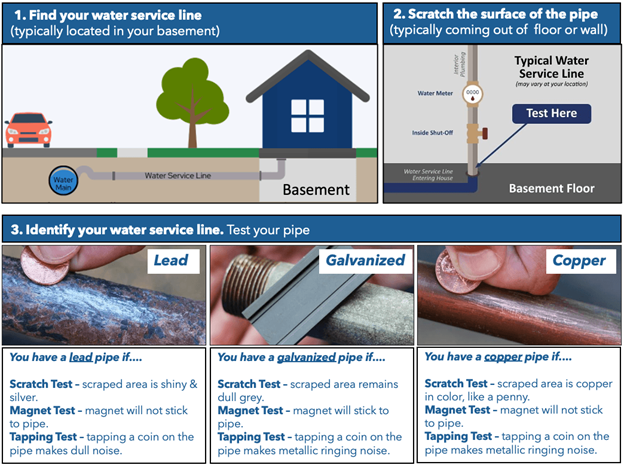 Lead Awareness - What you need to know and how to check your service
Your next steps: flush your pipes for 1-2 minutes before drinking (especially after vacation), use cold water for cooking (hot water dissolves more lead), and consider a certified filter. Look for ones marked NS 53, ANSI 53, or NSF 58—these aren’t just acronyms; they’re your shield.
Fun fact: boiling water does NOT remove lead. In fact, it concentrates it. So, put that kettle down—unless you’re making tea with already-filtered water. Knowledge is literally power (and better hydration).
The “Aesthetic” Water Setup
Let’s talk about the vibe shift. Once you’re filtering, you can embrace the Montessori-looking countertop pitcher or the sleek under-sink system. Suddenly, your kitchen looks like an influencer’s wellness corner, and you’re officially that person who asks “how’s your water game?” at dinner parties.
Pair your filter with a reusable glass bottle—avoid plastic, which can leach other chemicals. You’ll feel like you’re starring in a sustainable luxury brand ad. Hydration with integrity is the new flex.
Culturalreference: Remember when Erin Brockovich made us all suspicious of groundwater? She was right. Channel her energy—be curious, be mildly furious at infrastructure, then fix it.
Long-Term Pipe Patience
If your test reveals old lead pipes (common in homes built before 1930—yes, that’s vintage plumbing, but not the cool kind), consider professional replacement. It’s expensive and disruptive, like an uninvited renovation, but worth every penny for your long-term health.
In the meantime, flush your system daily—morning routine: wake up, stretch, run the tap for two minutes. Make it a habit, like asking Alexa for the weather. You’ll use that water for plants or washing dishes, so it’s not wasted.
 How to Detect Lead in Water (with Pictures) - wikiHow Life
Little known tip: corrosion control chemicals are often added by municipalities. If your city treats water, it might bind lead and reduce risk. Call your local utility and ask—they love answering that question. Probably.
The Micro-Trend of Water Literacy
Checking for lead is part of a bigger movement: knowing what’s in what you consume. It’s adjacent to reading ingredient labels and questioning everything. Trendy? Maybe. Essential? Absolutely.
It’s also oddly satisfying. There’s a quiet dignity in being the person who tests their water—like a secret life-hack guru who lives in your own home. You don’t need a Ph.D.; you just need a kit, patience, and a small bit of courage.
Fun fact: Lead taste was once used as a sweetener in ancient Rome. That explains a lot about Roman architecture and, well, their decision-making. We’ve evolved.
Daily Life Connection
The morning after you get your results, fill your glass with cold water. Notice it. That clink of ice, the clarity, the absence of worry—it’s a small ritual of care. You didn’t just check for lead; you checked in with your home, your health, and your peace of mind.
In a world where we scroll past so much, pausing to ensure one thing is clean? That’s a genuine act of self-love. Your water is your body’s capital. Make sure it’s not making villainous investments.
So go ahead—test, filter, hydrate, and live. You’ve got this. And your pipes? They’re about to get a serious accountability check.
